 Numbers + Letters
 QuickShip
 Plaques
 Decals
 Custom
 Trade
Trade


STR address numbering is the practice of displaying a property's street number in a format that meets fire code standards, satisfies local ordinances, and guides guests and emergency responders to the correct location without delay.
This guide covers address numbering's role in safety and compliance, how to choose the right materials and design, installation best practices, the upgrade and replacement process, and common compliance challenges for short-term rental owners.
Accurate numbering affects guest experience directly: 80% of guests require a minimum 4-star rating before booking, and wayfinding failures at arrival are a fast path to negative reviews. Beyond ratings, clear numbers allow emergency responders to reach the property on the first pass, which is critical in time-sensitive medical situations.
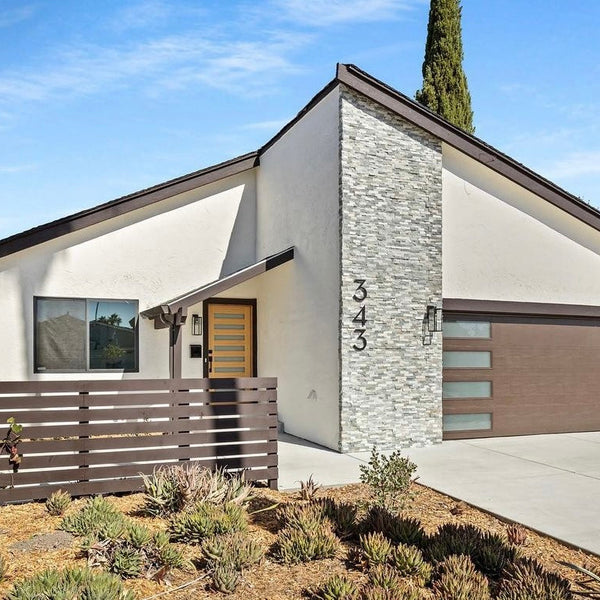
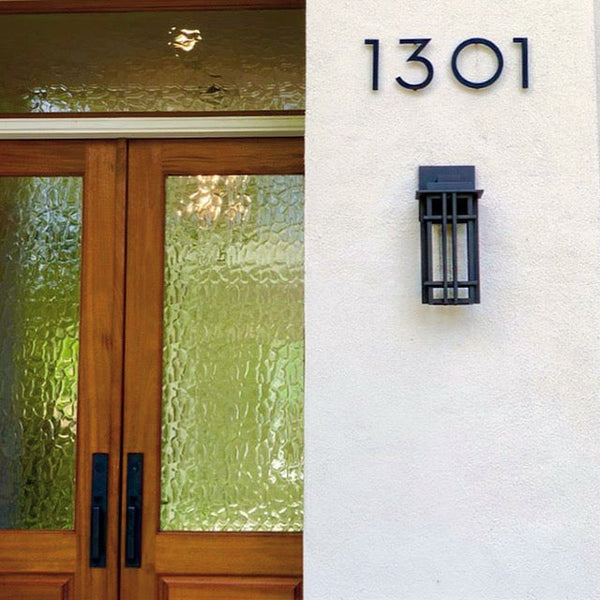
The legal framework for STR address numbering is more specific than many owners realize. The International Fire Code Section 505 sets a baseline of 4-inch-tall numbers in a contrasting color visible from the street, while local ordinances in cities like St. Martinville, Louisiana, potentially add illumination or reflectivity requirements on top of that minimum.
Material selection and design choices directly shape both durability and compliance outcomes. Aluminum outperforms acrylic and wood in longevity, stainless steel offers a premium aesthetic at a higher installation complexity, and 2026 trends are driving demand for backlit numbers, matte finishes, and larger-format signage.
Compliance challenges are growing alongside regulatory change: more than 340 U.S. cities rewrote STR codes between 2022 and 2026, and the median daily fine for non-compliant operation now sits at $500, making proactive signage decisions a measurable risk-management tool.
Why Is Accurate Address Numbering Critical for Short-Term Rentals?

Accurate address numbering is critical for short-term rentals because it directly affects guest safety, emergency response, and legal compliance. The following sections cover how numbering impacts guest experience, what federal and state codes require, and how local ordinances shape placement rules.
How Does Proper Address Numbering Impact Guest Experience and Safety?
Proper address numbering impacts guest experience and safety by eliminating wayfinding friction at arrival and enabling emergency responders to locate the property without delay. A guest who cannot find the property at night is unlikely to leave a favorable review, and review scores carry real commercial weight: according to Customer Alliance, 80% of guests require properties to have at least a 4-star rating before considering a booking. A single wayfinding complaint can push a listing below that threshold. Beyond ratings, clear numbering lets paramedics, fire crews, and police reach the correct address on the first pass, which is especially consequential in medical emergencies where every minute matters.
What Are the Legal and Regulatory Requirements for STR Address Numbering in 2026?
The legal and regulatory requirements for STR address numbering in 2026 center on the International Fire Code and state-level building inspection rules. The International Fire Code (IFC) Section 505 requires street numbers to be at least 4 inches tall, displayed in a color that contrasts with the background, and visible from the street. Additionally, under the Americans with Disabilities Act, a short-term rental qualifies as a "place of public accommodation" if it offers more than five rooms for rent and is not owner-occupied as a primary residence, which can trigger additional signage and accessibility obligations. STR owners should treat IFC Section 505 as a baseline minimum, not a ceiling.
How Do Local Ordinances Affect STR Address Number Placement and Visibility?
Local ordinances affect STR address number placement and visibility by layering requirements on top of state and federal standards, often with specific rules on size, illumination, and reflectivity. The City of St. Martinville, Louisiana, for example, considered an ordinance requiring street numbers to be at least 4 inches tall and either illuminated at night or finished with a reflective coating. Requirements vary significantly by jurisdiction, so STR owners should verify three local factors before installing numbers:
-
Minimum character height required by the municipality or fire district.
-
Illumination or reflectivity standards for nighttime visibility.
-
Placement location, such as fence post, door, or building facade, as some ordinances specify the exact mounting surface.
Confirming local rules before installation prevents costly retrofits and avoids compliance citations down the line.
How Can You Choose the Best Address Number Style and Material for Your Rental?

Choosing the best address number style and material depends on durability, local visibility requirements, and design compatibility with your property. The sections below cover material options, design principles, and 2026 trends to guide your selection.
What Are the Most Durable and Attractive Materials Suitable for Exterior Address Numbers?
The most durable and attractive materials suitable for exterior address numbers are aluminum, stainless steel, and acrylic, each carrying distinct trade-offs across cost, longevity, and appearance.
-
Aluminum offers durability and maintenance-free performance, consistently outperforming acrylic and wood in longevity comparisons.
-
Stainless steel delivers a premium, weighty aesthetic but carries a higher price point and can complicate installation on certain surfaces.
-
Acrylic is more affordable and versatile than metal, though it tends to fade or discolor under prolonged direct sunlight, shortening its useful lifespan.
For a high-turnover STR environment, aluminum represents the strongest value: it resists weathering without upkeep, keeps replacement costs low, and maintains a clean, professional appearance year-round.
How Do Modern Design Considerations Influence Address Number Selection?

Modern design considerations influence address number selection by requiring that numbers complement the property's architectural style, meet contrast and legibility standards, and integrate with smart building trends.
Smart buildings increasingly incorporate IoT-connected lighting controls for energy-efficient, sustainable illumination, according to a 2024 study published in MDPI on advanced building systems. Address numbers that pair with low-voltage LED backlighting align with this direction, making properties both compliant and visually distinctive after dark.
Beyond technology, font choice, finish, and mounting style all signal property quality to arriving guests. A cohesive design between signage and facade creates the first impression that drives 5-star reviews.
What Are Current Trends in STR Address Number Design for 2026?
Current trends in STR address number design for 2026 center on three converging priorities: illumination, material longevity, and architectural integration.
-
Backlit and LED-integrated numbers are growing in demand as STR owners seek 24-hour visibility without adding separate lighting fixtures.
-
Brushed aluminum and matte black finishes are replacing painted or glossy alternatives, offering timeless appeal that resists both weathering and shifting style trends.
-
Larger format signage is gaining traction as more municipalities codify minimum size standards, making oversized numbers both compliant and visually commanding.
-
Custom font selection allows hosts to match signage to a property's architectural identity, from mid-century modern to contemporary coastal.
Investing in well-designed, weather-resistant address numbers is one of the lowest-effort, highest-visibility upgrades an STR owner can make heading into 2026.
What Are the Best Practices for Installing Address Numbers on Short-Term Rentals?
The best practices for installing address numbers on short-term rentals cover placement, visibility, and common mistakes to avoid. The following sections address where to mount numbers for compliance, how to keep them readable around the clock, and which errors most frequently trigger complaints or code violations.
Where Should Address Numbers Be Placed for Maximum Visibility and Compliance?

Address numbers should be placed at a height and position where they are unobstructed and readable from the street in both directions. Mount numbers near the primary entrance, on the front facade, or on a fence post if the structure sits far from the curb. Avoid placement behind landscaping, under deep overhangs, or on surfaces where the background color reduces contrast.
Compliance priority matters here. According to STR expert Sean Rakidzich, focusing first on registration, tax remittance, and occupancy limits removes 80% of legal risk, and proper address posting ties directly into the registration requirements most jurisdictions enforce.
How Can You Ensure Address Numbers Are Easily Read Both Day and Night?
Address numbers are easily read both day and night by combining adequate size, strong contrast, and either illumination or a reflective finish. The City of St. Martinville, Louisiana, considered an ordinance requiring street numbers to be at least 4 inches tall and either illuminated at night or finished with a reflective coating, according to InterNACHI. These two options represent the most practical approaches for STR owners: solar-powered lighting mounted above or beside the numbers, or retro-reflective materials that activate under vehicle headlights without any wiring. For STR guests arriving after dark, this distinction can be the difference between a smooth check-in and a one-star review.
What Installation Mistakes Should STR Owners Avoid?
The installation mistakes STR owners should avoid include the following:
-
Mounting too high or too low: Numbers placed above eye level or below knee height are difficult to read from a passing vehicle.
-
Using low-contrast combinations: Dark numbers on a dark background, or light on light, fail readability requirements and frustrate guests at night.
-
Selecting undersized characters: Numbers smaller than 4 inches often fall below local code minimums and are hard to read from the street.
-
Ignoring multiple entry points: Properties with side entrances, rear driveways, or detached units need numbers at each guest-accessible entry.
-
Using temporary or adhesive-only mounting: Stickers and tape degrade quickly outdoors, requiring frequent replacement and risking non-compliance between inspection cycles.
Addressing these mistakes before listing a property saves time, avoids fines, and ensures guests arrive without confusion.
How Can STR Owners Upgrade or Replace Address Numbers Efficiently?
STR owners can upgrade or replace address numbers efficiently by following a clear removal and remounting process, knowing when to call a professional, and choosing custom options that meet both compliance standards and guest expectations. The steps below cover each stage of the upgrade process.
What Steps Are Involved in Replacing Old or Damaged Address Numbers?
The steps involved in replacing old or damaged address numbers are: assess the current mounting surface, remove existing hardware cleanly, select compliant replacement numbers, and reinstall using a drilling template for precise alignment.
Before purchasing replacements, verify your local code's minimum size requirement. The International Fire Code Section 505 requires numbers at least 4 inches tall in a contrasting color visible from the street, so replacements must meet or exceed that standard.
Clean the mounting surface after removal to prevent adhesive residue or corrosion from interfering with new hardware. Using a personalized drilling template, included with Modern House Numbers orders, eliminates guesswork and ensures a level, professional result on the first attempt.
When Should Professional Installation Be Considered for Address Numbers?
Professional installation should be considered for address numbers when the mounting surface is masonry, stucco, or stone; when numbers must be anchored at height; or when local permit inspections require documented compliance.
Stainless steel numbers are heavier than aluminum alternatives, which can complicate self-installation on certain exterior surfaces. In those cases, a professional installer ensures anchors are rated for the material weight and that concealed hardware sits flush without cracking the substrate.
For STR owners managing multiple properties, professional installation also eliminates inconsistency across units, which matters for inspection and guest wayfinding alike. The upfront cost of professional installation is small relative to the compliance and guest-experience risks of poorly mounted numbers.
How Do Custom Options Improve STR Address Numbering Solutions?
Custom options improve STR address numbering solutions by allowing owners to match architectural style, choose compliant sizing, and select finishes that remain legible and durable through repeated seasonal exposure.
Aluminum custom numbers are maintenance-free and win in longevity comparisons against acrylic and wood, making them a practical choice for rental properties that receive heavier-than-average exterior wear. Acrylic signs, while more affordable upfront, tend to fade or discolor under direct sunlight, increasing long-term replacement costs for STRs in sunny markets.
Modern House Numbers offers architect-designed custom address signs in multiple fonts (including Palm Springs, SoCal, Austin, Soho, Backbay, South Beach, and Santa Barbara) and finishes, handcrafted to order from recycled aluminum in Tucson, Arizona. Each order includes concealed hardware and a personalized drilling template, giving STR owners a repeatable, professional installation without specialized tools.
What Common Compliance Challenges Do STR Owners Face with Address Numbering?
Common compliance challenges STR owners face with address numbering include mismatched signage standards, evolving local ordinances, and HOA rules that conflict with municipal codes. The subsections below cover the penalties non-compliant owners risk and practical strategies for staying current with changing regulations.
What Penalties or Issues Can Result from Non-Compliant Address Numbering?
Penalties from non-compliant address numbering range from fines and failed inspections to permit revocation. The median fine across U.S. cities for operating an unpermitted short-term rental in 2026 is $500 per day, according to data cited by Rakidzich.com. In Los Angeles, violations tied to exceeding the 120-day hosting cap can trigger fines of $2,000 per day or twice the nightly rent, whichever is greater. South Padre Island, Texas, revokes STR licenses after three separate citations within a 12-month period. Beyond fines, non-compliant signage can delay emergency response and generate negative guest reviews that directly threaten booking rates.
How Can Owners Keep Up with Changing Local Rules or HOA Guidelines?
Owners can keep up with changing local rules and HOA guidelines by monitoring municipal portals, joining local STR host associations, and scheduling annual compliance audits. Regulations shift frequently: more than 340 U.S. cities rewrote STR codes between 2022 and 2026. HOA rules often impose stricter signage standards than municipal codes, requiring separate tracking. The U.S. Department of Justice extended ADA Title II web accessibility compliance for local governments over 50,000 residents to April 26, 2027, illustrating how deadlines can shift even within established frameworks. Proactive calendar reminders tied to permit renewal dates are the most reliable way to avoid surprises.
How Can Modern House Numbers Help Short-Term Rental Owners Enhance Address Numbering?

Modern House Numbers helps short-term rental owners enhance address numbering through architect-designed, handcrafted aluminum signs built for durability, visibility, and compliance. The sections below cover customization services and key 2026 STR address numbering takeaways.
What Architectural Address Signs and Customization Services Does Modern House Numbers Offer for STRs?
Modern House Numbers offers architectural address signs and customization services including custom house numbers, address plaques, mailbox decals, and curb stencils, all handcrafted to order from recycled aluminum in Tucson, Arizona. STR owners can select from multiple architect-designed fonts, such as Palm Springs, SoCal, and Austin, to match any property's exterior style. Every order includes a personalized drilling template and step-by-step installation instructions, making compliance-ready installation straightforward. Recycled aluminum construction delivers maintenance-free durability, an important advantage for rental properties that undergo periodic inspections. In Massachusetts, for example, primarily owner-occupied STR lodging houses face building code inspections at least once every five years. Choosing materials and designs that hold up over time reduces the risk of non-compliance findings during those reviews.
What Are the Key Takeaways About STR Address Numbering for Short-Term Rentals in 2026?
The key takeaways about STR address numbering for short-term rentals in 2026 center on three realities: the regulatory landscape is tightening, local rules vary dramatically, and visible, compliant signage directly protects your investment. Short-term rentals are generally defined as furnished homes or rooms rented for fewer than 30 days, though no official federal definition exists. Idaho's House Bill 583, effective July 1, 2026, requires STRs to follow the same building codes as other residential uses, while Miami Beach continues enforcing near-total residential STR bans through pre-2011 grandfathered ordinances. Clear, code-compliant address numbering is one of the most practical, low-cost steps STR owners can take to stay ahead of inspections, protect guests, and avoid avoidable penalties.