 Numbers + Letters
 QuickShip
 Plaques
 Decals
 Custom
 Trade
Trade


Feng shui is an ancient Chinese practice that arranges homes to balance five elements, earth, fire, metal, water, and wood, so chi (energy) flows freely and creates a sense of harmony buyers respond to instinctively.
This guide covers feng shui fundamentals and why buyers now crave wellness-driven spaces, how curb appeal and house numbers shape first impressions, room-by-room staging strategies for the living room, kitchen, bedroom, and bathroom, and how to sell faster with low-cost adjustments and modern address details.
Feng shui rests on balancing five elements to keep chi moving, and that same balance now matters more to buyers than ever. Wellness has become a top purchase driver, with a majority of consumers citing health and atmosphere as reasons they choose specific home features, and open floor plans make it easier than ever to apply these principles without a renovation.
Curb appeal and address visibility set the tone before a buyer opens the car door. Legible house numbers, symmetrical lighting, and an inviting entryway signal order and care, while feng shui numerology adds meaning to specific digits like 8, long considered the most auspicious number for attracting prosperity.
Inside the home, staging priorities shift room by room. The living room carries the heaviest staging weight since most buyers name it their top priority, kitchens center on stove placement and elemental balance, bedrooms focus on commanding bed placement and calm colors, and bathrooms rely on decluttering and soft lighting to avoid draining positive energy.
Selling faster rarely requires major renovation. Decluttering, cleaning, minor repairs, and correcting common feng shui mistakes, like broken fixtures or furniture blocking flow, cost little but shape buyer perception immediately. Pairing these fixes with a clean, legible, well-placed house number ties curb appeal and interior energy into one cohesive, move-in-ready impression.
What Is Feng Shui And Why Might It Matter To Home Buyers?
Feng shui is an ancient Chinese practice that arranges homes to balance energy and create harmony. For buyers, this translates into calm, welcoming spaces that feel move-in ready. Below, this section covers feng shui's core principles, buyer psychology around wellness, and its fit with modern design.
How Does Feng Shui Traditionally Define Balance, Flow, And Harmony In A Space?
Feng shui traditionally defines balance, flow, and harmony through the interaction of five elements, earth, fire, metal, water, and wood, working together to guide chi, the vital life force that moves through a space. According to Britannica, feng shui translates to "wind-water" in Chinese and developed over 3,000 years ago to balance a space's energy for health and good fortune. When these elements interact properly, energy flows freely rather than stalling in corners or clutter. Feng shui practitioners flag oversized furniture as a problem because it leaves no room for energy, money, or opportunity to move, while monochromatic interiors are considered to lack the balance harmony requires.
Why Are Today's Home Buyers Increasingly Interested In Energy, Wellness, And Atmosphere?
Today's home buyers are increasingly interested in energy, wellness, and atmosphere because wellness now shapes housing expectations. According to a 2026 Global Wellness Institute report, 60% of consumers cite health and wellness as the top reason they want specific home features, a 17% jump from two years earlier, with the wellness real estate sector valued at $548 billion globally and projected to top $1 trillion by 2029. Buyer confidence adds pressure: 60% of prospective buyers are unsure whether now is the right time to purchase, a three-year high, and 62% worry about severe weather damaging a future home. Amid that uncertainty, a calm, orderly home offers reassurance data alone cannot provide, which is exactly what feng shui-informed staging delivers.
How Can Feng Shui Complement Modern, Minimal, Or Contemporary Home Styles?

Feng shui can complement modern, minimal, or contemporary home styles by working with open floor plans rather than against them. Open-concept layouts create a central great room that supports traffic flow and feng shui's emphasis on unobstructed chi. According to Kieran Hardesty, VP of Architecture at Century Communities, "the openness and flexibility of our layouts make it easier for homeowners to customize spaces to their needs and implement Feng Shui aesthetics." Defining zones with rugs, lighting, and furniture placement while keeping sightlines clear keeps a large room feeling cohesive rather than empty. Minimalist interiors reinforce this by removing clutter, a common energy blocker in feng shui. That same attention to flow and balance starts right at the curb.
How Can Feng Shui Principles Influence First Impressions And Curb Appeal?
Feng shui principles shape first impressions and curb appeal by influencing how buyers read a home's energy, order, and care from the street. Visible address numbers, balanced lighting, and an inviting entryway all signal harmony. The sections below cover street visibility, color and lighting energy, and house number placement.
What Feng Shui Factors Most Affect A Buyer's First Impression From The Street?
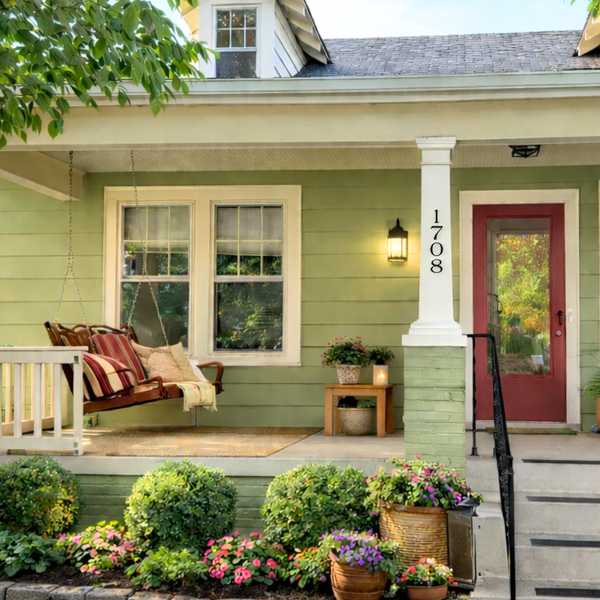
The feng shui factors that most affect a buyer's first impression from the street are address visibility, entryway design, and the "settle in" transition zone before the front door. Municipal codes require house numbers to be legible and clearly visible from the street, and feng shui reinforces this by treating numbers as auspicious for attracting positive energy. Beyond the number, feng shui frames the entryway as a settle-in zone, a pause point where buyers form their first energetic read of a home before stepping inside. As architect Cliff Tan explains, "Do not underestimate the power of a first impression." For sellers, a legible number and calm entry work together as one continuous first impression.
How Do Color, Symmetry, And Lighting At The Front Of Your Home Impact Energy?
Color, symmetry, and lighting at the front of your home impact energy by shaping how smoothly chi moves toward the entry. The front door is the critical entry point for energy, so its color and condition set the tone for everything buyers feel next. Soft, calming colors balance that energy, while ample lighting sets the right mood and keeps the flow uninterrupted after dark. Symmetrical fixtures or planters on either side of the door reinforce stability buyers register instantly. According to Opendoor, the highest-ROI seller improvements are minor cosmetic projects such as fresh paint, landscaping, and a new front door, changes that align with these same feng shui priorities. Adjusting lighting intentionally helps direct energy toward the home's best features.
Why Are A Visible House Number And A Clear Path To The Door Critical In Feng Shui?

A visible house number and clear path to the door are critical in feng shui because they let energy, and buyers, find the entrance without confusion. Seven Devils, NC's municipal code requires house numbers to be legible and visible from the street, with a minimum height of 3.5 inches. Feng shui numerology adds a second layer: numbers such as 3, 6, 8, 9, 11, and 38 are considered lucky and linked to positivity and good fortune. A cluttered or poorly lit walkway works against both code compliance and feng shui, since blocked paths signal blocked energy before a buyer reaches the door. Clear numbers and open paths set the stage for a welcoming front door experience.
What Are The Most Important Feng Shui Tips For Your Front Door And Entryway?

The front door is the "mouth of chi," the single most powerful point of energy entry into a home. The most important entryway feng shui tips fall into three areas:
- Positioning and styling the door itself
- Decluttering, cleaning, and repairs at the entry
- Decor, plants, and lighting that make buyers feel welcome
How Should You Position And Style The Front Door To Welcome Positive Chi And Buyers?
You should position and style the front door to welcome positive chi and buyers by lighting the path and framing the entrance symmetrically. According to the National Association of Realtors' feng shui staging guidance, the path leading to the front door should be lit to create an inviting atmosphere. Placing two healthy plants or flowers in planters on both sides of the door adds symmetry and signals care. Inside the entryway, furniture should face the door rather than away from it, since a back-facing arrangement blocks the commanding view feng shui prizes. This kind of symmetry is one of the easiest, most cost-effective upgrades a seller can make before listing.
Which Decluttering, Cleaning, And Repair Tasks Most Improve Feng Shui At The Entry?
The decluttering, cleaning, and repair tasks that most improve feng shui at the entry are removing clutter, sweeping away cobwebs and dust, and fixing anything broken near the doorway, such as loose hinges, cracked steps, or burnt-out bulbs. A cluttered or neglected entry blocks the chi trying to enter through the "mouth of chi," so the space should stay clear and functional before anything decorative gets added. Before staging any part of the home, one of the most important steps is to significantly declutter and minimize possessions, and the entryway sets the tone for that effort since it's the first space buyers touch. Many people credit feng shui practices like these with improved mental health and well-being.
How Can Decor, Plants, And Lighting At The Threshold Make Buyers Feel Invited?
Decor, plants, and lighting at the threshold can make buyers feel invited by softening the entrance and signaling that the home is cared for. Plants act as a welcoming threshold that greets potential buyers before they even step inside. Keeping sightlines open at the entry allows energy to flow freely, promotes calm and connection, and makes the space feel larger, so a lighter decor presence helps buyers picture themselves living there. According to Bank of America's 2025 Homebuyer Insights Report, 52% of prospective buyers feel the market has improved compared to a year ago, so a warm, uncluttered threshold helps convert that confidence into offers. With the entryway welcoming buyers in, the home's overall energy can carry that impression forward.
How Can You Use Feng Shui To Stage Your Living Room For Maximum Buyer Appeal?
You can use feng shui to stage your living room by arranging furniture for open flow, choosing calming colors, maximizing natural light, and clearing clutter. The living room carries the most staging weight of any room, with 91% of agents staging it and 37% of buyers naming it their top priority. The following sections cover furniture arrangement, color and light, and clutter control.
How Should Furniture Be Arranged To Support Flow, Conversation, And Comfort?
Furniture should be arranged away from walls and positioned to create open conversation areas that let energy circulate freely. Furniture pushed flush against walls restricts energy flow, blocking the chi a living room needs to feel welcoming. Correct placement, by contrast, builds positive and healing energy flow through the space.
Practical arrangement tips include the following:
- Angle seating pieces toward each other to create a conversational grouping rather than lining everything against the perimeter.
- Leave visible walking paths between furniture so buyers can move through the room without obstruction.
- Avoid oversized pieces that crowd walkways, since energy, like buyers, needs room to move.
Well-arranged furniture signals a home that feels both spacious and intentional, a detail many buyers notice even if they cannot name why a room feels "right."
What Role Do Color, Texture, And Natural Light Play In A Feng Shui Living Room?
Color, texture, and natural light shape a feng shui living room by setting the emotional tone and supporting energy flow throughout the space. Soft, soothing tones, such as those used in bedroom feng shui like green, blue, and lavender, translate well to living rooms because they promote calm rather than visual noise. Warm, earthy tones are also considered soothing choices for walls in feng shui interiors.
Natural light plays an especially important role. Windows should be cleaned so light enters unobstructed, since natural light promotes positive energy flow throughout a room. According to a December 12, 2024 report from Forest Therapy Hub, natural light boosts mood, regulates sleep, and promotes productivity, and it gives the body's internal clock essential time cues to stay synced with the outside world. For sellers, bright, naturally lit living rooms consistently photograph and show better than dim ones.
How Can You Reduce Visual Clutter While Keeping The Space Warm And Lived In?
You can reduce visual clutter in the living room by removing excess decor and personal items while keeping a few intentional, warm touches like a throw blanket or a single plant. Clutter blocks chi and creates a stagnant feel, so surfaces should stay clear and storage should stay closed. Sightlines matter here too: just as being able to see the door while at the stove gives a sense of control and power in the kitchen, keeping clear sightlines across the living room gives buyers a sense of openness and ease. A tidy but not sterile room, where a few thoughtful objects remain, reads as move-in ready rather than staged.
With clutter controlled and light flowing freely, attention naturally shifts to the kitchen, bedrooms, and bathrooms next.
Which Feng Shui Adjustments Matter Most In Kitchens, Bedrooms, And Bathrooms?
Feng shui adjustments matter most in the kitchen, bedroom, and bathroom because these rooms shape a buyer's sense of comfort, privacy, and cleanliness. This section covers:
- Kitchen feng shui for a clean, prosperous feel
- Bedroom feng shui for rest and retreat
- Bathroom feng shui to prevent energy loss
How Can Feng Shui Make Your Kitchen Feel Clean, Prosperous, And Move In Ready?
Feng shui can make your kitchen feel clean, prosperous, and move-in ready by centering attention on stove placement and elemental balance. According to a 2022 guide from Sivana Spirit, the stove represents nourishment, success, wealth, and opportunity, making its placement the single most important factor in kitchen feng shui. Key stove placement rules include:
- Position the stove so the cook can see the door, creating a sense of control.
- Avoid placing the stove directly facing the door.
- Keep the stove separated from the sink, since fire and water elements conflict.
- Keep the stove clean and in full working order.
Balancing earthy wood cabinets with metal appliances further strengthens kitchen harmony. A clean, functioning stove signals to buyers that the home was well maintained.
What Bedroom Feng Shui Tweaks Help Buyers Imagine Rest, Privacy, And Retreat?
Bedroom feng shui tweaks that help buyers imagine rest, privacy, and retreat center on bed placement and simplicity. The bed works best in a commanding position, diagonal from the door and visible without lining up directly with the doorway, which creates a sense of security. Symmetrical nightstands and a solid headboard reinforce stability, while clearing surfaces of personal items helps buyers picture their own belongings in the space. Sellers should avoid storing items under the bed, since blocked space beneath the mattress can make the room feel cramped rather than restful. For staging purposes, a tidy, neutral bedroom reads as a retreat rather than someone else's space, an impression that helps buyers connect emotionally with the room.
How Do You Handle Bathrooms In Feng Shui So They Do Not Drain Positive Energy?
Bathrooms are handled in feng shui by keeping them clean, decluttered, and closed off so they don't drain positive energy from the rest of the home. Placing a mirror in a dim bathroom opens up the space and brings in positive energy. A few finishing touches reinforce this calm, well-cared-for feeling:
- Fresh plants on the counter
- Soft, even lighting
- A decluttered vanity
Buyers notice these small signals, and a spa-like bathroom often reassures them that the whole home has been well maintained. With kitchens, bedrooms, and bathrooms addressed, low-cost staging strategies can carry that momentum through the rest of the home.
How Can Feng Shui Support A Faster Home Sale Without Major Renovations?
Feng shui speeds up a home sale by improving buyer perception through low-cost, high-impact adjustments rather than expensive renovations. The sections below cover the cheapest changes with the biggest payoff, how to prioritize rooms under time pressure, and common mistakes that quietly repel buyers.
Which Low Cost Feng Shui Changes Offer The Biggest Impact On Buyer Perception?
The low-cost feng shui changes with the biggest impact on buyer perception are decluttering, deep cleaning, minor repairs, and simple staging touches in high-visibility rooms. These adjustments cost little but shape how quickly a buyer connects emotionally with a space.
- Clear counters, closets, and floors to restore open chi flow.
- Repair or remove broken fixtures, doors, and furniture.
- Add fresh plants near the entry to signal welcome and vitality.
- Clean windows to maximize natural light and energy flow.
- Swap harsh or dim bulbs for warm, even lighting.
According to a May 6, 2025 National Association of Realtors report, staging investment pays off through faster sales and higher offer prices. Sellers working with limited budgets should treat these small, feng shui-aligned fixes as priority spending before listing.
How Can You Prioritize Rooms And Areas If You Have Limited Time Before Listing?
Room prioritization under time pressure should start with the entryway, followed by the kitchen, then shared living spaces. The entry sets the first energetic impression, so clearing the path, cleaning the door, and adding simple lighting matters most when time is short.
Because the kitchen represents nourishment and prosperity in feng shui tradition, a quick decluttering and cleaning pass there ranks second. Shared living areas come next, since buyers linger there while imagining daily life in the home.
In practice, sellers rarely have time to perfect every room. Focusing effort on the spaces buyers see first and linger in longest delivers the strongest return on limited hours before a listing goes live.
What Common Feng Shui Mistakes Might Quietly Turn Off Potential Buyers?
Common feng shui mistakes that quietly turn off potential buyers include furniture facing away from the door, broken or damaged items, clutter, poorly placed mirrors, dead plants, and oversized furniture that blocks movement. Each of these signals stagnation rather than the balance buyers respond to.
- Furniture facing away from the entrance, which disrupts commanding chi.
- Broken or damaged items left unrepaired, symbolizing neglect.
- Clutter that blocks natural energy flow through a room.
- Mirrors placed where they reflect negative energy back into the space.
- Dead or artificial plants that represent stagnation instead of life.
- Oversized furniture that leaves no room for chi, money, or opportunity to move.
According to Ivy Ellerby, an Accredited Staging Professional and Advanced Feng Shui Design Professional writing for QC Design School in 2021, these errors are among the most frequent feng shui missteps sellers make. Correcting them costs little but removes subtle red flags buyers notice even without knowing why. Addressing these mistakes alongside the front approach sets up a stronger first impression at the address itself.
How Do Feng Shui, House Numbers, And Address Visibility Work Together To Attract Buyers?
Feng shui, house numbers, and address visibility work together by aligning good chi flow with practical wayfinding, so buyers feel welcomed before they even reach the door. Clear numbers guide energy and people alike. The sections below cover wayfinding, safety, and placement.
Why Does Feng Shui Emphasize Clear Address Visibility And Wayfinding For Chi Flow?
Feng shui emphasizes clear address visibility because chi energy, like a visitor, needs an obvious path to find and enter a property. A hidden or hard-to-read house number disrupts this flow, creating confusion at the very first threshold of energetic exchange. When numbers are legible from the street, chi moves smoothly toward the front door, the "mouth of chi" that channels energy into the home.
This principle extends naturally to buyers. A visible address does more than satisfy tradition; it signals order and intention. Beyond symbolism, certain numbers carry numerological weight. Lucky house numbers such as 3, 6, 8, 9, 11, and 38 are considered auspicious because these numbers attract positivity and good fortune, reinforcing the sense that a well-marked home is also a welcoming one.
How Can Stylish, Easy To Read House Numbers Improve Safety, Access, And Confidence?
Stylish, easy to read house numbers improve safety, access, and confidence by helping visitors, delivery drivers, and emergency responders locate a home quickly and without hesitation. Legible numbers reduce delays during emergencies, ease navigation for buyers touring a neighborhood, and project a sense of care that builds trust before anyone steps inside.
There are several ways clear numbering supports both safety and buyer confidence:
- Faster emergency response, since responders can identify the correct address without slowing down or circling the block.
- Smoother buyer and agent access, particularly for showings scheduled after dark or in unfamiliar areas.
- Stronger first impressions, as crisp, well-designed numbers suggest the rest of the home receives the same attention to detail.
In my experience, well-designed address numbers quietly reassure buyers that a property has been maintained thoughtfully, long before they reach the front door.
What Feng Shui Considerations Apply To The Placement, Size, And Color Of House Numbers?
The feng shui considerations that apply to house number placement, size, and color are visibility, contrast, and material harmony with the home's five-element balance. Numbers should sit where they are unobstructed from the street, at a height and scale that reads clearly from a passing car or sidewalk.
Key considerations include:
- Contrast: Numbers must stand out clearly against their background, allowing passersby to register the address instantly.
- Size and legibility: Larger, well-proportioned numerals feel confident and intentional rather than an afterthought.
- Material and color balance: Metal finishes align with the metal element, while warm tones can soften a stark facade and support a more harmonious entry.
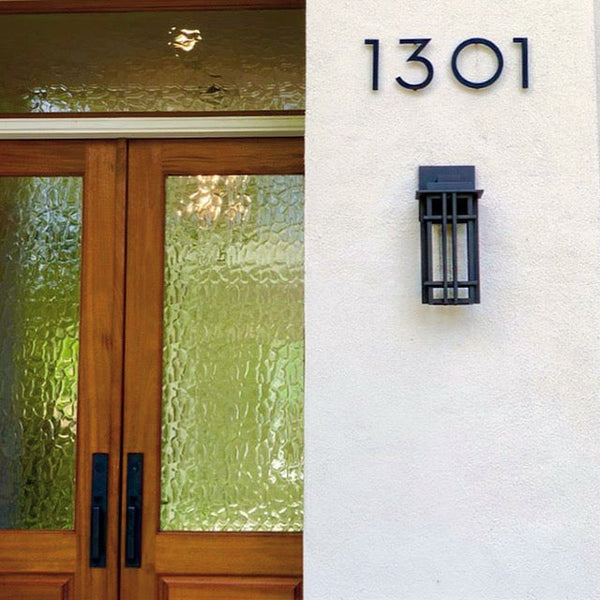
Modern House Numbers designs handcrafted aluminum numbers, letters, and plaques in Tucson, Arizona, giving sellers a way to pair auspicious numerology with clean, architecturally balanced design. Choosing the right number and finish is a small detail that supports a welcoming, energetically aligned entrance.
How Can You Integrate Feng Shui With Modern, Architectural Curb Appeal Details?

Feng shui blends with modern curb appeal by keeping architectural lines clean, balancing fixture materials, and coordinating exterior details as one system. The sections below cover minimalist design, balanced fixtures and hardware, and coordinating house numbers, lighting, and landscaping for a unified look.
How Do Clean Lines And Minimalist Design Support A Calm, High End Feng Shui Look?
Clean lines and minimalist design support a calm, high-end feng shui look by clearing away visual clutter so each architectural detail can breathe. According to a 2025 Century Communities article by Rachel Robinson, open, uncluttered layouts let chi move freely, a principle that translates directly to exterior facades, trim, and hardware. Soft, soothing colors, such as light blues, greens, and earthy neutrals, promote cleanliness and relaxation, and the same restrained palette works well on siding, doors, and window frames. This pairing of geometry and color reads as intentional rather than sparse, giving buyers a sense of calm order the moment they arrive.
In What Ways Can Modern Fixtures, Hardware, And Signage Feel Balanced Rather Than Stark?
Modern fixtures, hardware, and signage feel balanced rather than stark when they mix material elements instead of relying on a single finish. Matte black hardware, brushed aluminum house numbers, and warm wood-toned door accents together represent the metal and wood elements, softening the sharp, minimal lines common in contemporary exteriors. Designers often pair metal with wood, stone, or greenery to restore warmth. This layered approach keeps a home's exterior looking curated and current without tipping into a stark, showroom feel that buyers may find unwelcoming.
How Can You Coordinate House Numbers, Lighting, And Landscaping For A Cohesive Feel?
You can coordinate house numbers, lighting, and landscaping for a cohesive feel by matching their finish, scale, and placement to the home's overall architectural style rather than letting them compete with it. Pairing brushed aluminum house numbers with matching sconces and railing hardware ties the entryway together visually, while well-lit walkways paired with tidy, symmetrical landscaping extend that same order from the street to the front door. Homes with strong curb appeal, including tidy landscaping and well-maintained exteriors, sell for an average of 7% more than comparable homes in the same neighborhood, according to a 2025 University of Texas at Arlington study. Treating numbers, lighting, and plantings as one coordinated system, rather than separate purchases, is what most distinguishes a curated exterior from a merely tidy one. This coordinated exterior sets the stage for choosing house numbers that reinforce it.
How Should You Approach Using Feng Shui To Sell Faster While Featuring Modern House Numbers?
Selling faster with feng shui means aligning tidy, energy-conscious staging with a clean, legible entrance. Modern House Numbers' custom numbers and plaques reinforce this curb appeal strategy, while proven staging data reveals the key takeaways sellers need before listing.
How Can Modern House Numbers' Custom Address Numbers And Plaques Support Feng Shui Focused Curb Appeal?

Modern House Numbers' custom address numbers and plaques support feng shui focused curb appeal by combining legible sizing with architectural design that suits the home's style. Curb appeal includes tidy landscaping, well-maintained exteriors, and an inviting entryway, and a well-designed number finishes that presentation with intention rather than an afterthought. This effect is especially pronounced in slower real estate markets, where sellers need every visual edge. Modern House Numbers crafts each number in finishes that contrast cleanly against stucco or siding. That contrast keeps the entry's "mouth of chi" clear, welcoming buyers and positive energy alike.
What Are The Key Takeaways About Using Feng Shui Tips To Improve Buyer Appeal And Sell Your House Faster?
The key takeaways about using feng shui tips to improve buyer appeal and sell your house faster are that staging, decluttering, and curb appeal shorten time on market.
- Staged homes sell faster than non-staged homes, sometimes up to 87% faster.
- 72% of sellers complete at least one home improvement project before listing.
- According to the Stavros Group, depersonalizing a home, removing photos and niche decor, is an essential feng shui tip for sellers.
Pairing these habits with a stylish, legible house number gives sellers a fast, low-effort way to boost first impressions. With decluttered rooms and a confident address number in place, a home is ready to welcome its next buyer.