 Numbers + Letters
 QuickShip
 Plaques
 Decals
 Custom
 Trade
Trade


Feng shui mailbox and front porch design is the practice of arranging entryway elements, mailbox placement, lighting, color, and materials, to guide qi (vital life energy) smoothly toward a home while inviting wealth and opportunity. Rooted in a 3,500-year-old Chinese tradition, this approach treats the front door as the "mouth of chi" and the mailbox as a symbol of how the world communicates with a household.
This guide covers the foundational principles of qi and the bagua map, mailbox positioning and prosperity-focused colors and materials, house numbers and their numerological meanings, entryway lighting, front porch design and decor, clutter management, and how these tips adapt across home styles while honoring USPS regulations.
Feng shui basics establish qi flow patterns and the bagua wealth zone, explaining why the front door and mailbox function as an energetic checkpoint before energy reaches the home's interior. From there, mailbox positioning, height, and common placement mistakes determine how freely that energy and mail service can reach the property.
Color and material choices, such as red, purple, or gold finishes paired with metal, wood, or brass, carry elemental symbolism that either reinforces or weakens prosperity signals at the curb. House numbers extend this same logic: visibility and sizing strengthen the mouth of chi, while numerology assigns specific meanings, lucky or challenging, to the digits themselves.
Lighting and porch design work together to keep qi moving smoothly and without glare, using warm color temperatures and open, uncluttered layouts. Complementary colors, plants, and symbolic decor, from jade plants to the Golden Toad, add layered prosperity cues near the entry.
Clutter clearing and routine maintenance protect this energy flow over time, with research linking tidiness directly to reduced stress. Finally, adapting these principles to different home styles, corner lots, gated communities, and apartments, while respecting USPS height and clearance rules, ensures feng shui recommendations stay practical and legally compliant nationwide.
What Are The Feng Shui Basics Behind Your Mailbox And Front Porch?
The feng shui basics behind your mailbox and front porch center on qi (energy flow), the bagua map, and the front door as the primary energy entry point. These principles guide door placement, mailbox positioning, and curb-side wealth zones, covered in the sections below.
Why Does The Front Porch And Mailbox Matter In Feng Shui?
The front porch and mailbox matter in feng shui because they form the first checkpoint where qi, or vital life energy, enters a property before reaching the home's interior. Feng shui, which translates to "wind-water," treats the entryway and its fixtures as gateways that shape how energy, opportunity, and communication reach a household. A clean doormat plays a supporting role here, since it greets both visitors and incoming qi at the threshold. Beyond the door itself, symbolic touches carry weight: items such as the Golden Toad, Prosperity Deer, and Qilin are traditionally placed near entries to invite blessings, guard against misfortune, and welcome good fortune. Coins in multiples of three, six, or nine, along with landscape paintings and water features, are also considered supportive of steady wealth flow. In practice, treating the porch and mailbox as intentional design elements, rather than afterthoughts, sets the tone for everything else covered in this guide.
How Does Qi Or Energy Flow To Your Front Door And Mailbox?
Qi flows to the front door and mailbox along clear, well-lit, unobstructed paths, entering the home through what feng shui calls the "mouth of chi." The mailbox itself symbolizes how the outside world communicates with the household, and it is traditionally placed on the Dragon, or left, side of the property as viewed from inside looking out. Clutter, broken fixtures, or blocked walkways interrupt this flow and are believed to dampen positive energy before it reaches the door. For apartment and condo residents, USPS-mandated Cluster Box Units mean the shared mailbox cannot serve this symbolic role, so the unit's own front door becomes the primary mouth of chi instead. In these cases, a well-lit hallway and a welcoming doormat help maintain energy continuity. This flexibility matters: not every home has a private mailbox, yet every home has a threshold worth optimizing.
Which Feng Shui Bagua Areas Relate To Wealth And Opportunities At The Curb?
The feng shui bagua areas related to wealth and opportunities at the curb are mapped from the front door inward, with the wealth zone located at the far left position relative to the entrance. Feng shui itself originated in ancient China more than 3,500 years ago as a system for aligning spaces with qi, the vital life force believed to circulate through every environment. The bagua map divides a home or property into nine distinct zones, each tied to a life aspect such as wealth, career, or relationships, and the front door marks the starting reference point for reading the entire grid. Because the wealth area sits at the left-hand corner from the entrance, curb-side elements like the mailbox, plantings, and lighting positioned there carry added significance for attracting prosperity. Understanding this layout gives homeowners a practical framework for deciding where to place symbolic or functional upgrades. With the basics of qi flow and bagua placement established, the next section turns to positioning the mailbox itself for optimal energy.

How Should You Position Your Mailbox For Optimal Feng Shui Energy Flow?
Mailbox positioning affects how smoothly energy and mail both reach your home. Correct placement depends on street visibility, mounting height, and avoiding common errors that block Qi. The following sections cover ideal placement relative to the front door and street, proper mounting height, and mistakes to avoid.
Where Should Your Mailbox Be Placed In Relation To The Front Door And Street?
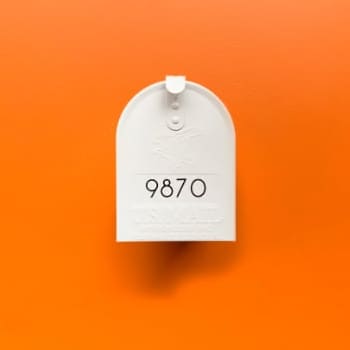
Your mailbox should stand close to the curb, fully visible from the street so both mail carriers and incoming energy have a clear, unobstructed path. Visibility depends on number size: mailbox numbers must measure at least 1 inch tall, while house numbers should reach 4 to 6 inches, mounted at eye level between 4 and 5 feet, in high-contrast colors. Number size should scale with the distance from the street to remain legible. Larger address numbers paired with proper mailbox placement create a stronger, more welcoming entry point for both postal service and positive Qi.
How High Should Your Mailbox Be Mounted For Balanced Energy?
Mailbox height should sit within a balanced range that satisfies both postal function and Feng Shui symbolism. Mounting a mailbox too low or too high violates USPS standards and disrupts the smooth exchange of mail and energy at the property line. Positioning it too close to the curb risks vehicle damage, while overgrown vegetation can physically block Qi and prevent carrier access. A broken or damaged mailbox stops delivery altogether, symbolizing stalled communication and blocked opportunity in Feng Shui practice. According to Mailbox Works, keeping the unit sturdy, clear of plants, and correctly mounted preserves both function and flow. Overlooking mounting height is one of the easiest mistakes to fix, yet it's often the first sign of neglect buyers notice.

How Can You Avoid Common Feng Shui Mailbox Placement Mistakes?
You can avoid common Feng Shui mailbox placement mistakes by checking height, curb clearance, vegetation, and road-side positioning.
- Incorrect mounting height violates USPS standards and disrupts energy exchange.
- Placement too close to the curb risks vehicle damage.
- Overgrown vegetation blocks access and Qi flow.
- A broken, unrepaired mailbox halts delivery and signals blocked communication.
- Rural mailboxes on the wrong roadside disrupt both service and flow.
According to USPS rural delivery guidelines, rural mailboxes belong on the right-hand side of the road in the carrier's direction, mounted on a sturdy post set in concrete.
With placement and height addressed, color and material choices become the next layer of prosperity-focused design.
What Mailbox Colors And Materials Support Prosperity In Feng Shui?
Mailbox colors and materials that support prosperity in feng shui include red, purple, gold, orange, and yellow paired with metal, wood, or matte brass finishes. Below: top prosperity colors, how materials shape energy, and choosing a finish that fits your style.
Which Mailbox Colors Best Support Wealth, Career, And Helpful People Energy?
The mailbox colors that best support wealth, career, and helpful people energy are red, purple, orange, gold, yellow, and lavender, while dark blue channels career luck. Orange performs best on south-facing mailboxes, and yellow or lavender reinforce financial opportunity near the curb.
According to The Spruce, six core hues each align with a feng shui element:
- Red: Fire element, vitality
- Green: Wood element, growth
- Black: Water element, power
- Purple: wealth and abundance
- White: Metal element, clarity
- Gold: Metal element, wealth and prosperity
Color alone isn't enough. A mailbox should avoid unsettling messaging, stay clean, and get repainted once its finish fades, since a worn surface weakens even the most auspicious color.
How Do Metal, Wood, And Other Materials Influence Mailbox Feng Shui?
Metal, wood, and other materials influence mailbox feng shui by carrying their own elemental energy alongside practical durability. Aluminum and stainless steel represent the Metal element, resisting rust and holding up in coastal or extreme-weather climates when marine-grade 316L is used. Cedar and redwood mailboxes represent the Wood element directly, since these rot-resistant woods support growth-oriented energy. Brass and copper mailboxes develop a patina over time, and in feng shui this aging process symbolizes accumulating prosperity rather than decline.
Marine-grade 316L stainless steel is the strongest choice for harsh coastal climates. Pairing a Wood-element material like cedar with matte brass hardware reinforces both growth and creativity at the entry, a combination many feng shui-minded homeowners overlook.
How Can You Choose A Mailbox Finish That Balances Style And Feng Shui?
You can choose a mailbox finish that balances style and feng shui by matching the design to your home's architecture while favoring auspicious colors and elements. A new mailbox won't single-handedly raise a home's value, but it helps the property show better and creates a positive first impression for guests, buyers, and mail carriers alike, according to Realtor.com.
Consistency matters as much as color. A brushed aluminum or matte black mailbox suits modern homes, while dark bronze or matte brass suits traditional ones. Choosing a style that visually matches the house keeps the entryway cohesive rather than mismatched, which supports smoother energy flow from a feng shui perspective. With mailbox color and material set, clear house numbers complete the entryway's feng shui.
How Can House Numbers And Address Visibility Enhance Feng Shui Energy?
House numbers and address visibility enhance Feng Shui energy by strengthening the "mouth of chi" that leads Qi toward a property. The sections below cover why visibility matters, how to size and position numbers correctly, and how modern, minimalist designs can honor traditional Feng Shui principles.
Why Is Clear,Readable House Number Visibility Important In Feng Shui?
Clear, readable house number visibility is important in Feng Shui because it directly affects how strongly Qi can locate and enter a property. Numbers that are faded, obscured, or too small create confusion at the property's threshold, weakening the flow of opportunity before it reaches the front door. According to USPS address visibility standards, house numbers should measure 4 to 6 inches tall, sit at eye level between 4 and 5 feet, and use high-contrast lettering visible from the street. Monthly maintenance checks should confirm numbers remain legible, since faded or damaged digits mirror blocked communication in Feng Shui terms. Modern number styles range from handcrafted designs to budget options under $10, though quality pieces typically cost $20 to $100.
How Should You Size And Position House Numbers For Smooth Energy Flow?
House numbers should be sized and positioned by matching the digit height to the distance drivers and visitors view them from, then mounting them at a consistent, unobstructed eye level near the front door. Larger numbers work best on long driveways or busy streets, while smaller numbers suit close-set urban entries. Positioning numbers directly above or beside the door, rather than tucked behind pillars or plants, keeps the "mouth of chi" clearly marked. Level, symmetrical placement supports balanced energy, whereas crooked or uneven mounting can create a subtle sense of disorder at the entrance. Keeping the surrounding wall or mailbox surface clean and well-lit further ensures numbers remain a strong, uninterrupted signal for arriving energy and visitors alike.
How Can You Use Modern, Minimalist Numbers While Respecting Feng Shui Principles?
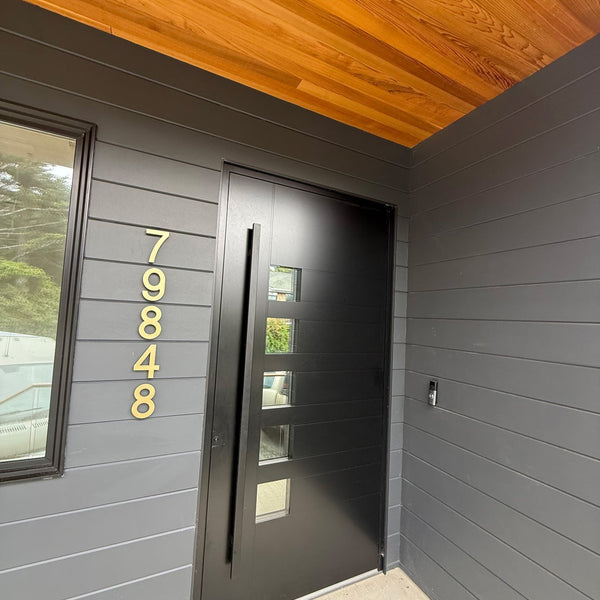
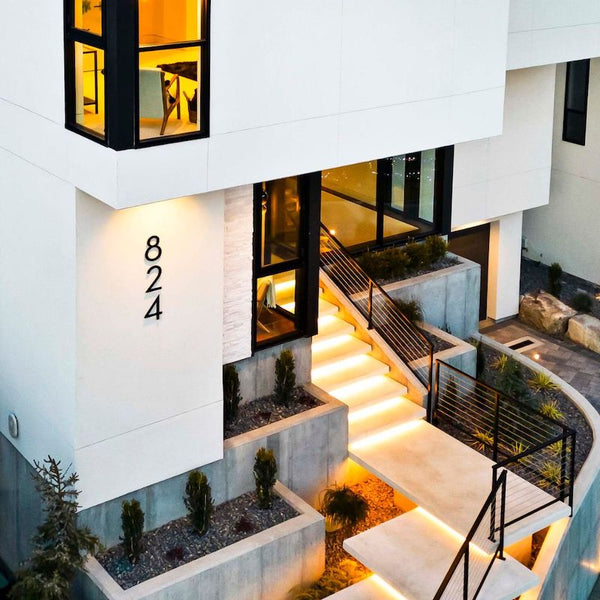
Modern, minimalist numbers can be used while respecting Feng Shui principles by prioritizing high-contrast finishes, solid materials, and uncluttered fonts that keep the address instantly legible. Sleek, sans-serif styles satisfy the clarity that both USPS and Feng Shui emphasize, since clean lines create less visual noise than ornate or script fonts. Metal finishes such as brushed aluminum align with the Metal element's clarity, while matte black options draw on the Water element's power and wealth flow. Pairing a minimalist number with proper lighting and placement does more for entrance energy than elaborate decoration ever could. Choosing a finish is also worth weighing against its numerological meaning.

What Do Different House Numbers Mean In Feng Shui Numerology?
House numbers carry specific numerological weight in Feng Shui, with certain digits linked to wealth, happiness, or misfortune. This section explains:
- How to calculate your house number's Feng Shui value.
- Which prosperity qualities popular numbers represent.
- How to balance a challenging number you cannot change.
How Do You Calculate Your House Number For Feng Shui Meanings?
You calculate your house number for Feng Shui meanings by reducing multi-digit addresses to a single root number. Add each digit together, and if the sum is still two digits, add those digits again until one number remains. For example, house number 123 becomes 1+2+3=6, while 4567 reduces to 4+5+6+7=22, then 2+2=4. This single-digit result carries the numerological meaning applied to the property, separate from the mailbox and porch elements discussed earlier, such as color or lighting. Practitioners treat this root number as the address's core energetic signature. Once calculated, homeowners can look up the prosperity qualities tied to that specific digit before deciding whether any adjustments are needed.
What Prosperity Qualities Are Linked To Popular House Numbers?
Prosperity qualities linked to popular house numbers vary by digit, with some numbers considered auspicious and others considered challenging in Chinese numerology. The associations include:
- Number 8: Symbolizes wealth and financial abundance.
- Number 9: Represents eternity and lasting success.
- Number 6: Signifies happiness and smooth harmony.
- Number 2: Reflects partnership and cooperative energy.
- Number 4: Considered unlucky because it sounds like the word for "death."
- Number 5: Associated with "crying" and instability.
- Number 7: Linked to deception and mistrust.
- Master numbers 11, 22, and 33: Carry amplified meanings of leadership, soulmate connection, and family unity.
These associations stem from long-standing Chinese numerology traditions rather than universal rules, so many homeowners weigh them as guidance rather than strict requirements.
How Can You Balance Challenging House Number Energies If You Cannot Change Them?
You can balance challenging house number energies by offsetting the number with strong supporting elements elsewhere at the entry. Since the root number itself cannot be altered without changing addresses, Feng Shui practice focuses on reinforcing positive Qi around it instead. Keeping the entryway exceptionally clean, well-lit, and free of obstruction helps counteract a difficult digit's energy. Choosing an auspicious finish or well-crafted signage for the number itself can also shift how the address is perceived and experienced daily. In practice, consistent maintenance and intentional design often matter more to overall energy flow than the number alone. With the numerological meaning established, lighting choices become the next factor shaping Qi at the entrance.
How Should You Light Your Mailbox And Front Porch For Positive Qi?
Positive Qi at the entry depends on light placement, warm color temperature, and glare-free fixtures. The following sections cover where to install lighting, which color temperature works best, and how solar or low-profile fixtures avoid harsh glare.
Where Should You Place Lighting Around The Mailbox And Entry For Safety And Energy?
Lighting around the mailbox and entry should be placed along the walkway, at the mailbox post, and beside the front door to guide Qi smoothly toward the home. A well-lit path removes shadows that can trap stagnant energy and helps visitors, and the postal carrier, see the house numbers clearly after dark. Path lights spaced evenly along the walkway prevent dark gaps, while a fixture mounted near the mailbox itself illuminates both the box and any nearby house numbers.
Porch light near the door completes the sequence, framing the entrance as a bright, welcoming "mouth of chi." Skipping any one of these three zones, mailbox, path, and door, creates an uneven flow that feels less inviting and less secure.
What Color Temperature And Brightness Of Light Work Best For Feng Shui?
The best color temperature for Feng Shui outdoor lighting is 2700K-3000K warm white light. According to Tru-Scapes' landscape lighting guide, this warm range is the industry standard for residential outdoor fixtures because it reads as inviting rather than clinical. Cooler temperatures of 5000K or higher feel harsh and sterile, working against the calm, welcoming energy a front entry is meant to project.
Brightness matters as much as color. Soft, evenly diffused light supports steady Qi flow, while overly bright or flickering fixtures create visual tension at the entry. Pairing warm 2700K-3000K bulbs with moderate brightness levels is the most practical way to balance safety needs with a calming, prosperity-friendly atmosphere at the mailbox and porch.
How Can You Use Solar And Low-Profile Lighting Without Creating Harsh Glare?
Solar and low-profile lighting can avoid harsh glare by using the lowest light level needed and adding shades, diffusers, or frosted covers. Solar fixtures are relatively maintenance-free and won't raise electric bills, though their output can drop 30-50% in winter unless the panels are sized for shorter daylight hours.
Frosted glass or acrylic covers soften solar light effectively, and cleaning solar panels regularly prevents performance loss over time. Practical steps include:
- Choosing fixtures with built-in diffusers or frosted lenses.
- Positioning solar lights away from direct line of sight at the entry.
- Wiping panels monthly to maintain consistent charging and output.
- Selecting the dimmest setting that still ensures safe visibility.
With glare-free lighting in place, attention naturally shifts to how the porch itself is arranged.

How Can Front Porch Design Invite Wealth, Opportunities, And Positive Energy?
Front porch design invites wealth, opportunities, and positive energy through an open layout, thoughtfully arranged furniture and decor, and a well-maintained front door. Together, these elements create clear pathways for Qi entering the home. This section covers porch openness, furniture and decor arrangement, and front door design choices.
What Makes A Front Porch Feel Open, Welcoming, And Prosperity Friendly?
A front porch feels open, welcoming, and prosperity friendly when it has a clear, uncluttered entryway and a door that opens and closes smoothly. A clear, well-lit path leading to the door further supports smooth energy flow, while furniture should be arranged to invite conversation rather than block entry. An open, spacious porch reads as welcoming both to Qi and to visitors. Design professionals often observe that a porch cluttered with tools, bikes, or excess decor sends a subtle message of stagnation rather than opportunity.
How Can You Arrange Furniture, Doormats, And Decor To Support Feng Shui?
Furniture, doormats, and decor can be arranged to support Feng Shui by keeping pathways clear and creating a natural flow toward the front door. Chairs and benches should sit to the side of the entry rather than directly blocking it, encouraging conversation without obstructing Qi. A doormat placed squarely in front of the door welcomes visitors and symbolically clears negative energy before it enters the home. Decor items, such as small planters or lanterns, work best in pairs or odd-numbered groupings that feel balanced rather than crowded. Homeowners should avoid overloading the porch with excess furniture or seasonal decorations that block sightlines to the door. A porch that feels curated rather than cluttered signals order and readiness for new opportunities.
Which Front Door Design Choices Most Strongly Impact Energy Flow?
The front door design choices that most strongly impact energy flow are the door's condition, its proportion to the house, and how smoothly it operates. A door in poor repair, with peeling paint, dents, or a sticking latch, blocks Qi and signals stagnation rather than opportunity. Doors sized appropriately for the entryway, neither dwarfed by an oversized porch nor overwhelmed by a tiny frame, support balanced energy at the threshold. Hardware in good working order, including hinges, locks, and handles, allows the door to swing freely without obstruction. Homeowners who invest in a well-maintained, appropriately scaled front door tend to notice an entry that feels more inviting to guests and more aligned with the home's overall curb appeal. With the door's condition addressed, color choices add another layer of prosperity energy.
Which Colors, Plants, And Decor Elements Support A Prosperous Front Porch?
Prosperous front porches combine specific colors, plants, and symbolic decor to attract wealth energy. The following sections cover door colors, planters, and lucky entry symbols that reinforce positive Qi.
Which Front Door And Porch Colors Symbolize Wealth And Good Fortune?
The colors that symbolize wealth and good fortune on a front door are red, black, and white. Red represents recognition and vitality, black signals power and wealth, and white conveys clarity, according to Feng Shui design principles from Simple Shui. Matte brass and gold hardware amplifies this effect, since these metallic tones symbolize wealth directly on door handles, kickplates, and house number finishes.
A door's condition matters as much as its color. A front door in excellent condition, free of chipped paint or sticking hinges, signals flowing opportunities, while a worn or damaged door suggests blocked prosperity. Homeowners should treat color choice and upkeep as a single decision, since a beautifully colored door with peeling paint sends a contradictory message to visitors and to the energy entering the home.
How Can You Choose Plants And Planters That Attract Prosperity?
Plants and planters that attract prosperity include jade plants, lucky bamboo, money trees, pothos, and snake plants. Each carries a distinct symbolic role at the entry:
- Jade plant: Represents wealth and prosperity through its coin-shaped leaves.
- Lucky bamboo: Symbolizes fortune, with stalk count carrying meaning (eight stalks signify prosperity).
- Money tree: Attracts financial luck and is a common porch or entry choice.
- Pothos: Represents forgiveness and ongoing prosperity, and tolerates low-maintenance care well.
- Snake plant: Offers protective energy rather than wealth attraction.
Round-leafed varieties generally support harmony better than sharp, spiky foliage, which Feng Shui associates with cutting or aggressive energy. Selecting planters that complement the home's exterior finish, rather than mismatched terracotta or plastic, reinforces the visual cohesion that supports strong curb-side energy flow.

Which Symbols, Artwork, And Textures Are Considered Lucky At The Entry?
The symbols, artwork, and textures considered lucky at the entry include the Golden Toad, Prosperity Deer, Qilin, coins, water features, and abundance-themed paintings. The Golden Toad represents prosperity and wealth, the Prosperity Deer signifies blessings and longevity, and the Qilin acts as a guardian symbol inviting good fortune. Coins placed in multiples of three, six, or nine are believed to attract wealth when displayed near the entry.
Water features support wealth flow, and landscape paintings depicting abundance, such as flowing rivers or lush scenery, reinforce this same symbolism visually. Mirrors can expand a cramped entry space, but they should never directly reflect the front door, since this is thought to bounce incoming energy back outside before it settles in the home.
In practice, layering just two or three of these elements, rather than crowding the porch with every symbol available, tends to produce a cleaner, more intentional entry that reads as curated rather than cluttered. Thoughtfully chosen colors, plants, and symbols work together with well-maintained hardware to create a porch that feels genuinely prosperous.
How Can You Keep Your Mailbox And Porch Clutter Free For Better Feng Shui?
Keeping your mailbox and porch clutter free means removing debris, clearing paths, and maintaining fixtures regularly. This directly reduces stress and supports smooth Qi flow. The following sections cover why clutter disrupts energy, how often to maintain curbside elements, and simple daily routines.
Why Is Clutter At The Mailbox And Front Porch So Problematic In Feng Shui?
Clutter at the mailbox and front porch is problematic because it physically blocks the "mouth of chi," preventing positive energy from entering the home. Beyond symbolism, clutter carries measurable psychological costs. According to a University of Connecticut study, removing clutter directly reduces stress, with benefits including reduced anxiety, improved focus, increased productivity, and better mood. A porch cluttered with packages, dead leaves, or broken items sends a subconscious signal of neglect to both residents and visitors. In feng shui terms, this stagnation mirrors blocked opportunity and stalled communication with the outside world. Clearing this space is less about aesthetics and more about restoring the energetic gateway that governs how prosperity and information flow into the household.
How Often Should You Maintain, Repair, Or Replace Curbside Elements?
Curbside elements should be maintained weekly, inspected monthly, deep-cleaned seasonally, and reviewed annually for repairs or replacement. Consistent upkeep prevents the slow buildup of clutter that disrupts energy flow. A practical maintenance schedule includes:
- Weekly: Sweep the porch, wipe down the mailbox, and clear any obstacles from the walkway.
- Monthly: Inspect for damage, verify house number visibility, and test outdoor lighting.
- Seasonal: Deep clean surfaces and trim overgrown vegetation blocking the path or mailbox.
- Annual: Inspect the roofline, repaint worn surfaces, check hardware, and power wash exterior areas.
Following this rhythm keeps curbside energy consistently open rather than letting neglect accumulate unnoticed.
What Simple Routines Help You Keep The Entry Clean, Organized, And Energetic?
Simple routines that keep the entry clean, organized, and energetic include a daily "ten-second tidy," a designated spot for mail and packages, and quick visual scans before entering the home. The "ten-second tidy" habit, which prevents overwhelm from ever building up, only takes a moment but stops clutter before it accumulates. Assigning a specific tray or basket for incoming mail avoids loose papers piling on the porch, while a quick nightly glance at the entryway catches stray shoes, tools, or debris before they become permanent fixtures. In practice, these small habits matter more than occasional deep cleans because feng shui responds to sustained conditions, not one-time efforts. A porch tidied for ten seconds daily maintains stronger, more consistent Qi than one overhauled sporadically. With these routines established, attention naturally turns to adapting these principles across different home styles.
How Can You Adapt Feng Shui Mailbox And Porch Tips For Different Home Styles?
Feng shui mailbox and porch adaptations vary by home style, requiring different adjustments for urban, suburban, and rural properties, for apartments and shared entries, and for unique layouts such as long driveways, corner lots, and gated communities.
- Urban, suburban, and rural homes
- Apartments, condos, and shared entries
- Long driveways, corner lots, and gated properties
How Should Feng Shui Entry Tips Change For Urban, Suburban, And Rural Homes?
Feng shui entry tips should change for urban, suburban, and rural homes based on space, visibility, and traffic patterns. Urban homes with narrow lots benefit from vertical elements, such as slim wall-mounted mailboxes that maximize energy flow without crowding the entry. Suburban homes typically have more room to apply full bagua principles, positioning the mailbox on the Dragon side of the property with layered lighting and plantings. Rural homes often sit far from the road, so long, well-lit pathways and sturdy, clearly visible mailboxes matter more than elaborate décor. Urban properties benefit most from vertical, space-saving feng shui choices, since ground-level room is simply too limited for elaborate layouts.
How Can You Apply These Principles To Apartments, Condos, Or Shared Entries?
You can apply these principles to apartments, condos, or shared entries by treating the unit's own front door as the primary mouth of chi, since a shared building entrance offers less individual control over the mailbox area. Residents can still optimize their hallway approach with a welcoming doormat, a small plant, and good lighting right outside their door. Where a private mailbox isn't possible, keeping shared mailbox areas tidy and reporting damaged units helps preserve communal energy flow for everyone in the building.
What Adjustments Work For Long Driveways, Corner Lots, And Gated Properties?
The adjustments that work for long driveways, corner lots, and gated properties are placement changes that preserve visibility, access, and Qi flow. Long driveways call for sturdy, well-lit mailboxes near the road so energy and mail carriers can reach the entry without obstruction. Corner lots should mount the mailbox on the primary address street, ideally visible from both roads, while respecting local setback rules and sightlines for drivers. Gated properties need a different balance. USPS requires gate access via key or code, and communities often rely on centralized, secure mailbox systems that stay visible, accessible, and well-maintained. These layout differences matter less than staying within USPS rules nationwide.
How Can You Honor Local U.S. Mailbox Rules While Still Following Feng Shui?
You can honor local U.S. mailbox rules while still following feng shui by treating USPS regulations as the fixed framework and layering color, material, and lighting choices inside it. The following sections cover USPS height guidelines, balancing postal rules with feng shui, and when to consult local codes.
What U.S. Postal Service Guidelines Affect Mailbox Placement And Height?
USPS guidelines require mailboxes to sit 41 to 45 inches from the road surface to the mailbox bottom, according to USPS mailbox regulations. This height range applies nationwide and determines where a curbside mailbox can legally be installed, regardless of any feng shui preference for placement. A mailbox mounted outside this range risks non-delivery, since carriers must be able to reach the box safely from a vehicle. Homeowners should measure from the road surface, not the curb edge, to confirm compliance before making feng shui-driven adjustments like new posts or decorative brackets.
How Can You Balance Postal Regulations With Feng Shui Recommendations?
You can balance postal regulations with feng shui recommendations by keeping USPS height and clearance rules fixed while adjusting color, material, landscaping, and lighting around them. USPS regulations take legal precedence over any feng shui guideline, so placement and height are non-negotiable. Within those constraints, homeowners still have room to choose a red or brass mailbox for wealth energy, add warm lighting, or clear vegetation for smoother qi flow. In practice, this layered approach works best: treat compliance as the foundation and feng shui as the finishing design layer, rather than trying to force symbolic placement that violates a hard measurement rule.
When Should You Consult Local Codes Or Professionals About Curbside Changes?
You should consult local codes or professionals when curbside changes involve corner lots, shared streets, or structural additions like new posts or gates. Corner lot properties should place the mailbox on the primary address street, staying visible from both streets when possible. Homeowners should also check with local officials or contractors in these situations:
- When a property sits on a corner lot and setback requirements are unclear.
- When new landscaping, lighting, or a mailbox post might create a sight-line obstruction for drivers.
- When a change could conflict with local setback ordinances rather than just USPS rules.
- When a gated or shared-access property requires coordination beyond standard curbside placement.
Consulting local codes or professionals before installation prevents costly rework and keeps both delivery access and feng shui goals intact. This final step of confirming code compliance completes the practical foundation for the rest of your entry design.

How Do Modern, Architect-Designed House Numbers Support Feng Shui Curb Appeal?
Architect-designed house numbers support Feng Shui curb appeal by strengthening the entry's first impression, guiding qi smoothly toward the door, and preventing visual clutter that blocks energy flow. The sections below cover why quality and visibility matter, how to coordinate numbers with the mailbox and door, and which design mistakes to avoid.
Why Do High Quality, Well Designed Numbers Matter For Energy, First Impressions, And Safety?
High-quality, well-designed house numbers matter for energy, first impressions, and safety because they signal an organized, cared-for home the moment qi enters through the front door. A crisp, legible number set removes the visual friction that Feng Shui associates with stagnant or confused energy at the threshold. Lighting plays a direct role in this equation. A 2025 AHS survey of 995 homeowners found that exterior lighting influences curb appeal perception for 30% of buyers, which reinforces why illuminated, high-contrast numbers double as both an energy cue and a nighttime safety feature for guests and emergency responders alike.
In our experience, oversized or poorly lit numbers rank among the most overlooked curb-appeal fixes, quietly undermining an otherwise well-kept entry.

How Can You Coordinate Mailbox, House Numbers, And Front Door For A Cohesive Look?
You can coordinate the mailbox, house numbers, and front door for a cohesive look by matching finishes, colors, and design style across all three elements so qi moves through a unified, uncluttered entry sequence. A mismatched set of fixtures reads as visual noise, which Feng Shui treats as a subtle block to smooth energy flow.
Practical coordination steps include:
- Matching metal finish, such as pairing brushed aluminum numbers with a matching mailbox and door hardware.
- Aligning color palettes, such as gold or brass tones for prosperity across numbers and door hardware.
- Choosing a consistent typeface style, from minimalist sans-serif to classic script, across numbers and any address signage.
- Keeping mounting height and spacing proportional so the eye reads the entry as one composition, not separate pieces.
What Design Mistakes With Numbers And Signage Can Disrupt Front Entry Qi?
Design mistakes with numbers and signage that disrupt front entry qi include choices that create clutter, confusion, or poor visibility at the "mouth of chi." These errors work against the smooth, welcoming energy Feng Shui prioritizes at the threshold.
Common mistakes to avoid are:
- Undersized or low-contrast numbers that force visitors to search for the address, stalling energy at the door.
- Clashing fonts or finishes between the mailbox, numbers, and door hardware, breaking visual harmony.
- Faded, cracked, or peeling number signage, which Feng Shui associates with blocked or declining communication.
Clear, well-coordinated numbers naturally set the stage for lighting and color choices covered next.
How Should You Approach Feng Shui Mailbox And Front Porch Design With Modern House Numbers?
Feng Shui mailbox and front porch design works best when USPS compliance, prosperity colors, and modern house numbers align. Well-crafted numbers anchor curb appeal while respecting postal rules. The following sections show how Modern House Numbers supports this balance and summarize the article's key takeaways.

How Can Modern House Numbers Products Help Enhance Feng Shui Curb Appeal And Prosperity?
Modern House Numbers products help enhance Feng Shui curb appeal and prosperity by pairing USPS-compliant sizing with clean, legible design that supports strong Qi flow. USPS guidelines set mailbox height at 41-45 inches from the road surface and curb distance at 6-8 inches. Modern House Numbers crafts bold, high-contrast numbers that compliment these standards while elevating a home's architectural style. According to the National Association of Realtors, 92% of REALTORS recommend curb appeal upgrades, and homes with strong curb appeal sell for up to 7% more. A well-placed house number combines postal compliance, prosperity symbolism, and resale value in one simple upgrade.
What Are The Key Takeaways About Feng Shui Mailbox And Front Porch Tips To Improve Energy Flow And Prosperity We Covered?
The key takeaways about Feng Shui mailbox and front porch tips to improve energy flow and prosperity are that USPS compliance and Feng Shui principles work together rather than against each other. Positioning, color, material, and lighting choices all shape how welcoming and prosperous an entry feels.
- Keep the mailbox and house numbers within USPS height and distance rules while choosing colors like red, black, or gold for prosperity.
- Maintain clear, unobstructed paths and clutter-free porches to let Qi flow freely.
- Light the entry with warm 2700K-3000K fixtures for a welcoming glow without harsh glare.
- Choose durable, well-designed house numbers that boost both curb appeal and resale value.