 Numbers + Letters
 QuickShip
 Plaques
 Decals
 Custom
 Trade
Trade


The finish on your house numbers is a surface coating property that controls how light reflects off the material; gloss finishes reflect light in a specular, mirror-like direction, while matte finishes scatter light through diffuse reflection. This single distinction drives meaningful differences in appearance, street-level readability, long-term durability, architectural compatibility, and overall selection criteria.
Gloss house numbers produce deeper color saturation and a polished, eye-catching look, yet their reflective surface can create bright hotspots that obscure legibility in direct sunlight. Matte finishes appear softer and more subdued, offering consistent luminance that keeps numerals readable across changing lighting conditions.
Durability and maintenance demands also diverge. Gloss surfaces resist weather exposure well and clean easily because their less-porous coating repels dirt, but they reveal scratches and fingerprints quickly. Matte coatings conceal minor scuffs, dust, and everyday marks, though they may require more careful cleaning over time to avoid visible wear from scrubbing.
Architectural style plays a direct role in which finish works best. Mid-century modern homes align with brushed aluminum or matte black for their minimalist, non-reflective aesthetic, while colonial and traditional facades favor polished brass or bronze for a refined, symmetrical look. Exterior materials like stucco, brick, and stone also influence the ideal pairing.
Choosing between matte and gloss also involves budget considerations, environmental factors (powder coatings produce virtually no VOCs), and local building code requirements that mandate specific height and contrast standards for emergency responder visibility.
What Are the Main Differences Between Matte and Gloss House Number Finishes?
The main differences between matte and gloss house number finishes involve light reflection, tactile quality, color appearance, and performance under varying lighting. The following sections break down look and feel, lighting behavior, and color rendering.
How Does the Look and Feel of Matte Compare to Gloss for House Numbers?
The look and feel of matte house numbers differs from gloss primarily in how each surface interacts with light. Gloss is an optical property indicating how well a surface reflects light in a specular, mirror-like direction; high-gloss surfaces reflect light at the angle of incidence, while matte surfaces scatter light through diffuse reflection, according to DeFelsko.
Smooth textures are standard for high-gloss applications, enhancing visual appeal with a sleek, polished look. However, glossy surfaces are more prone to showing wear and tear early in their service life. Matte finishes, by contrast, effectively conceal marks, dust, and fingerprints that would be immediately visible on a glossy surface. For house numbers that receive frequent contact during cleaning or installation adjustments, this practical advantage makes matte a forgiving choice.
In What Lighting Conditions Do Matte and Gloss Finishes Perform Best?
Matte and gloss finishes perform best in different lighting conditions due to their distinct reflectance properties. Gloss finishes excel in controlled, even lighting where specular reflection creates a crisp, eye-catching appearance. Matte finishes perform best in bright or variable sunlight, where scattered diffuse reflection prevents distracting hotspots.
According to a perceptual study published in the National Library of Medicine, judging the intrinsic material properties of 3D objects is significantly challenged by diverse lighting environments, as diffuse and specular reflections mix in different proportions across a surface. For south-facing or sun-drenched facades, matte or satin finishes typically maintain more consistent readability throughout the day. Gloss numbers on shaded porches or north-facing walls, though, can add striking visual depth without glare concerns.
Are There Differences in Color Rendering Between Matte and Gloss Finishes?
There are notable differences in color rendering between matte and gloss finishes. A glossy finish often appears to have deeper color saturation and more muted highlights, while a matte finish can appear lighter or more muted because diffuse reflection spreads light across the surface, as noted by Datacolor.
This means the same black house number can look richer and more intense in gloss, yet softer and more understated in matte. Homeowners matching numbers to existing trim or hardware should request samples in both finishes whenever possible, since the perceived color shift between them can be significant enough to affect overall curb appeal harmony.
With these visual distinctions in mind, understanding how each finish affects street-level readability becomes the next consideration.
How Do Matte and Gloss House Numbers Affect Visibility and Readability?

Matte and gloss house numbers affect visibility and readability differently based on light reflection, viewing distance, and weather. The sections below cover street-level legibility, glare impact, and weather-related visibility differences.
Which Finish Is More Legible From the Street or Curb?
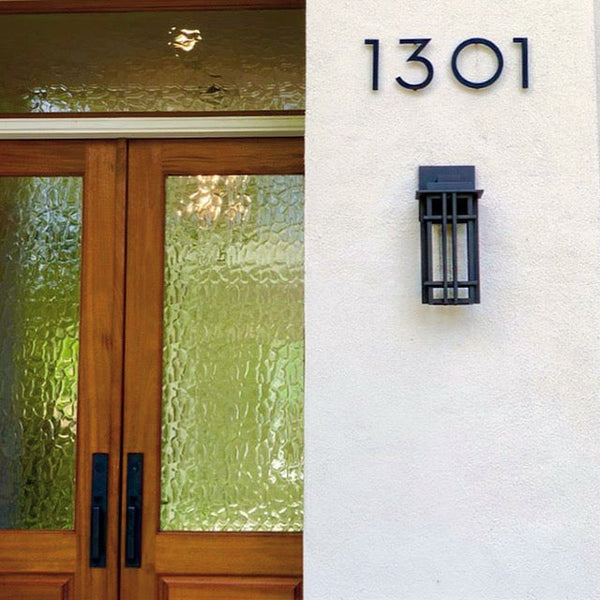
The finish more legible from the street or curb depends on contrast with the mounting surface and numeral sizing. High-contrast pairings, such as matte black numbers on a light wall, produce consistent readability without relying on reflected light to define letterforms.
Numeral height plays an equally critical role. Local fire codes, such as those in Los Angeles, specify that address numeral height must be at least 2 inches taller than 1/10 of the setback distance from the street to ensure emergency responder visibility. A home set back 50 feet, for example, requires numerals at least 7 inches tall regardless of finish.
Gloss numbers can appear sharper up close, but at typical curb distances, that advantage diminishes. Prioritizing strong contrast and code-compliant sizing will improve legibility far more than finish selection alone.
Does Glare or Reflection Impact House Number Visibility in Either Finish?
Glare and reflection do impact house number visibility, particularly with gloss finishes. Gloss surfaces reflect light in a specular, mirror-like direction, which can produce bright hotspots that temporarily obscure the numeral shape when sunlight hits at certain angles.
According to Coohom, designers often choose matte finishes for address numerals to limit specular reflections and ensure consistent luminance uniformity. This is especially relevant for south- or west-facing installations that receive prolonged direct sunlight throughout the day.
Matte finishes scatter light diffusely across the surface, so the numeral remains readable from multiple viewing angles without sudden washout. For homes where the address plaque catches intense afternoon sun, a matte finish is the more reliable choice for all-day legibility.
How Do Weather Conditions Influence the Visibility of Matte vs Gloss?
Weather conditions influence the visibility of matte vs gloss house numbers in distinct ways. Rain creates a thin water film on gloss surfaces that amplifies specular reflection, potentially causing glare under streetlights or headlights at night. Matte finishes, because they scatter light diffusely, remain more consistently readable in wet conditions.
Overcast skies and fog reduce ambient light levels, which can make low-contrast installations harder to read regardless of finish. In these conditions, gloss numbers may actually benefit from catching whatever directional light is available, while matte numbers depend more heavily on strong color contrast against the wall.
Dust and pollen accumulation dulls gloss surfaces over time, gradually reducing their reflective advantage. For regions with frequent rain, humidity, or coastal salt exposure, combining the right finish with durable powder-coated construction helps maintain long-term readability.
What Maintenance and Durability Considerations Apply to Matte vs Gloss House Numbers?

Maintenance and durability considerations for matte vs gloss house numbers involve differences in scratch resistance, cleaning ease, and long-term weathering. The following subsections break down how each finish performs over time.
How Do Matte and Gloss Finishes Resist Scratches, Fading, and Weather?
Matte and gloss finishes resist scratches, fading, and weather in different ways. According to House of Signs, glossy finishes are generally more resistant to weather conditions, while matte finishes are preferred for their ability to hide fingerprints and minor surface scuffs. The smooth surface of a gloss coating repels moisture and UV exposure more effectively, which slows fading in direct sunlight. Matte textures, with their slightly rougher profile, absorb minor abrasions without showing obvious marks. For house numbers exposed to harsh climates, gloss tends to hold up better against the elements; matte better conceals the everyday wear that accumulates between cleanings.
Is One Finish Easier to Clean or Maintain Over Time?
Yes, one finish is easier to clean over time. Gloss house numbers have a less porous surface, so dirt, pollen, and grime wipe away with minimal effort. Matte finishes can absorb surface contaminants more readily, and repeated scrubbing may gradually dull the texture. However, matte surfaces conceal dust and fingerprints between cleanings, reducing how often you need to maintain them. For homeowners who prefer low-visibility upkeep, matte requires less frequent attention. For those who want a spotless, reflective look, gloss cleans faster but shows every smudge. The practical choice depends on whether you prioritize ease of wiping or tolerance for visible marks.
Are There Long-Term Durability Differences Between Matte and Gloss House Numbers?
Yes, there are long-term durability differences between matte and gloss house numbers. Gloss coatings form a denser, smoother polymer layer that resists moisture penetration and chemical exposure over years of outdoor use. Matte coatings, while structurally sound, may show subtle wear patterns sooner because their textured surface is more susceptible to dirt accumulation and micro-abrasion. Both finishes perform well when applied as thermoset powder coatings, which create cross-linked polymer chains resistant to impact and chemicals. The real difference emerges over five to ten years: gloss retains its original sheen longer, while matte ages more gracefully by masking imperfections. With understanding of each finish's maintenance profile, choosing the right style for your home becomes straightforward.
Which Finish Complements Different Architectural Styles and Home Designs?

The best finish for house numbers depends on your home's architectural style, exterior materials, and color palette. The subsections below cover how exterior surfaces influence finish selection and which finishes suit modern, traditional, and mid-century homes.
Does Home Exterior Material or Color Influence the Best Finish Choice?
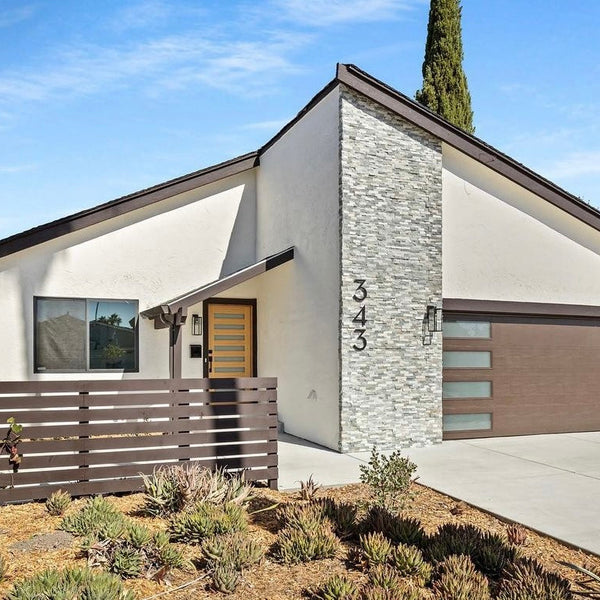
Home exterior material and color directly influence the best finish choice for house numbers. Dark-toned facades, such as charcoal siding or deep brick, pair well with gloss finishes that create visible contrast. Lighter exteriors, including white stucco or pale stone, benefit from matte finishes that avoid harsh reflective glare. Natural materials like wood and brick tend to complement matte or brushed textures, which echo the organic, non-reflective quality of the surface. Smooth, painted exteriors can support either finish, though glossy numbers on a glossy wall may compete visually. Matching the reflectivity level of your house numbers to the surrounding material creates a cohesive, intentional look.
Which Finish Is Preferred for Modern, Traditional, or Mid-Century Homes?
The preferred finish varies by architectural style. Modern and contemporary homes favor matte black or brushed metal finishes that reinforce clean lines and minimalist aesthetics. According to Dropcap Studio, architectural guidelines for mid-century modern homes recommend materials like brushed aluminum or matte black to align with the style's emphasis on sleek, non-reflective surfaces. Colonial and traditional homes often favor polished brass or bronze finishes that complement symmetrical facades and stately proportions. For most homeowners, matching finish reflectivity to the home's design era produces the most visually coherent result.
With architectural style guiding finish choice, practical factors like budget and sustainability round out the decision.
What Should You Consider When Choosing the Best Finish for Your House Numbers?
You should consider budget, installation requirements, and environmental impact when choosing the best finish for your house numbers. The sections below cover cost and mounting factors alongside sustainability differences between matte and gloss.
What Budget and Installation Factors Might Influence the Choice?
The budget and installation factors that might influence the choice include powder coating costs, mounting surface compatibility, and hardware requirements. According to Absolute Powder Coating, industrial powder coating services typically cost between $50 and $100 per square foot, with pricing varying based on powder type, transfer efficiency, and part complexity. Because matte and gloss finishes use the same base coating process, the price difference between them is often minimal.
Installation surface matters just as much as finish selection. Metal address numbers work well on stucco, wood, brick, concrete, and stone, though they are not recommended for direct mounting on vinyl siding due to expansion and contraction issues. Concealed mounting hardware, like the templates included with Modern House Numbers products, simplifies installation regardless of finish.
Are There Environmental or Sustainability Differences Between Matte and Gloss?
There are notable environmental and sustainability differences between matte and gloss finishes, though both benefit from the same eco-friendly coating technology. According to a U.S. Environmental Protection Agency review published via ScienceDirect, modern powder coatings contain virtually no volatile organic compounds (VOCs) and allow recovery and reuse of overspray, significantly reducing hazardous waste compared to liquid paints.
Neither matte nor gloss powder coating produces meaningfully more waste than the other during application. The real sustainability distinction lies in material sourcing and production philosophy. Choosing house numbers made from recycled aluminum and manufactured to order, rather than mass-produced in bulk, reduces material waste regardless of which finish you select.
With budget, installation, and sustainability factors clarified, the next step is matching these priorities to your specific home.
How Can Modern House Numbers Help You Select the Right Finish for Your Home?
Modern House Numbers can help you select the right finish for your home by offering architect-designed address signs, custom material options, and installation guidance tailored to your exterior. Below, explore how their services assist with finish selection and the key takeaways for choosing between matte and gloss.
Can Custom, Architect-Designed Address Signs and Installation Support from Modern House Numbers Assist With Finish Selection?

Yes, custom, architect-designed address signs and installation support from Modern House Numbers can assist with finish selection. Because every product is designed by licensed architects and handcrafted to order in Tucson, Arizona, Modern House Numbers tailors each address sign to complement your home's specific exterior material and architectural style.
Material compatibility matters when choosing a finish. Metal address numbers perform well on stucco, wood, brick, concrete, and stone. Modern House Numbers includes personalized drilling templates and step-by-step installation instructions with every order, removing guesswork from the process.
Finish selection also intersects with code compliance. According to the National Fire Protection Association, the 2024 International Building Code and NFPA 101 require building address numbers to be legible and clearly visible from the street, with specific height and contrast standards. Modern House Numbers accounts for these requirements, ensuring the chosen finish provides adequate contrast against your home's facade.
What Are the Key Takeaways About Matte vs Gloss House Numbers: Which Finish Is Best?
The key takeaways about matte vs gloss house numbers are that neither finish is universally best; the right choice depends on your home's exterior, lighting conditions, and maintenance preferences.
-
Matte finishes reduce glare, hide minor scuffs, and suit modern or mid-century architectural styles.
-
Gloss finishes offer deeper color saturation, stronger weather resistance, and a bold, eye-catching presence.
-
Both finishes meet durability standards when applied through quality powder coating processes.
-
Material compatibility, local building codes, and facade color should guide your final decision.
Market data for 2024 confirms a significant upward trend in consumer preference for matte black finishes, driven by a desire for understated elegance. Still, gloss remains a strong option for homeowners seeking maximum visibility and traditional appeal. The best approach is matching the finish to your home's unique characteristics, and Modern House Numbers offers the architect-led guidance and customization to make that match with confidence.