 Numbers + Letters
 QuickShip
 Plaques
 Decals
 Custom
 Trade
Trade


House numbers are the permanent address markers mounted on a home's exterior that identify the property for visitors, delivery services, and emergency responders. Choosing the right ones requires balancing safety performance, material durability, architectural compatibility, installation placement, and personal customization.
This guide covers visibility and sizing requirements, material selection by climate, style matching for different architectural types, placement compliance, customization options, and how to decide between DIY and professionally made numbers.
Clear visibility is the foundation of effective house numbers. Numbers that contrast sharply against their mounting surface, meet minimum size codes such as the 4-inch standard in the International Fire Code, and face the street from both directions of approach do the most practical work for your home.
Material choice determines how long that visibility holds up. Durable metals like aluminum outperform wood and acrylic in most U.S. climates due to their rustproof, weather-resistant properties, while wood suits farmhouse aesthetics with proper sealing and acrylic risks fading in high-UV environments after about two years.
Style alignment turns a functional item into a design detail. Colonial homes read best with serif fonts in matte brass or dark bronze finishes, mid-century modern homes suit geometric sans-serif faces in brushed aluminum finishes, and farmhouse exteriors pair naturally with wrought iron or weathered wood.
Placement, customization, and build quality round out the decision. Numbers installed at the right height and position, chosen from a range of fonts and finishes, and either professionally installed or carefully self-mounted with quality hardware produce a result that is legible, durable, and architecturally considered.
What factors should you consider when selecting house numbers?
The key factors to consider when selecting house numbers are visibility, size, style, and color contrast. The sections below cover how each factor affects both safety performance and curb appeal.
How does house number visibility impact safety and curb appeal?
House number visibility impacts safety and curb appeal by determining how quickly emergency responders and visitors can locate your home. Poor visibility delays response times, while well-placed, legible numbers signal a cared-for exterior.
Curb appeal has measurable financial value. According to a 2025 study published by Phys.org on home exterior renovations, enhancing curb appeal, including well-maintained entryways and exteriors, can increase a home's sales price by an average of 7%. Numbers that blend into the facade or sit behind landscaping quietly erode that value.
Visibility is one of the most underestimated factors in house number selection. Getting it right costs very little but pays dividends in both safety and first impressions.
What size and style of house numbers work best for different home types?

The size and style of house numbers that work best depend on your home's architectural character and its distance from the street. Larger setbacks require taller numbers; the style should complement, not contrast, the facade's design language.
Architectural style guides the right choice:
-
Mid-century modern homes suit bold, geometric sans-serif fonts in stainless steel or brushed aluminum.
-
Colonial and traditional homes pair well with classic serif fonts in brass, bronze, or copper.
-
Farmhouse-style homes work best with weathered wood, wrought iron, or cast iron materials.
For sizing, the City of Bothell's Fire Prevention code requires a minimum of 6 inches in height with a 1-inch brush stroke width, with size scaling as distance from the road increases. This standard is a useful practical benchmark regardless of your municipality.
How does color contrast affect the legibility of house numbers?
Color contrast affects legibility by creating a visual separation between the number and its mounting surface, making it readable at speed and from a distance. Without adequate contrast, numbers become invisible in low light or against similarly toned walls.
The International Fire Code (IFC) 505.1 and NFPA 1 both mandate that residential address numbers be a minimum of 4 inches tall with a contrasting background to ensure street-level legibility. Dark numbers on a light surface, or light numbers on a dark background, consistently outperform same-tone combinations in real-world conditions.
Contrast is not just a code requirement; it is the single fastest fix for a house number that is technically present but functionally invisible to anyone approaching from the street.
Which materials are best for house numbers in different climates?
The best materials for house numbers in different climates are metals like aluminum and stainless steel for most conditions, with wood and acrylic serving more specialized aesthetic roles. The following sections cover how environmental factors shape material choice and compare the performance trade-offs of metal, wood, and plastic options.
How do weather and environmental factors influence material selection?
Weather and environmental factors influence material selection by determining how well a material resists moisture, UV radiation, salt air, and temperature swings over time. High-quality aluminum is among the most durable outdoor sign materials: rustproof, weather-resistant, and capable of maintaining its appearance for years without significant maintenance. This makes it the strongest all-climate choice, from humid Gulf Coast summers to freezing Midwest winters. Coastal homes face salt-spray corrosion, making stainless steel or powder-coated aluminum preferable over bare iron or untreated wood. In high-UV desert climates, UV-stable finishes on metal outperform most plastics and untreated natural materials significantly.
What are the pros and cons of popular house number materials like metal, wood, and plastic?
The pros and cons of popular house number materials like metal, wood, and plastic vary by durability, aesthetics, and climate suitability. The metal segment commands over 40% of the global house number market's $1.65 billion 2024 valuation, reflecting broad consumer confidence in its longevity. Key trade-offs across the three main material categories are:
-
Aluminum and stainless steel: Long-lasting, rustproof, and low-maintenance, though initial cost is higher than plastic alternatives.
-
Wood (oak, wrought iron accents): Suits farmhouse and rustic aesthetics using weathered wood or wrought iron, but untreated wood can show moisture damage and rot within months; properly varnished oak performs significantly better.
-
Acrylic/plastic: Offers glass-like clarity at a lower price point, but reds and yellows can fade after two years of constant direct UV exposure, limiting its value in sun-heavy climates.
For most U.S. homeowners, quality aluminum offers strong durability, low upkeep, and design versatility across all climate zones.
How do you match house numbers with your home's architectural style?

Matching house numbers to your home's architectural style requires aligning font style, material, and finish with your exterior's design language. The following sections cover style pairings for modern, traditional, and eclectic homes, plus how to use numbers as a cohesive exterior décor element.
What are the best house number styles for modern, traditional, and eclectic homes?
The best house number styles vary by architectural category, with each style calling for distinct materials and typography. According to Modern House Numbers’ architectural style guide, the key pairings are:
-
Mid-century modern and contemporary homes: Bold, geometric sans-serif fonts in stainless steel or brushed aluminum complement the minimalist aesthetic.
-
Colonial and traditional homes: Classic serif fonts in brass or bronze finishes reinforce formal, symmetrical facades.
-
Farmhouse and rustic homes: Weathered wood, wrought iron, or cast iron materials reflect a simple, organic character.
-
Eclectic homes: Mixed materials or contrasting finishes can mirror the layered, expressive nature of the style.
Choosing the wrong font for your architectural style is one of the most common and easily avoidable mistakes homeowners make. Getting the typography right costs nothing extra but dramatically sharpens the overall impression.
How can you use house numbers to complement your exterior décor?
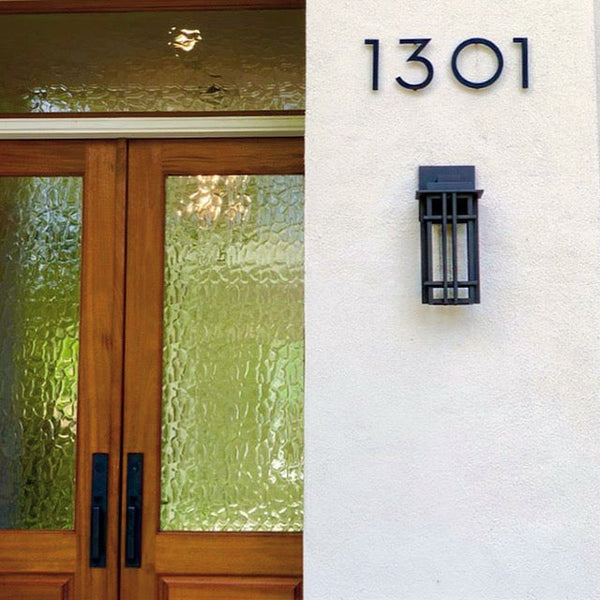
House numbers complement your exterior décor when their finish, scale, and placement echo existing design details such as door hardware, light fixtures, and trim color. A brushed aluminum number set reads cleanly alongside a modern matte-black front door, while a dark bronze finish ties directly into traditional lantern-style sconces. Treating numbers as part of a coordinated hardware palette, rather than an afterthought, produces a far more polished result. Size matters here too: numbers scaled to the wall surface create visual balance, while undersized numbers disappear against large facades and oversized ones overwhelm modest entryways.
Where should you install house numbers for maximum effect and compliance?
House numbers should be installed where they are immediately visible from the street and meet local code requirements. The following sub-sections cover recommended placement guidelines and the regulatory standards that govern address sign visibility.
What are the recommended placement guidelines for house numbers?

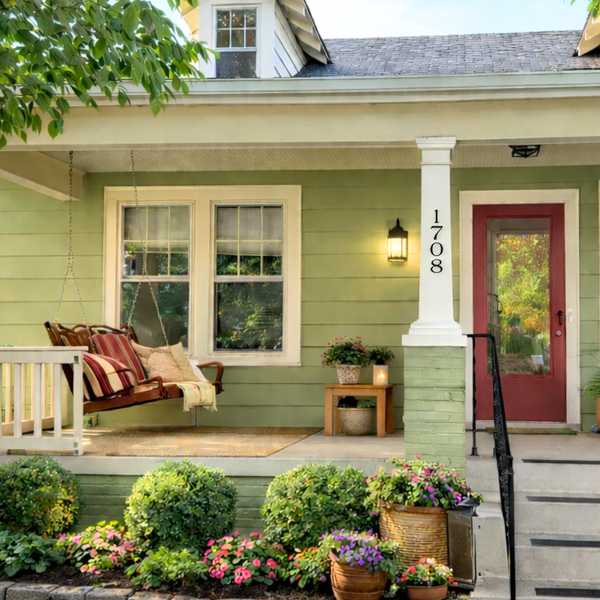
The recommended placement guidelines for house numbers prioritize unobstructed street visibility from both directions of approach. Mount numbers near the front entrance, ideally beside or above the primary door, at a height between four feet and the top of the door frame. Numbers should face the street directly, free from obstruction by landscaping, pillars, or decorative elements. For homes set far back from the road, a secondary installation on a mailbox post or fence post significantly improves legibility. According to 911 Ready, only 50% of street addresses are visible to a 9-1-1 responder because emergency vehicles often arrive from the direction opposite standard mail delivery. Placing numbers on both sides of a post or using illuminated numbers eliminates this blind spot.
Are there local regulations or requirements for address sign visibility?
Local regulations for address sign visibility vary by jurisdiction, but most follow baseline standards set by model fire codes. The International Fire Code (IFC) 505.1 and NFPA 1 both mandate residential address numbers be a minimum of 4 inches tall with a contrasting background for street legibility. Some municipalities set stricter requirements: New York City Rules (Section 3-01) require numbers at least 5 inches tall, positioned within two feet of the door. Before installing, check your local municipal code or fire department guidelines, as size and contrast requirements increase with your home's distance from the road.
How can you personalize house numbers to reflect your taste?
You can personalize house numbers by selecting from a range of fonts, materials, finishes, and mounting styles that match your home's architecture. The sections below cover available customization options and how custom numbers elevate curb appeal.
What customization options are available for house numbers?
The customization options available for house numbers include font style, material, finish, size, and mounting configuration. Homeowners can choose from sans-serif, serif, or script typefaces to suit modern, traditional, or eclectic facades. Material choices such as recycled aluminum allow further personalization, while finish options like brushed or matte complete the look. Size can be scaled to the viewing distance and wall surface, and mounting hardware can be concealed for a clean, architectural appearance. The depth of choice here is genuinely what separates a considered design decision from a last-minute hardware-store purchase.
How do custom-made house numbers enhance curb appeal?

Custom-made house numbers enhance curb appeal by aligning every visible detail of your entryway with your home's overall design language. According to research published on Phys.org in 2025, enhancing a home's curb appeal can increase its sales price by an average of 7%, with well-maintained exteriors and inviting entryways cited as primary contributors. Thoughtfully chosen numbers signal design intention to visitors and prospective buyers alike. Rather than treating address markers as purely functional, custom numbers function as small architectural statements that reinforce the character of the whole property.
What are the benefits and drawbacks of DIY versus professionally made house numbers?
The benefits and drawbacks of DIY versus professionally made house numbers come down to cost, quality, and long-term performance. The sections below compare professional versus self-installation and outline the maintenance each approach typically requires.
How does professional installation compare to self-installation of house numbers?
Professional installation compares favorably to self-installation in precision and finish quality, though it carries higher upfront costs. DIY home improvements can save 20–30% on labor costs, but only if the homeowner has the skill to avoid errors that could negate those savings, according to Softpro Water Systems. Misaligned numbers, improper hardware, and poor material choices are common DIY mistakes that create additional expense. Professionally made house numbers, particularly those that include personalized drilling templates and concealed hardware, significantly reduce the risk of installation errors and deliver a cleaner architectural result and are a preferred option to those homeowners who wish to install their numbers on their own.
What maintenance is needed to keep house numbers looking their best?
Maintenance needed to keep house numbers looking their best depends primarily on material. The most common upkeep tasks include:
-
Aluminum: Wipe with a damp cloth periodically; no rust treatment required due to its weather-resistant properties.
-
Wood: Re-varnish or re-oil at least once per season to prevent moisture damage and rot.
-
Acrylic: Clean with non-abrasive solutions and monitor for UV-related color fading, particularly in red and yellow pigments after two or more years of direct sun exposure.
Choosing a durable material from the start is the most underrated maintenance strategy available to homeowners.
How can Modern House Numbers help you choose and customize house numbers for your home?
Modern House Numbers helps you choose and customize house numbers through made-to-order designs, architect-guided style matching, and full installation support. The sections below cover customization options and key decision takeaways.
What made-to-order customization and installation support does Modern House Numbers offer?
Modern House Numbers offers made-to-order customization across numbers, letters, plaques, and decals, all handcrafted from recycled aluminum in Tucson, Arizona. Founded in 2008 by architects Brandy and Rick McLain, every product is precision-crafted to order, never mass-produced. Customers choose from seven stylish architect-designed fonts, including Palm Springs, SoCal, Austin, and SoHo, with finishes suited to any architectural style. Every purchase includes a free personalized drilling template, step-by-step installation instructions, and concealed hardware for a professional result. For faster needs, the QuickShip line ships pre-made options without sacrificing quality. As architects themselves, the McLains built a service that removes guesswork from the selection process entirely.
What are the main takeaways for choosing the best house numbers for your home?
The main takeaways for choosing the best house numbers are visibility, material durability, style compatibility, and compliance with local size codes. Numbers must contrast against their mounting surface and meet minimum height requirements, such as the 5-inch minimum mandated under New York City Rules (Section 3-01). Material selection should reflect your climate, with aluminum offering the strongest long-term performance outdoors. Style should echo your home's architecture: colonial homes suit brass or bronze finishes with serif fonts, while modern homes call for brushed aluminum with clean sans-serif letterforms. According to Market Intelo, the LED and illuminated segment is now the fastest-growing category, driven by solar power and smart home integration. Prioritizing all four factors together produces a result that is both beautiful and functional.