 Numbers + Letters
 QuickShip
 Plaques
 Decals
 Custom
 Trade
Trade


The best house facing direction in Feng Shui is the orientation that lets a home receive the most beneficial qi, determined through compass calculations, elemental theory, and the alignment of the front door rather than any single universal answer. South-facing homes are cited most often as auspicious, but the "best" direction ultimately shifts based on personal Kua number, climate, and life goals.
This guide covers the foundations of facing direction and compass methodology, the comparative strengths of south, east, north, and west orientations, Kua number personalization for individuals and couples, climate and elemental influences on orientation, life-goal alignment for wealth and health, remedies for challenging directions, and how front door design and house numbers reinforce Feng Shui luck.
Facing direction refers to where the front door and main windows open toward, marking the point where incoming energy enters the home. Measured traditionally with a Luo Pan compass, this direction carries more weight than the opposite "sitting" direction because it governs daily energy flow into the household.
South, east, north, and west orientations each carry distinct advantages tied to sunlight, elemental associations, and life priorities. South is linked to fire and abundant sunlight, east to wood and health, north to water and career stability, and west to metal and creativity, giving households a framework to match orientation with their priorities.
A Kua number, calculated from birth year and gender, sorts individuals into East or West groups, each favoring four specific directions for entrances and layout. Couples with mismatched Kua numbers can prioritize the breadwinner's direction for the main entrance while optimizing secondary rooms for the other partner.
Climate, sun path, and the Five Elements shape how traditional Feng Shui guidance plays out in real conditions across the United States. Regional heat, wind exposure, and elemental balancing, using the generative cycle of wood, fire, earth, metal, and water, determine whether a textbook "ideal" direction actually performs well on a specific lot.
Life goals such as wealth, career, health, and relationships map to specific compass sectors, and remedies like mirrors, lighting, plants, and door adjustments can offset a home's less favorable orientation. Front door color, material, and well-placed house numbers further reinforce the entrance's role as the "mouth of chi," rounding out a practical, personalized approach to directional luck.
How Does Feng Shui Define an Auspicious House Facing Direction?
Feng Shui defines an auspicious facing direction as the orientation that allows a home to receive the most beneficial qi, based on compass calculations, elemental theory, and the front door's alignment. The following sections explain what "facing direction" means, how to measure it, and why it outweighs the sitting direction.
What Does "House Facing Direction" Mean in Feng Shui?
House facing direction is the direction the front door and main windows open toward, marking the point where incoming energy enters the home. This concept comes from Feng Shui, which literally means "wind and water" and describes the ancient Chinese practice of harmonizing people with their environment through the flow of qi, or life energy. Practitioners traditionally measure this direction using the Luo Pan, a geomantic compass. According to Duke University's Sacred Arts of the Black Atlantic Project, the Luo Pan combines magnetic compass functionality with Feng Shui's cosmological systems to pinpoint cardinal directions and assess auspicious orientations for buildings. In Ba Zhai (Eight Mansions) Feng Shui, a home is divided into nine palaces corresponding to the eight magnetic directions, each carrying its own qi.
How Do You Accurately Determine Your Home's Facing Direction?
You determine your home's facing direction by standing at the front door, facing outward, and reading a compass pointed away from the house. This reading, not the direction the back of the house points, establishes the facing direction used in Feng Shui analysis. Homeowners should take the reading from the threshold of the main entrance rather than a side or garage door, since the front door is treated as the primary energy access point. For the most reliable result, take multiple readings and average them, since nearby metal fixtures, appliances, or rebar in walkways can distort a compass and shift the reading by several degrees.
Why Is the Facing Direction Considered More Important Than the Sitting Direction?
The facing direction is considered more important than the sitting direction because it represents incoming energy, while the sitting direction represents the home's foundation and support. According to the Feng Shui Store, the facing direction is the direction the front door and main windows look toward, whereas the sitting direction sits directly opposite it; both matter in Ba Zhai analysis, but the facing direction governs how new qi enters daily life. Five Elements Theory reinforces this: a south-facing home, for example, carries the fire element, tied to summer, passion, and the bagua's fame and reputation area, directly shaping the household's incoming influence. This is why Feng Shui consultants prioritize the entrance's orientation when evaluating a property. Understanding this hierarchy sets up the next question: which facing directions rank most auspicious.
Which House Facing Directions Are Generally Considered Most Auspicious in Feng Shui?
Feng Shui considers south-facing houses the most auspicious orientation overall, though east, north, and west-facing homes each carry distinct strengths depending on a household's goals. This section covers:
- South-facing houses
- East-facing houses
- North-facing houses
- West-facing houses
Why Are South-Facing Houses Often Considered Lucky in Feng Shui?
South-facing houses are often considered lucky in Feng Shui because this orientation traditionally receives the most hours of direct sunlight. In ancient China, longer daylight exposure meant extended growing seasons and higher crop yields, which translated into greater household prosperity. Feng Shui practitioners still link abundant sunlight to health and vitality today, treating a sun-filled home as a natural symbol of abundance and wealth. This is also why south-facing and east-facing houses are traditionally favored over other orientations, since both capture strong morning and midday light. In practice, this historical preference still holds up: strong natural light remains one of the most reliable indicators of a home's day-to-day livability, regardless of which Feng Shui school a homeowner follows.
When Is an East-Facing House Considered the Best Orientation?
An east-facing house is considered the best orientation when families prioritize health, growth, and new beginnings. In Feng Shui, east corresponds to the wood element, which governs vitality, expansion, and personal development. Morning sunlight enters through east-facing windows, offering gentler, cooler light than west or south exposures, a quality practitioners associate with renewal rather than intensity. East-facing homes are often recommended for growing families, since the wood element's association with growth extends symbolically to children and career development. Because morning light also supports natural circadian rhythms, an east orientation can suit households that value energetic mornings paired with steady, sustainable progress over dramatic gains.
In Which Situations Can a North-Facing House Be Very Auspicious?
A north-facing house can be very auspicious in situations where career stability and quiet introspection matter more than constant sunlight exposure. Feng Shui's Five Elements Theory identifies water, fire, wood, metal, and earth as the fundamental forces shaping every direction, with the northern orientation traditionally linked to water's calm, reflective qualities. Because water represents wisdom, career flow, and adaptability rather than high energy, north-facing homes tend to suit professionals, writers, or anyone whose goals depend on focus rather than constant stimulation. Although north-facing houses receive less direct sunlight than south-facing ones, this cooler, steadier exposure can support restful sleep and reduced overheating, making the orientation genuinely practical in hot climates. For many households, a north-facing home rewards patience and steady effort over flashy, fast results.
How Can a West-Facing House Be Made More Fortunate in Feng Shui?
A west-facing house can be made more fortunate in Feng Shui by pairing metal-element enhancements, such as round shapes, white or gray tones, and metallic accents, with mirrors or wind chimes near the entrance to circulate afternoon energy. West corresponds to the metal element, which governs creativity and children's luck rather than career-driven ambition. According to a Better Homes and Gardens Real Estate and AREAA survey, 86 percent of respondents said Feng Shui would influence a future home purchase, and 79 percent were willing to pay more for a home incorporating its principles. This demand suggests that even small west-facing enhancements can meaningfully boost a property's appeal. With these orientation basics established, your Kua number personalizes which direction suits you best.
How Does Your Kua Number Influence the Best Direction for Your House?
Your Kua number determines which of the eight magnetic directions best support your personal energy, guiding entrance and layout choices for your home. Each direction carries a distinct qi that either harmonizes or clashes with your personal life Kua. The sections below cover calculating this number and matching it to house orientation.
What Is a Kua Number and How Do You Calculate It?
A Kua number is a personal Feng Shui number derived from birth year and gender that identifies which directions bring you the most favorable energy. To calculate it, add the last two digits of the birth year together and reduce the sum to a single digit. For males, subtract that digit from 11 (born before 2000) or 10 (born 2000 or later). For females born before 2000, add 5 to the reduced digit; for females born 2000 or later, add 6. This calculation determines whether an individual falls into the East or West group, which in turn dictates favorable house directions. Getting the formula right matters, since even a small arithmetic error can point someone toward the opposite group's directions.
Which House Orientations Suit East Group Versus West Group People?
House orientation suitability depends on whether your Kua number places you in the East or West group, each favoring a different set of four directions. The East Group includes Kua numbers 1, 3, 4, and 9, and these individuals benefit most from facing Southeast, East, South, and North. The West Group includes Kua numbers 2, 6, 7, and 8 (note: Kua number 5 converts to 2 for males and 8 for females), and this group favors Southwest, West, Northwest, and Northeast.
- East Group directions: Southeast, East, South, North
- West Group directions: Southwest, West, Northwest, Northeast
Homes that sit West and face East, or sit East and face West, benefit both groups simultaneously. Houses along the Southeast-Northwest axis, facing Southeast while sitting Northwest, also serve as effective "axis houses" for mixed households. In practice, these dual-benefit layouts are worth prioritizing for anyone house-hunting without a fixed group preference already in mind.
How Should Couples Handle Different Kua Numbers and Lucky Directions?
Couples with different Kua numbers should prioritize the breadwinner's auspicious direction for the main entrance while optimizing other rooms for the second partner's directions. This practical approach acknowledges that a single home rarely satisfies both group directions perfectly, so allocating the front door, the highest-impact zone, to the primary income earner tends to yield the most balanced household energy. Bedrooms, home offices, or other personal spaces can then be arranged according to the second partner's favorable directions.
Once your Kua number and group are settled, the next factor to weigh is how local climate and sun exposure shape practical direction choices.
How Do Climate, Sun Path, and Local Environment Affect the "Best" Facing Direction?

Climate, sun path, and local environment influence the "best" facing direction because they determine actual sunlight, heat gain, and wind exposure at a specific site. The following sections cover U.S. sun and heat patterns, regional climate considerations in Feng Shui, and how roads, buildings, and natural features affect directional luck.
How Do Sunlight and Heat in the United States Influence Ideal Orientations?
Sunlight and heat in the United States influence ideal orientations by determining how much solar exposure and thermal gain a home experiences year-round. A south-facing home in Arizona captures intense summer sun, while the same orientation in Minnesota provides welcome winter warmth with little cooling burden. Because the U.S. spans multiple climate zones, from the hot desert Southwest to the cold Northeast, the ideal orientation balances Feng Shui's traditional preference for south exposure with practical concerns like heat gain and seasonal comfort. Chasing a "perfect" Feng Shui direction without factoring in local climate can backfire, since an unshaded south wall in Phoenix creates comfort problems no amount of favorable chi can offset.
Why Should You Consider Wind, Weather, and Regional Climate With Feng Shui?
You should consider wind, weather, and regional climate with Feng Shui because the practice's name literally means "wind and water," rooting it in natural forces rather than compass direction alone. In the Bagua, wind corresponds to the wealth sector, linking atmospheric conditions directly to prosperity. Modern building science supports this climate focus: south- and north-facing homes generally perform best for energy efficiency, and passive solar strategies aim to maximize winter heat gain while limiting summer overheating. According to the American Solar Energy Society, orientation for passive heating works best in Climate Zone 3 and Climate Zones 4 through 8, meaning the "ideal" direction shifts with regional weather. Buyers now weigh this comfort factor alongside Feng Shui guidance.
How Do Surrounding Roads, Buildings, and Natural Features Change Directional Luck?
Surrounding roads, buildings, and natural features change directional luck by altering how chi moves toward and around a home. A straight road aimed directly at the front door can create a fast, aggressive flow known as a "poison arrow," while curved streets let chi settle more gently. Tall buildings, walls, or dense trees positioned too close can block sunlight and qi from an otherwise favorable direction, while a distant hill or larger structure behind the home can add protection and stability. Even a well-oriented south-facing house can underperform near a busy overpass or dead-end street. With these environmental layers in mind, balancing the five elements offers the next step for fine-tuning any orientation.
How Do the Five Elements Relate to House Facing Directions?
Each compass direction in Feng Shui carries a dominant element that shapes color, material, and design choices for that facing direction. The sections below cover elemental compass correspondences, methods for balancing the Five Elements at your specific orientation, and cures for less favorable directions.
Which Elements Correspond to North, South, East, and West in Feng Shui?
The elements that correspond to north, south, east, and west are water, fire, wood, and metal. According to Duke University research, the Luo Pan compass evolved from the Si Nan lodestone device (Warring States period, c. 4th century BCE) and formalized these correspondences by the Song Dynasty (960-1279 CE), alongside the Eight Trigrams and Twenty-Four Mountains. Eight House Feng Shui also divides homes into nine palaces aligned with these directions. Each direction's element shapes front door color choices:
- North-facing homes: black or blue for water energy.
- South-facing homes: red for fire energy.
- East-facing homes: green for wood energy.
- West-facing homes: white, silver, or gold for metal energy.
How Can You Balance the Five Elements for Your Specific House Orientation?
You can balance the Five Elements for your house orientation by applying the generative cycle to add whichever element supports the home's natural direction. In this cycle, wood fuels fire, fire forms earth, earth contains metal, metal carries water, and water feeds wood, so each element strengthens the one that follows it. A south-facing (fire) home benefits from wood accents to fuel its energy, while a north-facing (water) home benefits from metal touches that carry water forward. Mirrors add flexibility: placed near a stove, they double prosperity by reflecting burners; hung on a cramped entry wall, they erase an oppressive feel; angled toward a view, they draw in positive energy. Ignoring this logic is a common curb-appeal mistake.
What Elemental Cures Help When Your House Faces a "Less Ideal" Direction?
The elemental cures that help when a house faces a less ideal direction are simple additions that reintroduce whichever element the orientation lacks. Because each direction favors one element, homeowners can supplement rather than fight the orientation:
- Wood-deficient directions: add plants, wood furniture, or vertical shapes.
- Fire-deficient directions: add lighting, candles, or red accents.
- Earth-deficient directions: add ceramic pots or terracotta tones.
- Metal-deficient directions: add wind chimes or round metal decor.
- Water-deficient directions: add a small fountain or mirrored surface.
These small adjustments work alongside structural fixes like door color and window placement covered elsewhere in this guide. With directional balance addressed, aligning these cures to specific life goals sharpens their impact.
How Do Life Goals (Wealth, Health, Career, Relationships) Affect the Best Facing Direction?
Life goals shape the ideal facing direction because Feng Shui assigns each ambition, such as wealth, health, career, and relationships, to a specific compass sector. The sections below cover wealth and career orientations, health and family orientations, and how to prioritize when goals compete.
Which Directions Support Wealth and Career Luck the Most?

Southeast supports wealth luck the most, while North supports career luck, according to the bagua map's directional assignments. Southeast carries growth-oriented Wood energy that encourages financial expansion, while North carries Water energy tied to career momentum and life path.
Numerology reinforces this pairing. The numbers 6 and 8 are widely considered lucky in Chinese culture, with 8 regarded as the luckiest number because it is linked to wealth. "Eight" (八, pronounced ba) sounds similar to fa (发), the root of facai (发财), meaning "becoming rich in a short time. Homeowners chasing wealth or career goals often choose a Southeast-facing entrance for symbolic reinforcement.
Which Orientations Are Strongest for Health, Family, and Personal Growth?
The orientations strongest for health, family, and personal growth are East and Southeast, both governed by the Wood element's vitality in traditional bagua theory. East corresponds to family harmony and physical health, while personal growth benefits from spaces that catch early morning light, symbolizing fresh starts and forward momentum.
Rooms used for rest, meals, or family gatherings placed along these orientations are believed to draw steadier, more nurturing energy. In practical terms, this often means prioritizing an East-facing kitchen, dining room, or family room over a purely wealth-focused layout when health and household harmony are the primary concern.
How Can You Prioritize Directions When You Have Multiple Life Goals?
You can prioritize directions when you have multiple life goals by ranking which goal matters most right now, then aligning the home's main entrance, or its most-used room, with that direction. Since no house can perfectly serve every life area at once, trade-offs are inevitable.
A practical prioritization approach includes:
- Identify the single most urgent goal, such as career stability, wealth growth, health, or relationship harmony.
- Match the front entrance orientation to that goal's corresponding direction whenever renovation or design choices allow it.
- Reserve secondary directions for supporting rooms, such as a home office facing a career-favorable direction.
- Revisit priorities as life circumstances shift, since goals like health or relationships often outweigh wealth over time.
In practice, chasing every life area equally tends to dilute results. Experienced practitioners generally recommend committing to one dominant goal per major renovation cycle for clearer, more consistent outcomes. When a home's orientation cannot fully support every goal, targeted remedies can help offset the gap.
What Feng Shui Remedies Help If Your House Faces an "Unlucky" Direction?
Feng Shui remedies for a house facing an unlucky direction include entryway adjustments, exterior cures, and interior layout changes. The three most reliable fixes are:
- Adjusting doors, foyers, and walkways
- Applying exterior cures such as plants, lights, and mirrors
- Rearranging interior layout and furniture placement
How Can Doors, Foyers, and Walkways Be Adjusted to Improve Chi Flow?

Doors, foyers, and walkways are adjusted by clearing clutter, widening narrow entries, and positioning mirrors or chimes to redirect incoming chi. A tight or dark foyer restricts energy flow before it ever reaches the home's interior.
Effective entryway adjustments include:
- Adding wind chimes near the entrance to lift stagnant chi.
- Keeping walkways clear, well-lit, and unobstructed so energy moves smoothly inside.
According to Feng Shui consultant Karen Rauch Carter, mirrors rank among the four primary cures because they can erase, deflect, or draw in energy depending on placement, making them ideal for correcting a cramped or unlucky-facing entry without renovation.
Which Exterior Cures (plants, lights, mirrors) Can Offset Directional Challenges?
The exterior cures that offset directional challenges are plants, outdoor lighting, mirrors, and wind chimes, each chosen to counteract the specific energy a facing direction lacks. These cures work from outside the home, intercepting chi before it reaches the front door.
Common exterior cures include:
- Mirrors placed to deflect negative energy away from the home or draw in favorable views and water features.
- Bright exterior lighting to strengthen fire energy on a dim or shaded facing wall.
- Lush plants to introduce wood energy where a direction feels stagnant or weak.
- Wind chimes hung near entry points to circulate sluggish chi.
Karen Rauch Carter notes mirrors work well outdoors, since they can double, erase, or amplify a view depending on placement.
How Do Interior Layout and Furniture Placement Compensate for Facing Issues?
Interior layout and furniture placement compensate for facing issues by repositioning furniture, adding color accents, and using mirrors to redirect chi toward key life areas. This works within the bagua map, independent of the home's exterior orientation.
Effective interior compensations include:
- Placing a mirror near the stove to reflect burners, symbolically doubling abundance.
- Adding red accents, one of the four primary cures, to boost fire energy in a weak area.
- Positioning beds and seating away from direct door alignment to avoid blocking chi.
Karen Rauch Carter notes mirrors and red accents are easy to hide while still shifting chi's direction and speed. Together, entry, exterior, and interior cures meaningfully soften an unlucky facing direction.
How Do Front Door Design and Curb Appeal Influence Feng Shui Luck?
Front door design and curb appeal shape Feng Shui luck by controlling how chi enters, circulates, and settles within a home. The door's color, material, and shape encode elemental energy, while surrounding curb appeal choices can reinforce a weak orientation.
Why Is the Front Door Called the "Mouth of Chi" in Feng Shui?
The front door is called the "mouth of chi" because it functions as the primary point where energy enters and exits a home, much like a mouth regulates breath. Viewing the front door this way helps homeowners maintain balance and cultivate serenity both inside and outside the house. This framing treats the entryway as more than a functional passage. It becomes the household's energetic gateway, filtering what flows in and what flows out. Because every other Feng Shui adjustment inside the home depends on healthy chi entering through this "mouth," a clear, well-maintained, unobstructed front door is often the first fix practitioners recommend before addressing interior layout or furniture placement.
How Do Color, Material, and Shape of the Front Door Affect Energy?
Color, material, and shape of the front door affect energy by carrying distinct symbolic meanings that either support or clash with the energy chi brings into the home. The color meanings behind common front door choices include:
- Red promotes passion, protection, and recognition.
- Black represents wisdom, good energy, and making friends.
- Brown guides strength, grounding, and connection to the earth.
- Yellow allows in bright energy, balance, and stability.
- Green encourages growth and new beginnings.
- White fosters purity and joy.
- Blue advances knowledge and spiritual maturation.
- Gray supports travel and making new connections.
- Purple boosts good fortune and abundance.
Material and shape matter too: solid, well-crafted doors reinforce a sense of protection, while clean geometric lines avoid the disruptive energy associated with cracked or irregular surfaces. In practice, homeowners rarely need to overthink this decision. Choosing a color that resonates personally, paired with a sturdy, well-fitted door, usually outperforms an overly rigid, direction-matched color scheme.
Which Curb Appeal Choices Strengthen a Weak or Challenging Orientation?
Curb appeal choices that strengthen a weak or challenging orientation focus on improving light, clarity, and welcome at the entry sequence. Effective options include:
- Adding pathway or porch lighting to brighten a dim or shaded approach.
- Keeping walkways clear and plants trimmed so chi can flow unobstructed to the door.
- Maintaining healthy, well-placed greenery to soften harsh angles or blank walls.
- Ensuring the entry is clean, uncluttered, and easy to locate from the street.
These fixes work because they remove the physical obstacles that block or scatter incoming energy, regardless of compass direction. Clear, visible house numbers play a similar supporting role in this entry sequence.
How Can House Numbers and Exterior Signage Enhance Feng Shui for Any Direction?
House numbers and exterior signage enhance feng shui by carrying their own numerological energy, independent of a home's facing direction. This section covers why house numbers matter in numerology and how modern, well-placed signage keeps energy flowing smoothly.
Why Do House Numbers Matter in Feng Shui and Numerology?
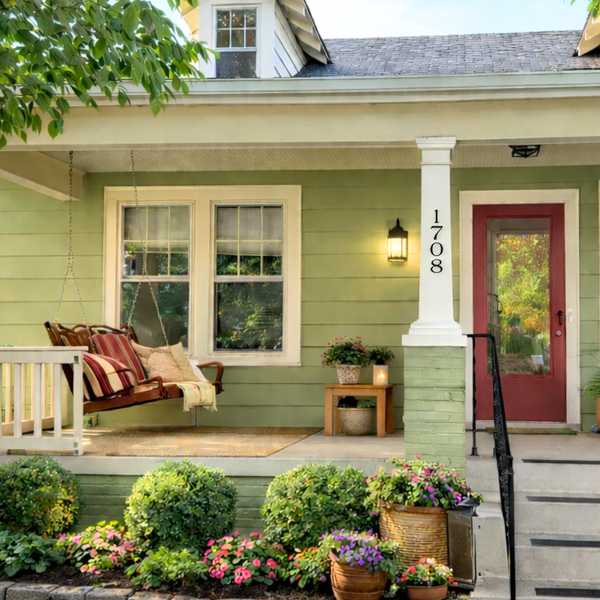
House numbers matter in feng shui and numerology because each digit carries its own symbolic energy, which is believed to interact with the qi entering through the front door. The digit 8 is widely considered the most fortunate, its pronunciation echoing words tied to prosperity, while 4 is often avoided for sounding similar to a word for death. Because the front door acts as the mouth of chi, the number beside it is thought to color incoming energy. This makes house numbers a subtle yet meaningful feng shui detail.
In What Ways Can Modern, Well-Placed House Numbers Improve Energy Flow?
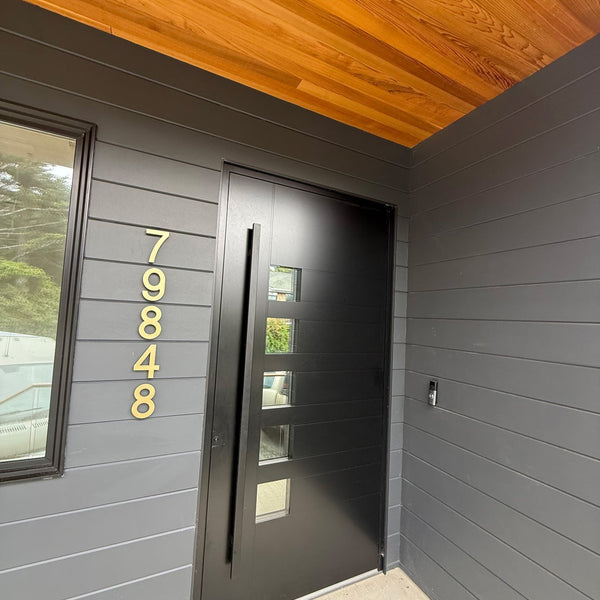
Modern, well-placed house numbers improve energy flow by keeping the entrance, the mouth of chi, clear, legible, and visually balanced so incoming qi is not disrupted. Numbers mounted too low, obscured by plants, or crowded against clutter can restrict the smooth passage of energy toward the front door. Clean typography, secure mounting, and adequate lighting all support uninterrupted chi flow. Materials matter too, since a sign coated in rust or peeling paint signals neglect that many practitioners believe weakens a home's energetic presence. Modern House Numbers crafts its aluminum numbers with legible fonts and corrosion-resistant finishes, keeping an entrance sharp for years. With house numbers optimized, the next step is aligning them with your home's specific facing direction.
How Should You Approach House Direction in Feng Shui When Using Modern House Numbers?

Approaching house direction in Feng Shui with modern house numbers means pairing directional principles with well-designed, correctly placed address numerals. Homeowners should treat the number itself as a curb appeal asset while respecting the home's facing direction. The following sections cover architect-designed plaques and numbers, and final directional takeaways.
How Can Architect-Designed House Numbers and Plaques From Modern House Numbers Support Feng Shui and Curb Appeal?
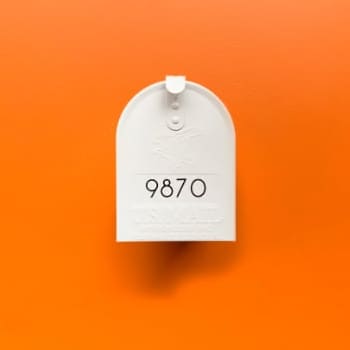
Architect-designed house numbers support Feng Shui by strengthening the "mouth of chi" entrance while boosting visual harmony. Modern House Numbers designs each number, letter and plaque with clean, intentional lines that complement a home's facing direction rather than clash with it, so a south-facing entry can carry warm metal tones while a north-facing entry benefits from cooler, streamlined finishes.
Numerology also intersects with real estate value. A study of nearly 117,000 house sales found that addresses ending in "4" sold at a 2.2% discount, while those ending in "8" sold at a 2.5% premium compared to other addresses, reflecting how numerological superstitions influence buyer perception. Separately, close to 70% of buyers said they would avoid a home with serious Feng Shui problems, and Feng Shui impact was linked to roughly 10% of total property price in a systematic review.
Given these patterns, presenting a house number with architectural precision does more than aid Feng Shui symbolism. It signals the pride of ownership that buyers already factor into price. Modern House Numbers' handcrafted aluminum designs, made to order in Tucson, give homeowners a way to align curb appeal with directional harmony without sacrificing design integrity.
What Are the Key Takeaways About the Best House Facing Direction in Feng Shui and Which Orientation Brings the Most Luck That You Should Remember?
The key takeaways are that facing direction, the Luo Pan compass, the Nine Life Areas, and elemental cures work together rather than in isolation. South-facing homes remain the most frequently cited auspicious orientation, tied to the fire element, sunlight, and daylighting benefits from September through April. The Luo Pan determines cardinal directions and identifies auspicious orientations using the Eight Trigrams and Twenty-Four Mountains.
There are several practical points worth remembering:
- The Nine Life Areas, such as Career, Wealth, and Health, map onto the home through the bagua and shape how each zone influences daily life.
- The four primary Feng Shui cures, mirrors, crystals, red accents, and chimes, offer quick, reversible ways to redirect chi when facing direction is fixed.
- Numerology carries real financial weight: a 0.95 regression coefficient between housing prices and Feng Shui quality was found across 15 villages in Tai Po New Town, Hong Kong, and the number 4 remains widely viewed as unlucky.
- A $300,000 home facing a 10% Feng Shui-related price impact could see a $30,000 swing in value.
In practice, treating facing direction and house numbers as complementary, not competing, elements gives homeowners the most balanced result. Modern House Numbers helps homeowners express that balance through architect-crafted numerals and plaques designed to enhance any orientation.