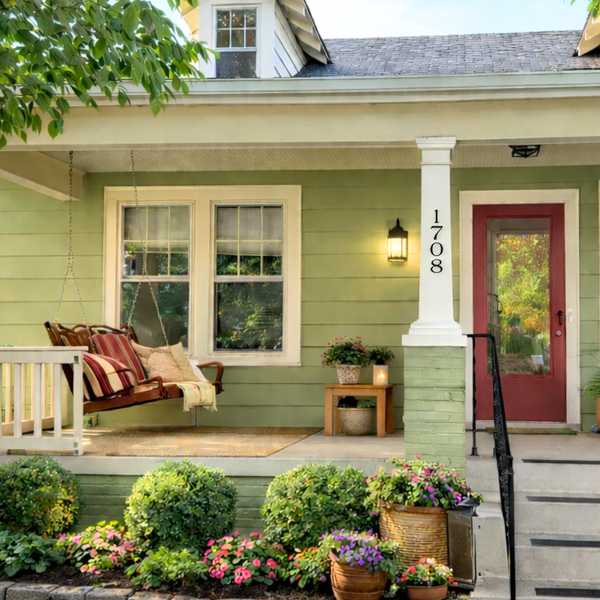
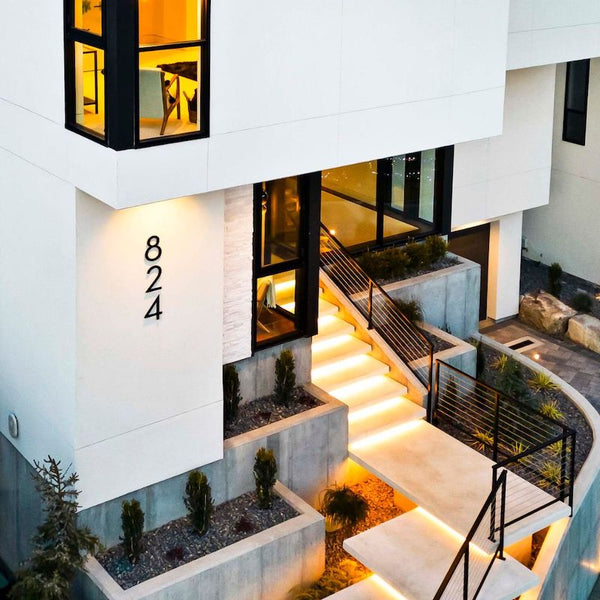
 Numbers + Letters
 QuickShip
 Plaques
 Decals
 Custom
 Trade
Trade


Feng Shui curb appeal is the practice of arranging a home's exterior, pathways, plants, colors, lighting, and entry details, so that Qi (energy) flows smoothly from the street to the front door, creating a sense of welcome before guests ever knock. Rooted in principles over 4,000 years old, this approach treats the front yard as the first and most important stage of a home's energetic and visual impression.
This guide covers the foundational Feng Shui principles that shape a harmonious entry, how to evaluate an existing front yard for energy blockages, the role of pathways and landscaping in guiding Qi, the front door's function as the "mouth" of the home, color and lighting strategies drawn from the Five Elements, and the finishing details, house numbers, décor, and maintenance, that keep positive energy flowing year-round.
Core concepts like Chi, the Bagua map, the Five Elements, and Yin-Yang balance form the framework for every decision made at the entry. Understanding how energy is meant to move, and what disrupts that movement, gives homeowners a practical lens for assessing their own front yard before making changes.
Reading a property the way a first-time visitor would reveals common blockages: cluttered walkways, corner-lot energy loss, and mismatched Bagua elements. Curved paths and driveways that hug the house, paired with tidy landscaping featuring prosperity plants like jade or lucky bamboo, correct much of this disruption and direct energy purposefully toward the entry.
The front door itself, along with its color, material, and hardware, acts as the primary portal for Qi, while exterior color choices tied to the Five Elements reinforce specific goals like wealth, health, or balanced relationships depending on directional placement.
Layered outdoor lighting protects this energy after dark by keeping paths, steps, and address numbers clearly visible without glare or harsh shadows, while well-chosen house numbers, décor, and consistent upkeep tie every element together into one cohesive, welcoming system.
What Are the Core Feng Shui Principles That Shape Positive Curb Appeal?
The core Feng Shui principles that shape positive curb appeal are Chi (energy flow), the Bagua map, the Five Elements, and Yin and Yang balance. These four principles work together to determine whether a home's exterior invites or blocks positive energy. The sections below cover how each principle applies specifically to a home's front approach.
How Does Qi (Energy Flow) Influence What Guests Feel Before They Reach Your Front Door?
Qi, or Chi, influences what guests feel by acting as the vital life force that moves through a property before anyone reaches the door. In Feng Shui, this energy is meant to travel in a smooth, meandering path rather than a rigid, straight line, since abrupt or blocked routes disrupt the sense of welcome a visitor experiences. Practically, this means the path, lighting, and entry details all shape a guest's first impression before they even knock. Well-placed outdoor lighting supports this flow directly: it should be visible on or beside the front door and allow guests to see where they are stepping. The global outdoor lighting market, projected to reach $63.5 billion by 2035 at a 7.14% CAGR, reflects growing homeowner investment in exactly this kind of entry illumination.
Why Are the Bagua Map and Five Elements Helpful for Planning Your Front Exterior?
The Bagua map and Five Elements are helpful for planning a front exterior because they translate abstract energy concepts into concrete design decisions. The Bagua map divides a space into nine sections, each tied to a life aspect such as wealth, career, or relationships, giving homeowners a framework for where to place specific colors, materials, and plantings. The Five Elements, Wood, Fire, Earth, Metal, and Water, assign every material, color, and shape in the landscape to one of these categories. For example, upright wooden plantings represent growth, while metal accents suggest clarity and precision. Using both tools together lets homeowners plan a front exterior with intention rather than guesswork, aligning plant choices, colors, and layout with the specific energy they want to attract to their entry.
How Do Yin and Yang Balance Affect the Look and Feel of Your Home's Entry?

Yin and Yang balance affects a home's entry by determining whether the space feels harmonious or unsettling to arriving guests. Yin and Yang represent opposing but complementary forces, such as light and dark, hard and soft, and active and passive, that Feng Shui requires to stay in equilibrium. An entry with only hard surfaces and stark lighting can feel cold and uninviting, while one with only soft, dim elements can feel undefined and passive. Related concepts such as the Dragon Side and Tiger Side and the Mouth of Qi all extend from this balance principle, guiding where solid versus open elements belong near the door. In practice, pairing a solid, well-maintained door with softer landscaping, or balancing bright lighting with shaded plantings, keeps the entry visually and energetically even. Getting this balance right at the entry sets the tone for everything a guest feels before they even reach the threshold.
How Should You Evaluate Your Current Front Yard and Entry From a Feng Shui Perspective?
Evaluating your front yard's Feng Shui requires identifying energy blockages, viewing your entry from a visitor's perspective, and recognizing common curb appeal mistakes. This assessment reveals where positive Qi struggles to reach your front door, guiding targeted improvements to correct it.
What Feng Shui Issues Might Be Blocking Positive Energy Before It Reaches Your Front Door?
Feng Shui issues that block positive energy before it reaches your front door include cluttered or straight pathways, corner-lot poison arrows, outward-swinging doors, and cramped entryways lacking room for Qi to pool. According to the National Geographic Society, Chi is the vital life force inhabiting everything, and good residential design encourages its smooth, meandering flow while deflecting negative energy. Corner lots erode this energy at the property line, often contributing to long-term health and financial strain. Apartment entries without an open foyer where chi can gather before spreading through the home work against this flow. Fixing these blockages first makes every later curb appeal upgrade more effective.
How Can You Stand Across the Street and "Read" Your Home's Energy Like a First-Time Visitor?
You can stand across the street and read your home's energy like a first-time visitor by pausing at the curb and noticing what draws your eye first: the pathway, the door, or clutter. The front door is often called the "mouth of the home," the point where energy, opportunities, and visitors enter, according to Realtor.com's outdoor focal points guide. From this vantage point, ask whether the path pulls attention toward the entry or gets lost among competing distractions such as overgrown shrubs, faded numbers, or dim lighting. A visitor's first glance should land naturally on a clear, well-lit route leading straight to that "mouth," since anything blocking that sightline also blocks the energy meant to follow it.
Which Common Curb Appeal Mistakes Interfere Most With Harmonious Feng Shui?
The common curb appeal mistakes that interfere most with harmonious feng shui are cluttered entrances, ignoring HOA landscaping restrictions, and underestimating buyer demand for feng shui-aligned homes. A cluttered, unkept entry blocks chi from pooling and spreading, since an open, attractive entrance is essential to good feng shui. HOA rules on approved plants, paint colors, and exterior changes limit customization, making it easy to overlook feng shui while chasing board approval. The stakes are real: 76% of Chinese-Americans surveyed are familiar with feng shui, 81% say it factored into their last home purchase, and 36% would avoid a real estate agent with no feng shui knowledge. These fixes set up stronger walkway and driveway energy flow.
How Do Pathways, Driveways, and Walkways Guide Positive Energy to Your Front Door?

Pathways, driveways, and walkways guide positive energy toward your front door by shaping how Qi moves before guests arrive. The right curves, materials, and upkeep determine whether that energy flows smoothly or stalls. This section covers ideal shapes and materials, fixes for harsh paths, and safety considerations.
What Feng Shui-Friendly Shapes, Curves, and Materials Work Best for Front Walkways?
The Feng Shui-friendly shapes, curves, and materials that work best for front walkways are gentle S-curves paired with natural, textured surfaces. Curved layouts let Qi meander at a relaxed pace instead of rushing straight toward the door, while irregular flagstone, brick, and gravel add texture that softens hard edges.
Common walkway material choices include:
- Natural stone or flagstone for organic, grounded energy
- Brick for warmth and earth-element balance
- Gravel or pebble borders for gentle sound and texture
- Wood accents for a softer, wood-element touch
Even a short walkway benefits from a slight bend rather than a rigid straight line, since curves slow visitors down and let them absorb the home's presence before arriving at the door.
How Can You Improve an Existing Path or Driveway That Feels Harsh, Cluttered, or Confusing?
You can improve an existing path or driveway that feels harsh, cluttered, or confusing by softening straight lines, clearing debris, and adding curved plantings. Straight paths can be too harsh and disrupt energy flow, so curved borders break up rigid lines without full reconstruction.
Simple fixes include:
- Lining straight walkways with curved garden beds or staggered shrubs
- Clearing bikes, bins, and tools that block clear passage
- Repairing cracked or uneven pavers
- Overlaying curved stepping stones atop a straight path
This softening approach, rather than a full repave, delivers most of the energetic benefit at a fraction of the cost.
Which Safety and Accessibility Considerations Also Support Healthy Qi Flow?
The safety and accessibility considerations that also support healthy Qi flow are even surfaces, adequate width, slip-resistant materials, and clear sightlines from curb to door. A path that is safe to walk also reads as more welcoming, since visitors instinctively relax when footing feels secure and the way forward is easy to see.
Key safety features that reinforce good Qi include:
- Level, crack-free surfaces that prevent trips
- A path width of at least three feet for comfortable, unobstructed movement
- Slip-resistant materials such as textured stone or brushed concrete
- Handrails on stepped sections for stability
With a welcoming path established, the next step is choosing plants that reinforce this positive energy.
How Can Landscaping and Plants Boost Feng Shui Curb Appeal?

Landscaping and plants boost feng shui curb appeal by inviting prosperity-symbolizing greenery, positioning trees and hedges to guide rather than block chi, and keeping the yard tidy year-round. The sections below cover plant selection, placement for energy flow, and low-maintenance upkeep.
Which Plants, Trees, and Flowers Invite Prosperity, Protection, and Vitality?
The plants, trees, and flowers that invite prosperity, protection, and vitality include jade plants, lucky bamboo, and citrus trees for wealth, snake plants for protection, and peace lilies for harmony. Popular entryway choices include:
- Jade Plant, for prosperity and good fortune
- Lucky Bamboo, for growth and luck
- Chinese Money Plant, for wealth and abundance
- Snake Plant, for protection and air purification
- Peace Lily, for calm and harmony
- Citrus Tree, for attracting wealth
According to Realtor.com, red is the most auspicious feng shui color, representing good luck, protection, prosperity, and the transformation of negative energy. Pairing red-blooming flowers with these species reinforces a vibrant, welcoming entrance.
Where Should You Place Trees, Hedges, and Containers to Support (Not Block) Energy Flow?
Trees, hedges, and containers should be placed to frame the entry path without crowding doorways, walkways, or house numbers. Overgrown shrubs create stagnant pockets of chi and hide the markers guests need to find the door. De-cluttering plant beds is essential for energy flow, since dense growth blocks qi from moving smoothly toward the home. Containers work well near doorways because they can be repositioned as plants mature. On properties with shared driveways, these shared common areas affect energy flow for every household using them, so hedges should never spill into shared access points. According to Montgomery County Fire and Rescue Service guidelines, house numbers must sit on a contrasting, reflective background, unobstructed by branches or shrubs.
How Do You Maintain a Low-Maintenance, Feng Shui-Friendly Landscape All Year?
Maintaining a low-maintenance, feng shui-friendly landscape all year requires hardy, slow-growing plants and a simple seasonal rhythm rather than elaborate redesigns. Prune shrubs before they block pathways or house numbers, and clear dead blooms promptly so stagnant energy never settles near the entry. Evergreen plants, such as boxwood or dwarf conifers, hold their shape through winter with minimal upkeep. According to research from the National Association of Landscape Professionals, very minimal landscaping with small plants can actually detract from home value, meaning even basic upkeep beats none at all. Short, frequent maintenance sessions outperform one large seasonal overhaul, since they prevent stagnant chi from accumulating. With the landscape supporting steady energy flow, attention turns naturally to the front door itself.
How Does the Front Door Itself Function as the "Mouth of Qi" in Feng Shui?
The front door functions as the "mouth of qi" because it serves as the main portal through which energy, opportunities, and visitors enter the home. Placement, size, color, hardware, and swing all shape how freely that energy moves inside.
What Makes a Front Door Placement, Size, and Swing Auspicious or Problematic?
A front door is auspicious when it is solid, properly sized for its entryway, and swings smoothly without sticking, scraping, or catching. Problems arise when the door is hidden, undersized relative to the entrance, or mechanically flawed. Doors should swing properly and work as expected, since a malfunctioning door signals blocked or stagnant energy before a guest even steps inside. Beyond function, color plays a surprisingly large role: front door color has an outsized effect on buyer perception and offers one of the highest dollar-for-dollar paint returns, with a painted front door being a weekend project costing under $100. A sticking door is one of the most overlooked feng shui issues homeowners fix last, yet it is often the fastest, cheapest energy correction available.
How Do Color, Material, and Hardware Choices Affect Your Home's Energy?

Color, material, and hardware affect a home's energy by aligning the entry with one of the Five Elements: Wood, Fire, Earth, Metal, or Water. Fire energy, for example, is expressed through passion, energy, and red tones paired with triangular shapes, making it a common choice for doors meant to energize an entrance. Material and hardware should echo this same elemental logic, since a mismatched combination (such as sharp metal accents on a home seeking calming Wood energy) can create friction rather than harmony. Choosing door color and hardware with intention, rather than trend alone, gives an entry a more cohesive, purposeful feel.
What Can You Do if Your Home Has a Side, Hidden, or Shared Entry?
If a home has a side, hidden, or shared entry, the fix is to make that entry point unmistakably visible and properly identified from the street. Clear, correctly sized house numbers are essential here: In Montgomery County, Maryland, existing residential homes require numbering at least 3.5 inches high, while new residential homes require a minimum of 5 inches. Placing numbers on a post, fence, or contrasting surface near the true entry point compensates for a door that isn't visible from the curb. For shared or hidden entries, well-placed, generously sized numbers act as a stand-in "mouth of qi," guiding both energy and guests to the correct door.
How Can Color and the Five Elements Create a Harmonious Exterior Palette?
Color and the Five Elements create a harmonious exterior palette by matching paint tones and accents to Wood, Fire, Earth, Metal, or Water based on directional placement. Each element carries a distinct color family and symbolic meaning. The following sections cover matching colors to Bagua areas, pairing elements with specific life goals, and layering accent colors without visual overload.
How Do You Match Exterior Colors to the Bagua Areas Around Your Front Entry?
Exterior colors are matched to Bagua areas by aligning the home's facing direction with the corresponding elemental color family for that zone. Classical Feng Shui treats color selection as directional: a home facing south benefits from Fire-element reds, while a north-facing entry pairs better with Water-element blacks or blues. This directional logic keeps qi flowing in a way that supports, rather than clashes with, the natural energy already present at that compass point.
Homeowners working within a planned community face an added layer of complexity. Many HOAs maintain pre-approved lists of exterior paint colors, which can limit how closely a Bagua-based scheme gets followed. In these cases, the practical workaround is choosing the closest-approved shade within the desired elemental family, such as a warm beige instead of a pure Earth-tone brown, rather than abandoning the color strategy altogether.
Which Color and Element Combinations Best Support Wealth, Health, and Relationships?
The color and element combinations that best support wealth, health, and relationships are Wood-element greens for wealth and health, and Earth-element browns, yellows, and pinks for relationships as well. The Bagua map divides exterior space into nine zones, each tied to a life aspect and an associated element:
- Wealth: Wood element, expressed through green tones, represents growth, prosperity, and stability.
- Relationships: Earth element, expressed through yellow, pink, or brown tones, represents balance and union.
- Health: Wood element, expressed through the same green family, represents freedom and adventure alongside stability.
- Career: Water element, expressed through black or blue, represents flow and abundance.
- Fame: Fire element, expressed through red, represents passion and energy.
- Helpful People: Metal element, expressed through white, gold, or silver tones, represents clarity and precision.
- Knowledge: Earth, expressed through the same yellow-pink-brown family,
Placement matters as much as color choice. Wood performs best in East and Southeast exposures, Fire in the South, Earth across center, Northeast, and Southwest zones, Metal in West and Northwest areas, and Water in North-facing sections. In practice, homeowners rarely need to repaint an entire facade to apply this system. Introducing the correct elemental color through a door, shutters, or planters in the relevant Bagua zone is often enough to activate that area's intended energy.
How Can You Use Accent Colors on Trim, Doors, and Accessories Without Overwhelming the Space?

Accent colors on trim, doors, and accessories work best when limited to one or two elemental tones layered against a neutral base, rather than applying multiple bold colors across the facade at once. This keeps the palette readable and prevents competing elements from creating visual and energetic clutter. A neutral body in a warm white or soft greige (both consistently high-performing exterior choices) provides a calm backdrop, while a single Fire-red door or Metal-toned house numbers introduce the intended elemental accent without competing for attention.
Address numbers and plaques offer a low-commitment way to apply this principle. Because they occupy a small footprint on the exterior, they can carry a Water-black or Metal-brass finish that would feel overwhelming across an entire door or wall. This makes accent hardware one of the easiest entry points for testing an elemental color before committing to a larger repaint.
How Do Lighting and Nighttime Visibility Influence Feng Shui Curb Appeal?
Lighting shapes Feng Shui curb appeal by controlling how Qi enters a home after dark. Balanced illumination welcomes positive energy while poor visibility invites stagnation and risk. The sections below cover layered lighting, path and house number visibility, and glare control.
Why Is Balanced, Layered Lighting Essential for Welcoming and Protecting Energy?
Balanced, layered lighting is essential because it welcomes fresh, vibrant Qi while creating visual harmony at the entry. Symmetrical, balanced outdoor wall lighting placed on either side of the door supports this balance, mirroring the Yin-Yang principle of matched opposites. Uneven lighting, such as one bright fixture and one burned-out bulb, creates an asymmetry that unsettles arriving energy and visitors alike.
Layering matters too. Combining wall sconces near the door with softer path lighting builds depth rather than a single harsh source. This approach avoids both under-lit entries, which feel unwelcoming, and overly bright setups, which can overwhelm the senses. A well-lit, symmetrical entry signals order and readiness, two qualities central to inviting supportive Chi into the home.
How Can You Light Paths, Steps, and House Numbers for Both Safety and Good Feng Shui?
Paths, steps, and house numbers should be lit clearly so guests can see where they are stepping, locate the entry mat, and read the address without hesitation. This dual purpose serves both physical safety and energetic flow, since confusion or stumbling at the threshold disrupts the smooth arrival of Qi.
Practical steps for path and number lighting include:
- Illuminate the walkway so footing, steps, and mat are all visible at night.
- Prune bushes and tree limbs that cover house numbers, restoring both visibility and unobstructed energy flow.
- Choose reflective, contrasting house numbers, especially for rural-style mailboxes, which should display numbers on both sides.
- Keep the entrance uncluttered and attractive, since good lighting paired with a clean approach is considered essential for good Feng Shui.
Anjie Cho, a Feng Shui consultant, notes that curved driveways hugging the house bring more wealth, health, and opportunity, a principle that pairs naturally with well-placed lighting guiding guests along that curve. In practice, homeowners often underestimate how much a dim or obstructed house number undercuts an otherwise thoughtful entry design.
What Are Practical Ways to Avoid Glare, Light Pollution, and Harsh Shadows?
Practical ways to avoid glare, light pollution, and harsh shadows include angling fixtures downward, using warm-toned bulbs, and spacing lights evenly rather than clustering them near one spot. Harsh, direct glare disrupts the gentle, meandering energy flow that balanced lighting is meant to create, while deep shadows near steps or numbers reintroduce the same visibility problems lighting is meant to solve.
Shielded or downward-facing fixtures prevent light from spilling into neighboring yards or the sky, keeping the effect focused and calm. Dimmable or motion-sensor lighting further helps by softening constant brightness without sacrificing safety. Thoughtfully placed, glare-free lighting keeps house numbers legible and pathways safe after dark.
How Can House Numbers and Signage Support Positive Feng Shui Before the Door?
House numbers and signage support positive Feng Shui by acting as a clear, energetically-aligned marker that welcomes Qi (and guests) toward the front door. This growing category reflects a broader personalization trend in home design. The sections below cover visibility, materials, and mounting placement.
Why Do Clearly Visible, Well-Placed House Numbers Matter in Feng Shui?

Clearly visible, well-placed house numbers matter in Feng Shui because they mark the exact point where energy, opportunity, and guests are meant to enter the property. A number hidden behind foliage or mounted in shadow disrupts that entry point before anyone even reaches the door. Numbers must be visible from the street, which is both a practical safety standard and a Feng Shui requirement: if energy cannot easily locate the home, it cannot easily flow toward it.
From a design perspective, this is one of the most overlooked details in curb appeal planning. Homeowners often invest in landscaping and lighting while leaving faded or obscured numbers untouched, which quietly undercuts every other improvement made to the entry.
How Do Material, Size, and Finish of House Numbers Influence Energy and First Impressions?
Material, size, and finish of house numbers influence energy and first impressions by determining how confidently and clearly the address reads from the street. A polished metal finish reflects light and signals order, while a worn or mismatched number set creates visual friction before a guest even reaches the walkway. This mirrors a broader driveway principle in Feng Shui: when a driveway curves away from the house, all energy and opportunity moves away with it, and a poorly finished or oddly placed number set can create that same "moving away" effect at a smaller scale.
In practice, choosing a durable, cohesive material such as solid aluminum tends to outperform mismatched or budget hardware, both energetically and visually.
Where Should You Mount House Numbers for Optimal Visibility and Harmonious Qi?
House numbers should be mounted where they are immediately visible from the street, well-lit at night, and free of any visual obstruction along the approach. Just as circular driveways should curve toward the house and "hug or embrace" the house to draw energy inward, house numbers should be positioned to pull the eye (and Qi) directly toward the entry rather than off to the side or lost against a busy background.
For multi-unit or shared-driveway properties, placement carries an added requirement: where a structure has more than one address or more than one structure shares a common entry or driveway, numbers must designate addresses in sequence. This prevents confusion for guests and emergency responders alike, which is itself a form of harmonious, unobstructed energy flow.
Lighting completes the picture. Lighting should allow guests to see where they are stepping, the entry mat, and the house number, all in one glance. A dark or glare-heavy approach undermines even a well-designed number set. With numbering and lighting aligned, attention naturally turns to selecting a design style that reinforces this welcoming first impression.
How Should You Choose Modern House Number Designs With Feng Shui in Mind?

Choosing modern house numbers with feng shui in mind means balancing legible, well-proportioned design with materials and placement that support smooth energy flow. The right choice covers three areas: style and font selection, coordination with door hardware, and numerology-informed sizing.
Which House Number Styles, Fonts, and Layouts Feel Most Balanced and Intentional?
The house number styles, fonts, and layouts that feel most balanced and intentional are minimalist sans-serif fonts, oversized bold numerals, and floating or stand-off mounting that creates shadow depth. Matte black finishes and earthy natural tones rank among the top styles homeowners choose, alongside mixed materials such as wood, metal, and stone. The house number market reflects this shift, valued at $1.2 billion in 2025. Simplicity signals intention: cluttered or overly decorative fonts break the clean visual line that Feng Shui associates with unobstructed energy flow. New installations should also meet a minimum height of 4 inches, so the number reads with confidence rather than disappearing into the facade.
How Can You Coordinate House Numbers With Your Door, Hardware, and Mailbox?
House numbers can be coordinated with your door, hardware, and mailbox by matching finish tones and letting one material family carry through the entire entry. Combining letters with numbers, such as a monogram or street name paired with the address, is one of the strongest 2026 design trends, and it works well when the lettering style echoes the door's hardware finish. Matte brass numerals pair naturally with brass door handles and hinges, while matte black or dark bronze numbers complement dark hardware and mailbox posts. Consistency across these elements reads as one intentional design decision rather than three mismatched purchases, which supports the calm, unified energy Feng Shui favors at an entry.
What Numerology and Address Considerations Might Affect Your Design Choices?
The numerology and address considerations that might affect your design choices come from Feng Shui's Bagua-based number meanings, which assign a symbolic focus and element to each digit in your address. Lucky numbers, specifically 0, 1, 2, 3, 6, 8, and 9, are considered especially auspicious for homeowners who want their number to reinforce these associations. If your address highlights one of these digits, some homeowners choose fonts or finishes that lean into that number's element, such as metal tones for a number 6 or 7 address.
|
Number |
Meaning |
Element |
|
1 |
Career, new beginnings |
Water |
|
2 |
Relationships, balance, union |
Earth |
|
3 |
Family, vitality, legacy, creation |
Wood |
|
4 |
Wealth, prosperity |
Wood |
|
5 |
Health, freedom |
Earth |
|
6 |
Helpful people, nurture, trust, loyalty |
Metal |
|
7 |
Children/creativity, contemplation, spirituality |
Metal |
|
8 |
Knowledge, abundance |
Earth |
|
9 |
Fame, inspiration |
Fire |
With numbers in mind, entry décor can reinforce that same intentional energy.
How Can You Use Décor, Art, and Outdoor Accessories Without Creating Cluttered Energy?
Décor, art, and outdoor accessories support positive Feng Shui when chosen intentionally and kept minimal, avoiding visual clutter that blocks Chi. The right doormats, planters, water features, and statues strengthen entry energy, while regular editing and seasonal refreshes keep that energy calm and focused.
Which Doormats, Planters, and Décor Items Strengthen Positive Intentions at the Entry?
Doormats, planters, and décor items that strengthen positive intentions at the entry are a clean welcome mat, lush entry planters, a small water feature, and well-placed statuary. A personalized welcome mat creates a prominent, positive energy at the threshold, according to Feng Shui consultant Ashlina Kaposta. Simple mat designs with positive messaging work best, since cluttered patterns or negative imagery disrupt the calm energy Feng Shui seeks to create. Moving water, such as a small tabletop fountain placed near the entrance, represents flowing money and acts as a magnet for positive energy. Statues and sculptures should be well-maintained and positioned according to the Bagua map so each piece supports its corresponding life area.
How Do You Edit, Declutter, and Arrange Accessories for Calm, Focused Energy?
Editing, decluttering, and arranging accessories for calm, focused energy involves limiting entry décor to a few purposeful pieces, spacing them with intention, and removing anything broken, faded, or mismatched. A cluttered porch scatters Chi, forcing energy to zigzag around obstacles instead of flowing smoothly toward the door. Keep pathways to the door completely clear, since blocked walkways interrupt the entry's energetic function as the "mouth of Qi." In practice, fewer well-chosen accessories almost always outperform a heavily decorated porch, because visual quiet lets each piece carry more intentional meaning.
What Seasonal Updates Help You Refresh Energy Without Constant Redecorating?
Seasonal updates that refresh energy without constant redecorating are swapping planters for in-season blooms, rotating a doormat design, and adding one small accent such as a wreath, lantern, or seasonal flag. These small changes signal renewal and keep entry energy active without requiring a full redesign each quarter. Choosing colors that align with the season, warm oranges in fall or fresh greens in spring, keeps the palette varied while still feeling intentional rather than cluttered. Limiting updates to one or two items per season prevents the entry from accumulating decorations that never get removed. Clean, well-kept accessories matter more than frequent decorating. Consistent upkeep of these accessories ties directly into broader curb appeal maintenance.
How Do Maintenance, Cleanliness, and Organization Affect Feng Shui Curb Appeal?
Maintenance, cleanliness, and organization affect Feng Shui curb appeal by determining whether Chi flows freely or stagnates near the entry. A tidy, well-repaired exterior supports positive energy, while clutter and disrepair block it. The following sections cover repair urgency, trash and storage placement, and year-round upkeep routines.
Why Are Cleanliness and Repair So Crucial to Attracting Supportive Qi?
Cleanliness and repair are crucial to attracting supportive Qi because cleanliness is a foundational tenet of Feng Shui itself. Clear, organized spaces allow Chi to flow freely, while dirt, damage, and clutter create stagnation and invite negative energy to settle near the home's entrance.
A well-maintained exterior also signals to the outside world, including visitors and potential buyers, that the home is genuinely cared for. This matters beyond aesthetics: a well-kept lawn alone can raise perceived home value by up to 7%. Deferred repairs, such as broken fixtures, cracked walkways, or peeling paint, send the opposite signal.
In practice, the two goals reinforce each other. Repairing what is broken removes physical obstacles to Qi, while regular cleaning removes the buildup that dulls a home's energy over time. Neither task alone is sufficient; consistency between them is what protects supportive Qi long-term.
How Should You Handle Trash Cans, Storage, and Utility Areas Near the Front?
Trash cans, storage, and utility areas near the front should be screened, neat, and never overflowing to prevent stagnant energy from collecting by the entrance. Overflowing bins and exposed clutter disrupt the calm, organized environment that Feng Shui prioritizes at a home's threshold.
There are a few practical ways to manage these areas without disrupting energy flow:
- Position trash and recycling bins away from the direct path leading to the front door.
- Use enclosures, fencing, or landscaping to screen utility equipment and storage bins from street view.
- Keep bins closed and empty them consistently so they never sit overflowing.
- Remove debris and clutter from storage zones regularly rather than letting items accumulate.
Well-organized utility areas keep the visual and energetic path to the door uncluttered, reinforcing the same principles applied at the entry itself.
What Simple Maintenance Routines Keep Your Curb Appeal Energy-Friendly Year-Round?
Simple maintenance routines that keep curb appeal energy-friendly year-round include pressure washing, lawn care, pruning, and hardware repair performed on a consistent schedule rather than only before major events or listings.
The core routines worth repeating throughout the year are:
- Pressure washing exterior surfaces to remove grime and refresh the home's overall appearance.
- Mowing and maintaining the lawn to keep the entry path visually calm and tidy.
- Pruning shrubs and tree limbs, especially any covering house numbers or blocking the walkway.
- Ensuring all hardware, including doors, gates, and lighting fixtures, functions correctly.
- Removing debris and clutter from walkways, porches, and storage areas.
- Repairing aging or damaged address number placards before they become illegible.
Consistent upkeep prevents small issues from becoming energy-blocking neglect. Handcrafted, durable house numbers from Modern House Numbers reduce one common maintenance headache, since solid aluminum construction resists fading and damage far longer than aging placards, keeping this small but symbolic entry detail from falling into disrepair.
How Can You Apply Feng Shui Curb Appeal Principles to Different Home Types and Layouts?
Feng Shui curb appeal principles shift depending on home type, lot shape, and construction age. Apartments need entry-focused fixes, tricky lots need pathway corrections, and new builds versus older homes call for different priorities.
The scenarios covered below include:
- Apartments, condos, and townhomes
- Long driveways, corner lots, and flag lots
- New builds versus older homes
What Feng Shui Adjustments Work Best for Apartments, Condos, and Townhomes?
Feng Shui adjustments that work best for apartments, condos, and townhomes are entryway-focused, since residents control little exterior space beyond their own door. A well-lit, uncluttered entrance with a clean mat and a healthy potted plant signals order and invites Chi to settle before entering the unit.
Because shared hallways and lobbies fall outside personal control, the individual front door becomes the primary Feng Shui touchpoint. Personalized house numbers or a small plaque near the unit door help distinguish the space and give visitors a clear, intentional point of arrival. Townhome owners with a small stoop or walkway should keep it swept, planted, and free of shared clutter such as neighbors' bins or packages.
How Can Homeowners With Long Driveways, Corner Lots, or Flag Lots Improve Energy Flow?
Homeowners with long driveways, corner lots, or flag lots can improve energy flow by softening hard angles and slowing the path of Chi before it reaches the door. Corner lots pose a particular challenge: according to Ms. Feng Shui, corner lots are generally considered favorable for businesses but unfavorable for homes, because energy gets stuck coming around corners and erodes at the property line instead of flowing smoothly inside.
For long driveways, curved landscaping or staggered plantings break up the straight run and slow the energy's approach. Flag lots, which sit behind other properties on a narrow access strip, benefit from lighting and winding stepping stones that guide guests confidently to the entrance rather than feeling exposed on a long, straight corridor.
Which Feng Shui Curb Appeal Tips Are Most Important for New Builds vs. Older Homes?
The Feng Shui curb appeal tips most important for new builds versus older homes differ by opportunity: new construction can embed Feng Shui into the design from the start, while older homes typically need corrective fixes layered onto an existing layout. According to the Better Homes and Gardens Real Estate and Asian Real Estate Association of America survey, 86% of respondents said Feng Shui will factor into future home-buying decisions, and 79% would pay more, an average premium of 16%, for Feng Shui-compliant homes, demonstrating strong market demand.
For new builds, this means planning curved paths, entry lighting, and Bagua-aligned color choices before landscaping is finalized. Older homes benefit most from targeted updates such as decluttering the entry, repainting the front door, and replacing outdated house numbers. In our experience, these smaller entry-level fixes deliver faster, more noticeable results for older homes than costly structural remodeling. These layout-specific adjustments set the stage for finishing touches like house numbers.
How Should You Approach Feng Shui Curb Appeal With Modern House Numbers and Design Details?
Feng shui curb appeal with modern house numbers and design details works best when every element, from plaques to lighting, complements the overall exterior design. The following sections explain how handcrafted numbers support this harmony and summarize the article's key takeaways.
How Can Modern House Numbers' Handcrafted Numbers, Letters, and Plaques Support Feng Shui Curb Appeal?

Modern House Numbers' handcrafted numbers, letters, and plaques support feng shui curb appeal by anchoring the front exterior with a clean, intentional focal point that guests notice immediately upon approach. A well-placed, well-designed address marker reinforces the sense of care and order that feng shui prioritizes at the entry.
This detail carries real financial weight. A study published in the Journal of Real Estate Finance and Economics found that strong curb appeal can raise a home's perceived value by as much as 7%, noting that a homeowner's own curb appeal is worth roughly twice that of a neighbor's across the street.
Because handcrafted address numbers from Modern House Numbers are made from solid aluminum in Tucson and customized to match a home's architecture, they add the kind of thoughtful, non-cluttered detail that supports both financial value and calm, welcoming energy at the door.
What Are the Key Takeaways About Feng Shui Curb Appeal and Attracting Positive Energy Before Guests Reach Your Front Door?
The key takeaways about feng shui curb appeal are that energy, design, and value all move together from curb to front door. There are several core lessons worth carrying forward, such as the following:
- Pathways should wind from curb to front door, since curved routes encourage gentle, meandering energy flow rather than a harsh, straight approach.
- Front door placement, color, and material are critical to curb appeal, according to Realtor.com's guide on feng shui-boosting outdoor focal points.
- Address numbers and plaques should complement the overall exterior design rather than compete with it, keeping the entry visually calm and intentional.
- Maintenance, lighting, and material choices work together to protect the positive value curb appeal adds to a property.
In practice, the properties that feel most balanced treat house numbers, pathways, and the front door as one connected system rather than separate upgrades. Modern House Numbers designs handcrafted numbers, letters, and plaques in Tucson to help homeowners bring that same intentional harmony to their own front entry.