 Numbers + Letters
 QuickShip
 Plaques
 Decals
 Custom
 Trade
Trade


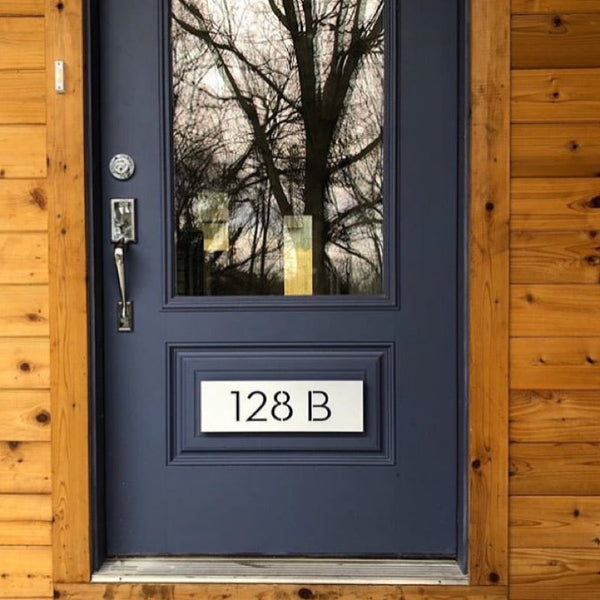
An address plaque is a property identifier that displays either a full street address (number plus street name) or a number-only format, with each approach carrying distinct trade-offs in readability, cost, and regulatory compliance.
This guide covers the core differences between both plaque styles, the practical pros and cons of each format, durability and pricing considerations, how to choose the right style for your property, and how Modern House Numbers supports that decision.
Street name and number-only plaques differ most in layout density, character sizing, and legibility at distance. Number-only designs dedicate more surface area to larger numerals, while street name plaques require a multi-field layout that can reduce individual character height and, consequently, how far away the plaque remains readable.
Each format has clear strengths and weaknesses depending on context. Street name plaques add wayfinding clarity for rural properties, corner lots, and complex street grids, while number-only plaques suit minimalist architecture and well-marked urban streets where the street name is already visible to approaching visitors.
Both styles use the same core materials, but durability and maintenance vary significantly by material choice. Pricing also differs, with number-only plaques typically costing less due to fewer characters and smaller substrate requirements.
Local codes, neighborhood guidelines, and 2025 design trends all shape which format makes sense for a given property. Minimalist fonts and oversized statement numbers currently favor the number-only format, though a well-executed street name plaque remains the stronger choice when full address context is essential.
What Are the Main Differences Between Street Name Address Plaques and Number-Only Plaques?
The main differences between street name and number-only address plaques are information scope, physical size, and design complexity. Street name plaques display both the property number and street name, while number-only plaques display a single numeric identifier. The following sections cover design styles, materials, and visibility factors for each type.
How Do Design Styles Differ Between Street Name and Number-Only Address Plaques?

Design styles differ between street name and number-only address plaques primarily in layout density and text hierarchy. Street name plaques require a two-line or multi-field layout to accommodate the full street name alongside the number, which typically results in a larger, more formal plaque format. Number-only designs allow for bolder, more minimal presentations, with more surface area dedicated to oversized numerals.
From a regulatory standpoint, Section 505.1 of the International Fire Code mandates that address identification be legible and visible from the street. Georgia's state addressing standards also specifically recommend including the full street name in addressing databases to improve wayfinding, which reinforces the practical case for street name plaques in rural or complex street grid areas.
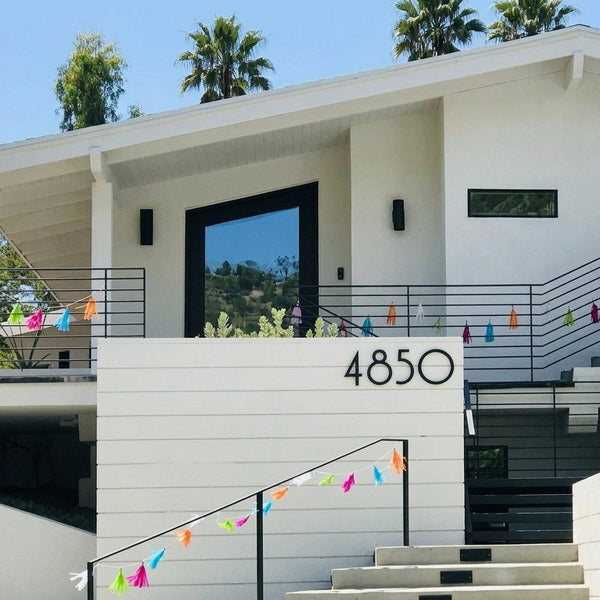
Number-only designs tend to align more naturally with contemporary minimalist aesthetics, while street name formats often suit traditional or estate-style homes where complete address identification adds a sense of formality.
What Are the Typical Materials Used in Each Type of Plaque?
The typical materials used in address plaques include aluminum and acrylic, regardless of whether the design is street name or number-only. Material choice is driven more by budget, environment, and aesthetic preference than by plaque type.
-
Aluminum is rust-proof and weather-resistant, performing well in coastal environments with salt-air exposure.
-
Acrylic is affordable and versatile but tends to fade or discolor with prolonged sun exposure.
Prices for custom plaques range from $150 to $5,000 depending on size and customization level, according to Impact Signs. Street name plaques typically cost more due to additional text, larger surface area, and increased casting complexity.
How Do Visibility and Readability Compare Between Street Name and Number-Only Designs?
Visibility and readability differ between street name and number-only designs primarily because more text requires smaller individual characters, which reduces legibility at distance. Number-only plaques concentrate visual weight on fewer, larger characters, making them easier to read quickly from a moving vehicle or emergency response position.
According to Signs NY, light text on dark backgrounds and clear sans-serif fonts are recommended for maximum distance visibility. Street name plaques must balance two lines of text within a fixed surface area, which often forces designers to reduce character height, directly impacting how far away the plaque remains legible.
The Colorado Springs Fire Department requires address identification to be plainly visible and legible from at least 100 feet. Number-only plaques more readily satisfy this standard without sacrificing character size, making them a strong choice where emergency visibility is the top priority.
What Are the Pros and Cons of Street Name Address Plaques?
Street name address plaques offer contextual clarity but require more surface area, planning, and budget than number-only designs. The sections below cover ideal use cases, common drawbacks, and curb appeal implications.
In What Situations Might a Street Name Plaque Be More Appropriate?

A street name plaque is more appropriate in situations where wayfinding context is limited or the property is difficult to locate without additional identifiers. Rural properties, corner lots, gated communities, and homes on streets with similar numbering patterns all benefit from the added clarity a full street name provides. State guidelines for Georgia, for example, recommend including the full street name in addressing records specifically to improve wayfinding and data linking. Properties with long driveways or low road visibility gain the most practical value from this format, since visitors and delivery drivers can confirm both the street and number from a single sign.
Are There Any Common Drawbacks to Including the Street Name on an Address Plaque?
The common drawbacks of including the street name on an address plaque center on size, cost, and legibility trade-offs. More text requires a larger plaque surface to maintain readable character height. According to APCO Signs, a sign must use a minimum letter height of 4 inches to remain legible at 113 feet. Fitting both a street name and house number at that scale significantly increases plaque dimensions and, consequently, price. Additional drawbacks include:
-
Reduced visual impact when numbers are scaled down to accommodate more text.
-
Higher customization cost for longer street names.
-
Greater installation complexity due to increased plaque weight and size.
-
Risk of visual clutter if font choices or spacing are not carefully managed.
How Does Curb Appeal Change with a Street Name Display?
Curb appeal changes with a street name display by shifting a plaque's visual role from a minimal accent to a more prominent architectural statement. A well-designed street name plaque adds a formal, distinguished quality that suits traditional, estate-style, or craftsman homes. However, for modern and minimalist exteriors, the additional text can compete with clean-lined facades. The best outcomes occur when the street name is set in a complementary secondary type size below the primary house number, preserving visual hierarchy. Thoughtful material and finish choices, such as recycled aluminum with a brushed aluminum or dark bronze finish, help unify both text elements into a cohesive design rather than a crowded one.
What Are the Pros and Cons of Number-Only Address Plaques?
Number-only plaques offer a clean, minimal look that suits a wide range of architectural styles. The sections below cover when they perform best, where they fall short, and how they affect delivery and emergency response.
When Is a Number-Only Plaque the Best Choice for a Property?

A number-only plaque is the best choice for a property when simplicity, bold readability, and design flexibility are the priority. Properties on well-marked streets benefit most, since the street name is already identifiable to visitors and service providers. Homes with minimalist or contemporary architecture gain the most from this format, as the uncluttered face lets the number command full visual attention. For homeowners mounting a plaque at close range near a door or gate, the number alone delivers all the directional information needed without visual noise.
What Limitations or Challenges Come with Number-Only Plaques?
The limitations of number-only plaques are most apparent on rural routes, private roads, or subdivisions where street identification is inconsistent or absent. Without the street name, a visitor approaching from an unfamiliar direction has less context to confirm they are at the correct address. Material selection also matters for long-term performance: according to Saifee Signs, aluminum plaques withstand coastal environments for decades, resisting salt-air corrosion better than many other metals, but lower-grade materials may degrade faster. Investing in a quality cast aluminum or bronze plaque with a protective weatherproof clear satin topcoat or powder coat finish minimizes maintenance concerns regardless of format.
Does a Number-Only Plaque Affect Delivery or Emergency Services?
A number-only plaque can affect delivery or emergency services if the displayed number lacks sufficient size, contrast, or visibility from the street. The Beech Mountain Volunteer Fire Department notes that visible house numbers can mean the difference between life and death by providing an automatic location for enhanced 911 services. A number-only design is not inherently a liability; in fact, removing the street name frees more plaque space for a larger, higher-contrast numeral that first responders can read at speed. The critical factor is compliance with local size and visibility codes, not the presence or absence of a street name.
How Do Durability and Weather Resistance Compare for Each Address Plaque Style?
Durability and weather resistance vary significantly by material, and both street name and number-only plaques are subject to the same environmental stresses. The following sections cover outdoor longevity by material type and the maintenance each style demands.
Are Certain Materials Better for Outdoor Longevity?

Certain materials are better for outdoor longevity, with aluminum consistently outperforming acrylic in long-term performance. Aluminum plaques withstand coastal environments for decades, resisting salt-air corrosion better than many other metals, according to Saifee Signs. Acrylic, while affordable, tends to fade or discolor in sunlight and generally does not last as long as metal alternatives. For homeowners in harsh climates, metal remains the strongest investment regardless of whether the plaque displays a street name or number only.
What Maintenance Considerations Apply to Each Style?
Maintenance considerations for each style depend more on material than on whether the plaque includes a street name or number only. Most aluminum plaques carry a clear weatherproof satin topcoat that protects against oxidation and corrosion. For routine cleaning, metal plaques should be wiped with a soft cloth and warm, soapy water; harsh chemicals containing ammonia can damage the surface. Simpler number-only designs with fewer engraved characters may accumulate less debris in recessed areas, making them marginally easier to clean.
What Are the Typical Costs and Value Considerations for Street Name vs. Number-Only Plaques?
Address plaque pricing varies by style, size, and level of customization. The sections below cover how personalization drives cost differences and which style typically delivers better value.
How Does Customization Affect Pricing?

Customization affects pricing by increasing production complexity, material usage, and design labor. A number-only plaque requires fewer characters, while a street name plaque adds letters, spacing, and often a larger substrate. According to CostHelper, a complete address plaque can cost between $1.80 and $300, with individual letters and numbers ranging from $0.58 to $50 each. At the higher end, custom plaques with premium finishes or large formats can reach $5,000. More characters and larger surface areas directly raise the final price.
Is One Style Typically More Affordable or Cost-Effective?
Number-only plaques are typically more affordable than street name plaques because they use fewer characters and require less material. Standard 8" x 8" square address plaques start at approximately $100.00, and smaller 7" diameter round plaques start from $85.50. Street name plaques, by contrast, demand wider panels and more engraving or casting to accommodate the full address line. For homeowners focused on long-term value, investing in a quality material like aluminum outweighs the upfront cost difference between the two styles, since durability reduces replacement frequency over time.
How Can You Choose the Right Address Plaque Style for Your Home or Project?
Choosing the right address plaque style depends on factors including local code requirements, neighborhood guidelines, and current design trends. The sections below cover what to weigh when deciding between street name and number-only formats, how regulations shape your options, and which 2025 design directions align with modern homes.
What Factors Should You Consider When Deciding Between Street Name and Number Only?
The factors to consider when deciding between street name and number only include property location, municipal numbering rules, and the complexity of your address.
Some jurisdictions standardize how numbers are assigned by each side of the street. San Diego's municipal code, for example, requires even numbers on the western side and odd numbers on the eastern side, which means your number alone may carry enough locational context without a street name.
Consider these additional factors:
-
Property type: Residential homes often need only numbers, while commercial or multi-unit properties benefit from full street name display.
-
Visibility distance: Longer addresses with street names require more plaque space to remain legible.
-
Neighborhood density: In areas with similar street names, adding the street name reduces delivery and navigation confusion.
-
Personal clarity preference: A street name adds redundancy that helps visitors and couriers confirm they have the right address.
Can Local Regulations or Neighborhood Guidelines Influence Your Decision?
Yes, local regulations and neighborhood guidelines can directly influence your address plaque decision. Municipal codes often dictate minimum character size, mounting height, and visibility requirements, leaving little room for purely aesthetic choices.
Homeowners' associations may also restrict materials, color contrast, or the inclusion of street names to maintain visual consistency across a neighborhood. Before selecting a style, check:
-
Your city or county addressing ordinance for character size and display requirements.
-
Your HOA's signage rules for approved materials and formats.
-
Whether your street has naming conflicts nearby that make including the street name advisable for emergency services.
Skipping this step is one of the most common mistakes homeowners make, and it can result in costly replacements after installation.
How Do Design Trends Impact Your Choice?
Design trends impact your choice by signaling which plaque styles will feel current and complement contemporary architecture. According to Post & Porch, three clear trends for 2025 are minimalist fonts, oversized statement numbers, and mixed material combinations.
-
Minimalist fonts favor clean letterforms that work well on number-only plaques, keeping visual weight low.
-
Oversized statement numbers make a bold impact without requiring a street name, reinforcing the number-only format's modern appeal.
-
Mixed material combinations such as brushed aluminum paired with wood or concrete suit both street name and number-only layouts, giving designers flexibility.
Trends favor the number-only format right now, but a well-executed street name plaque in the right finish still holds its own when the architectural context calls for it.
How Does Modern House Numbers Support Your Address Plaque Selection Process?

Modern House Numbers supports your address plaque selection process by combining architect-designed expertise with fully custom, made-to-order craftsmanship. The sections below cover custom plaque options and key takeaways from this street name vs. number-only comparison.
Can Modern House Numbers Provide Custom, Architect-Designed Plaques Tailored to Your Needs?
Yes, Modern House Numbers can provide custom, architect-designed plaques tailored to your needs. Founded by architects Brandy and Rick McLain in 2008, every plaque is handcrafted to order in Tucson, Arizona, using solid, recycled 3/8" thick aluminum designed to last for years.
Custom plaques start at $64.50 and are available in multiple font styles, including Palm Springs, SoCal, Austin. Whether you prefer a street name plaque or a clean number-only design, Modern House Numbers configures each order to your specifications, with concealed hardware and a free personalized drilling template included.
The City of Mobile notes that missing or poorly visible house numbers can significantly delay emergency response, making a well-designed, legible plaque a practical safety investment alongside a curb appeal upgrade.
What Are the Key Takeaways About Address Plaque Reviews: Street Name vs. Number Only We Covered?
The key takeaways about address plaque reviews are that your choice between a street name and number-only plaque depends on visibility needs, local codes, budget, and design preference.
The most actionable conclusions from this comparison include:
-
Visibility is non-negotiable. Santa Rosa requires address numbers to be continuously displayed and readily visible to emergency vehicles from the street, a standard that applies regardless of plaque style.
-
Local definitions matter. The City of Las Vegas defines a complete address as a number, directional prefix, primary street name, and suffix, which may inform whether your plaque should include a street name.
-
Budget guides format. According to CostHelper, a complete address plaque costs between $1.80 and $300, with individual characters ranging from $0.58 to $50, making number-only designs the more affordable entry point.
-
Material and design are long-term decisions. Choosing durable materials and a timeless format reduces future replacement costs.
Modern House Numbers brings architectural judgment to every one of these decisions, helping you select a plaque that meets safety standards, local requirements, and your home's design vision.