 Numbers + Letters
 QuickShip
 Plaques
 Decals
 Custom
 Trade
Trade


Large house numbers are address identifiers sized and designed to maximize street visibility while complementing a home's architectural character. Choosing the right set means evaluating style, material, size compliance, color contrast, installation method, maintenance demands, and curb appeal impact together.
This guide covers style and trend comparisons, material performance across climates, sizing and placement requirements, color and finish decisions, installation methods, maintenance by material type, and the real estate value of a deliberate upgrade.
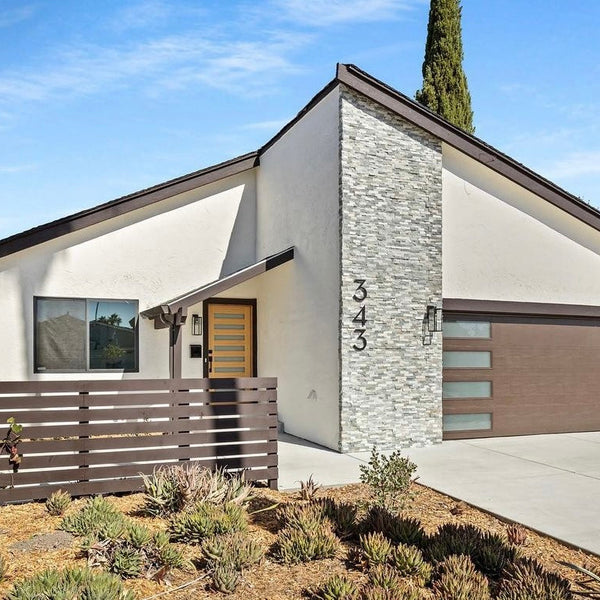
Modern and minimalist designs favor clean geometric fonts and metal finishes, while traditional styles use serif letterforms and warmer brass or bronze tones. For 2026, oversized formats measuring 8 to 15 inches are projected to dominate, with mixed-material combinations emerging as a strong design direction.
Material performance varies by climate. Aluminum and stainless steel handle humidity and coastal salt air reliably, while acrylic fades in high-UV environments and glazed ceramic resists moisture but can crack through freeze-thaw cycles.
Size and placement carry compliance weight. The NFPA 1 Fire Code requires address numbers to be plainly legible from the street, and local codes in cities like Los Angeles and Chicago set specific minimum heights. Emergency response guidance recommends at least 4 inches for single-family homes and 6 inches for multi-unit buildings.
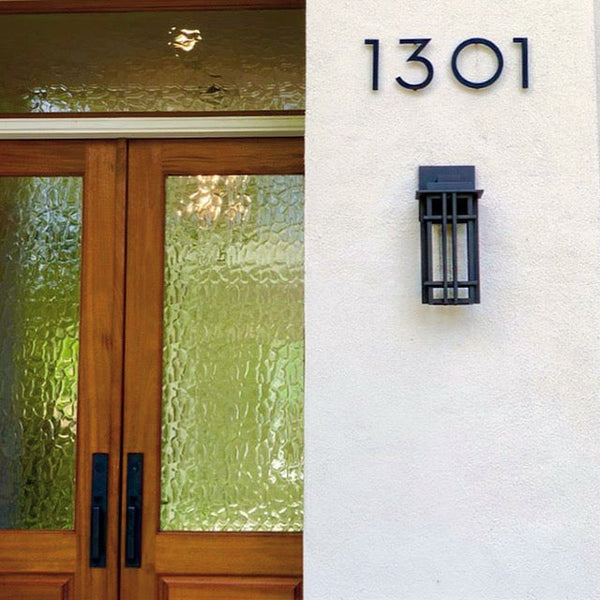
Color contrast determines legibility. A luminance contrast of 30 to 50 percent maintains readability under varying light conditions, and pairings like matte black on white or brushed aluminum on dark siding consistently perform best.
Well-chosen numbers also affect property value. Research shows a maintained exterior can raise home value by up to 10%, making house numbers one of the highest-return details in any curb appeal investment.
What Are the Most Popular Styles of Large House Numbers Available Today?
The most popular styles of large house numbers today span three broad categories: modern and minimalist designs, traditional ornamental styles, and mixed-material statement pieces. Each style serves a distinct aesthetic while meeting visibility and curb appeal goals.
How Do Modern, Minimalist, and Traditional Styles Differ in Large House Numbers?
Modern, minimalist, and traditional styles differ in form, finish, and visual weight. Modern styles favor clean geometric letterforms, flush mounting, and metal finishes such as brushed aluminum or matte black. Minimalist designs strip back ornamentation entirely, prioritizing negative space and slim profiles that complement contemporary architecture. Traditional styles use serif fonts, heavier stroke weights, and warmer finishes like dark bronze or matte brass to complement craftsman, colonial, or Victorian facades.
What Are the Key Design Trends for Large House Numbers in 2026?
The key design trends for large house numbers in 2026 include oversized formats, minimalist typography, and mixed-material combinations. According to Dropcap Studio's 2026 trend report, numbers measuring 8 to 12 inches or more are predicted to dominate, boosting visibility while serving as dramatic architectural features for homes set back from the street. Consumer search data confirms that questions about sizing and warm, timeless aesthetics rank among the most common house number queries heading into 2026. Mixed materials, pairing metal characters with backlit acrylic or concrete panels, reflect a broader shift toward numbers that function as exterior design statements rather than purely utilitarian identifiers.
Which Styles of Large House Numbers Enhance Curb Appeal Most Effectively?

The styles of large house numbers that enhance curb appeal most effectively are those that achieve strong visual contrast against the mounting surface while complementing the home's architectural language. According to WebAIM, a contrast ratio of at least 4.5:1 is sufficient for large text, which covers most oversized house numbers, while a 7:1 ratio meets the highest legibility standard. High-contrast pairings, such as matte black numbers on white stucco or brushed aluminum on dark brick, maximize readability from the street. Research from The Ginther Group indicates that a well-maintained exterior, including quality house numbers, can increase property value by up to 10%. Numbers that align with the home's architectural style, rather than clash with it, consistently deliver the strongest first impression.
What Materials Are Commonly Used for Large House Numbers, and How Do They Compare?
The most common materials for large house numbers are aluminum, stainless steel, acrylic, and ceramic. Each varies in durability, maintenance requirements, and visual character, so the right choice depends on your climate, architectural style, and long-term expectations.
What Are the Pros and Cons of Aluminum, Brass, Stainless Steel, and Other Materials?
The pros and cons of aluminum, brass, stainless steel, and other materials differ across cost, weight, weather resistance, and aesthetics:
-
Aluminum: Lightweight with an excellent strength-to-weight ratio, corrosion-resistant, and highly workable. It holds paint and powder-coat finishes well but can oxidize over time without a protective coating.
-
Stainless steel: Extremely durable and easy to clean. According to Fractory, the 2R (Bright Annealed) finish is exceptionally smooth and less likely to harbor airborne contaminants or moisture, making it one of the most hygienic and low-maintenance options available.
-
Acrylic: Affordable and versatile, though it tends to fade and discolor with prolonged sun exposure, limiting its long-term value.
-
Ceramic (glazed): Offers a waterproof barrier that resists moisture absorption, though it is heavier and more fragile than metal options.
For most homeowners prioritizing longevity with minimal upkeep, aluminum and stainless steel consistently outperform the alternatives.
How Durable Are Different House Number Materials in Various Climates?
The durability of different house number materials varies significantly by climate conditions such as humidity, UV intensity, salt air, and freeze-thaw cycles:
-
Aluminum: Performs reliably across most climates. Its natural oxide layer resists corrosion in humid and coastal environments.
-
Stainless steel: Excels in high-humidity and coastal settings where salt air accelerates rust on lesser metals.
-
Acrylic: Weakest in sunny, high-UV environments, where fading and discoloration occur fastest.
-
Glazed ceramic: Handles wet climates well, but its rigidity makes it vulnerable to cracking in regions with hard freeze-thaw cycles.
Climate is the single most underweighted factor homeowners consider when selecting materials, yet it determines how a number looks five years after installation far more than initial finish quality does.
How Does Material Choice Affect the Appearance and Longevity of Large House Numbers?
Material choice directly affects both the visual character and the expected service life of large house numbers. Metals like aluminum and stainless steel maintain crisp, architectural lines over decades with minimal degradation, supporting clean modern aesthetics long-term. Acrylic offers sharp color options at lower cost, though its appearance degrades faster in sun-exposed installations. Glazed ceramic contributes handcrafted texture and color depth, but its lifespan depends heavily on installation quality and regional temperature swings. Choosing a material that aligns with both your home's exterior palette and your local climate ensures the numbers remain a design asset rather than a maintenance liability.
What Size and Placement Guidelines Should Be Considered for Large House Numbers?
Size and placement guidelines for large house numbers cover three key areas: minimum visible dimensions, optimal mounting locations, and local code or HOA requirements. The sections below address each factor in full.
How Large Should House Numbers Be for Maximum Visibility?
House numbers should be at least 4 inches tall for single-family homes and 6 inches tall for multi-unit or commercial buildings to support effective emergency response. For homes set well back from the street, 8 to 12 inches or larger provides the dramatic visibility that makes numbers readable at a glance.
According to the City of Oakland Park, undersized numbers directly delay public safety response times, which makes size a functional decision, not just an aesthetic one. From a design standpoint, larger numbers also serve as architectural features, so choosing the right size rewards you on both fronts.
Where Is the Best Place to Install Large House Numbers for Readability and Style?

The best place to install large house numbers is on a surface plainly visible from the street or road fronting the property, as required by the NFPA 1 Fire Code (2018 edition). Strong placement options include:
-
Beside the front door or entryway at eye level.
-
On a fence post, pillar, or gate near the street for homes with long driveways.
-
On a mailbox or low garden wall when the facade is obscured by landscaping or distance.
-
Mounted flat on a garage door panel or exterior wall facing the street.
Avoid placing numbers behind plants, under overhangs with heavy shadow, or on surfaces that face away from the primary approach angle.
Are There Local Ordinances or HOA Rules about House Number Size and Placement?
Local ordinances and HOA rules about house number size and placement vary widely by jurisdiction. The Los Angeles Municipal Code calculates minimum height as one-tenth of the setback distance in feet plus two inches, with a floor of four inches. Chicago mandates that each numeral on any residence be no less than three inches in length.
Beyond city codes, HOA rules frequently govern font style, finish color, and exact mounting position. Before purchasing, check your local municipal code and HOA covenants to confirm compliant dimensions and approved installation zones.
How Do Color and Finish Options Impact the Look and Function of Large House Numbers?
Color and finish choices affect both the visual appeal and the legibility of large house numbers. The sections below cover which finishes create the strongest contrast for easy reading and which color combinations balance style with visibility.
Which Finishes Offer the Best Contrast for Easy Reading?

The finishes that offer the best contrast for easy reading are those that create a clear luminance difference between the number and its mounting surface. A Transportation Research Board laboratory study on sign legibility found that a luminance contrast of 30 to 50 percent is required to maintain 75th-percentile legibility under varying lighting conditions.
Common high-contrast finish options include:
-
Matte black on light or white walls, which eliminates glare while maximizing figure-ground separation.
-
Brushed aluminum against dark surfaces such as charcoal, navy, or espresso siding.
-
Dark bronze mounted on warm cream or tan stucco, which delivers strong contrast with a traditional character.
Matte finishes perform more consistently across changing daylight conditions because they do not produce glare hotspots that can temporarily obscure numerals for drivers passing at speed.
What Color Combinations Enhance Both Style and Visibility?
The color combinations that enhance both style and visibility pair high-contrast tones with complementary architectural colors rather than matching the facade. A contrast ratio of at least 4.5:1 is sufficient for large text such as house numbers, according to WCAG standards documented by WebAIM.
Effective pairings by architectural style include:
-
White numbers on dark siding: Works with modern and contemporary homes featuring black, navy, or deep green exteriors.
-
Matte black numbers on white or light gray: The most universally legible combination for minimalist facades.
-
Dark bronze or matte brass numbers on dark wood or charcoal: Adds warmth while maintaining contrast on craftsman and mid-century homes.
-
Brushed aluminum on terracotta or brick: Natural metal tones read cleanly against warm, earthy backgrounds.
Choosing a finish color that complements trim rather than blending into the main body color is the most reliable strategy for combining curb appeal with clear readability.
How Do You Properly Install Large House Numbers Across Different Surfaces?
Installing large house numbers properly depends on the mounting surface, since brick, wood, stucco, and metal each require different hardware and preparation. The sections below cover the essential tools and hardware for each surface type, plus how installation templates simplify alignment and spacing.
What Tools and Hardware Are Needed for Installation on Brick, Wood, or Stucco?
The tools and hardware needed for installation vary by surface: masonry anchors and a hammer drill for brick, wood screws and a standard drill for wood, and toggle bolts or masonry anchors for stucco.
Common tools across all surfaces include:
-
A power drill with the appropriate bit (masonry, wood, or multipurpose)
-
A level to ensure straight horizontal alignment
-
A tape measure for consistent spacing between digits
-
A pencil or marking tool for pilot hole locations
-
Mounting screws, wall anchors, or standoffs sized to the number weight and depth
On brick and stucco, pilot holes drilled slightly smaller than the anchor diameter create a secure grip. Wood installations are more forgiving, though pre-drilling prevents splitting in hardwoods or painted trim. Concealed hardware, like standoff mounting systems, keeps fasteners hidden for a clean architectural finish. Businesses like Modern House Numbers take the guess work out of installation by including necessary hardware, and a personalized drilling template to ensure consistent spacing between digits.
Are There Installation Templates or Guides That Simplify the Process?
Yes, installation templates are guides that simplify the process by pre-marking exact drill hole locations for each digit, eliminating guesswork on spacing and alignment. Modern House Numbers includes personalized drilling templates and step-by-step installation instructions with purchases, so holes are positioned correctly before drilling begins.
Using a template reduces the most common installation errors, such as uneven spacing, crooked rows, and misaligned standoffs. The process is straightforward:
-
Tape the template to the mounting surface at the desired height.
-
Mark or punch through the template to transfer drill hole locations.
-
Remove the template, drill pilot holes, and insert anchors.
-
Mount each number or letter onto the hardware.
This approach works across brick, wood, stucco, and most exterior surfaces, making professional-looking results achievable without specialized trade skills.
What Maintenance and Care Are Required for Different Styles and Materials?
Maintenance and care requirements vary by material type, including aluminum, stainless steel, acrylic, and ceramic. The sections below cover routine cleaning practices and the warning signs that signal replacement or refurbishment.
How Should You Clean and Protect Large House Numbers to Extend Their Life?
Cleaning and protecting large house numbers requires material-specific methods to prevent premature wear. The correct approach depends on what your numbers are made from:
-
Aluminum: Wipe with a damp cloth and mild soap. Avoid abrasive pads that scratch the finish.
-
Stainless steel: The 2R (Bright Annealed) finish is extremely smooth and resists airborne contaminants and moisture, making routine cleaning straightforward with a damp microfiber cloth and a streak-free cleaner.
-
Acrylic: Clean gently with a soft, damp cloth. Avoid solvent-based cleaners, which accelerate surface crazing and discoloration from UV exposure.
-
Glazed ceramic: Wipe down with a damp cloth. The waterproof glaze barrier requires no sealant and resists moisture absorption effectively.
For all materials, inspect fastener hardware annually and reseal any mounting holes where water could wick behind the number and accelerate corrosion.
What Signs Indicate It's Time to Replace or Refurbish House Numbers?
The signs that indicate it's time to replace or refurbish house numbers fall into three clear categories: visible material degradation, legibility failure, and structural compromise.
-
Fading or discoloration: Acrylic numbers are particularly prone to fading and discoloring under prolonged direct sunlight, signaling the end of their useful lifespan.
-
Pitting or surface corrosion: Metal numbers showing rust streaks, deep pitting, or flaking finish can no longer be cleaned back to a presentable state.
-
Cracking or chipping: Ceramic and acrylic numbers that chip or crack lose both aesthetics and weather resistance simultaneously.
-
Illegibility from the street: If numbers cannot be read clearly from the curb, they pose a safety risk regardless of material condition.
-
Loose or missing mounting hardware: Numbers that shift, tilt, or rattle indicate hardware failure that risks complete detachment.
Refurbishing is practical for solid metal numbers with only surface oxidation; replacement is the better call when structural integrity or legibility is compromised. Investing in durable, architect-designed aluminum numbers from the outset significantly reduces how often replacement becomes necessary.
How Do Large House Numbers Affect Your Home's First Impression and Value?
Large house numbers affect your home's first impression by signaling attention to detail, architectural care, and pride of ownership from the street. The sections below cover how upgraded numbers influence property value and neighborhood standing.
Do Upgraded House Numbers Increase Property Value or Appeal to Buyers?
Upgraded house numbers increase property value and appeal to buyers by contributing directly to curb appeal, one of the most influential factors in a home's perceived worth. Research on residential curb appeal reveals that a well-maintained exterior, including high-quality house numbers, can increase a home's overall property value by up to 10%. According to a National Association of Realtors study, an investment of approximately $3,500 in curb appeal improvements can potentially raise a home's value by as much as $12,000. For such a modest line item within that budget, house numbers deliver an outsized visual return. Buyers form judgments within seconds of arriving at a property, and crisp, well-chosen numbers signal that the rest of the home has been equally well maintained.
Can Stylish Numbers Make a Home Stand Out in the Neighborhood?
Stylish house numbers can make a home stand out in the neighborhood by functioning as a small but visible design statement that differentiates one property from the next. Most homes default to builder-grade numbers with little visual presence, so a deliberate upgrade in scale, font, or finish immediately catches the eye. Oversized numbers in a clean modern font, for example, communicate architectural confidence. Beyond aesthetics, numbers that complement a home's exterior palette and material palette create a cohesive, finished look that neighbors and passersby notice. In a street of similar homes, that consistency of detail is what makes one property feel curated and another feel overlooked.
How Should You Approach Large House Numbers with Architect-Designed, Handcrafted, Made-to-Order Options?
Approaching large house numbers with architect-designed, handcrafted, made-to-order options means evaluating style, material, size compliance, and weather performance together. The sections below cover how Modern House Numbers supports those choices and the key article takeaways.
Can Personalized, Made-to-Order House Numbers from Modern House Numbers Help with Style and Material Choices?

Yes, personalized, made-to-order house numbers from Modern House Numbers can help with both style and material choices. Founded by architects Brandy and Rick McLain, Modern House Numbers designs every product with architectural integrity, allowing homeowners to match address signage precisely to their home's exterior character.
Size decisions benefit from compliance awareness. The NFPA 1 Fire Code (2018 edition) requires address numbers to be plainly legible and visible from the street, and the City of Oakland Park recommends a minimum of 4 inches for single-family homes and 6 inches for multi-unit buildings. For homes set back from the street, 8 to 12 inch numbers are projected to dominate in 2026 as both visibility tools and architectural features.
Material selection matters as much as size. Recycled aluminum offers low-density durability suited to varied climates, and many quality manufacturers like Modern House Numbers prioritize this sustainable material choice. A made-to-order approach eliminates guesswork on finish, font, and scale.
What Are the Key Takeaways About Large House Numbers: Compare Styles & Materials [2026] We Covered?
The key takeaways about large house numbers covered in this article center on four practical decisions: size, material, contrast, and compliance.
-
Size: Numbers measuring 8 to 12 inches or more boost visibility and double as architectural statements, particularly for homes set back from the street.
-
Material: Aluminum offers durability and low maintenance; glazed ceramic provides waterproof performance; acrylic costs less but fades over time in direct sunlight.
-
Compliance: Local codes vary, and national standards like NFPA 1 set a clear legibility baseline regardless of location.
-
Curb appeal: Design quality, finish, and scale together determine how effectively house numbers contribute to a home's first impression.
Modern House Numbers offers architect-designed, handcrafted products made to order in Tucson, Arizona, with personalized drilling templates and installation instructions included, making it straightforward to meet both aesthetic and safety requirements in one purchase.