 Numbers + Letters
 QuickShip
 Plaques
 Decals
 Custom
 Trade
Trade


Choosing between a pylon sign and a monument sign comes down to matching sign height and placement to your traffic speed, site conditions, budget, and brand image. Pylon signs stand on elevated poles for long-distance highway visibility, while monument signs sit low to the ground for close-range, architectural impact.
This guide covers what defines each sign type and where they perform best, how they compare in visibility and driver perception, the local codes and site conditions that shape feasibility, branding and aesthetic differences, cost and maintenance factors, safety and durability standards, and how to match a final choice to your specific business goals.
Pylon and monument signs serve different visibility needs by design. Pylon signs mount on single or twin poles reaching 20 to 80 feet, built for gas stations, hotels, shopping centers, and dealerships along highways and busy corridors. Monument signs stay four to eight feet tall, built into masonry or landscaping for medical offices, corporate campuses, and retail centers where close-range identification matters more than distance.
Height and driver attention drive the visibility comparison between these two formats. Pylon signs give drivers more reaction time at highway speeds, while monument signs confirm arrival once a driver has already slowed down; brand perception follows a similar split, with pylon signs projecting scale and monument signs projecting permanence.
Local zoning, setback rules, and permitting requirements often narrow the choice before budget or design preferences even enter the conversation. Site-specific factors, including road speed, parking layout, multi-tenant needs, and grade conditions, further determine which sign type a property can actually support.
Materials, typography, and lighting shape how each sign communicates brand identity, with pylon signs favoring bold, high-impact visuals and monument signs favoring refined, building-matched, design-focused detailing. Cost, installation complexity, and ongoing maintenance also diverge sharply between the two, from foundation depth to weather exposure to total ownership expense over the sign's lifespan.
Safety engineering, wind and seismic load requirements, and material durability round out the technical factors worth weighing before installation. Once these considerations point toward a final decision, extending the same materials and typography to entrance house numbers and address plaques completes a cohesive property identity from the street to the front door.
What Are Pylon Signs and When Are They Typically Used?
Pylon signs are freestanding, pole-mounted structures built for high visibility from roads and highways. Businesses typically use them along major thoroughfares, at multi-tenant properties, and wherever long-distance recognition matters. This section covers their definition, ideal locations, common industries, pole configurations, and design and lighting choices.
How Is a Pylon Sign Defined in Commercial Signage?
A pylon sign is defined as a freestanding exterior sign elevated on one or more poles or columns, engineered for visibility from a distance. Unlike wall-mounted or ground-level signage, a pylon sign stands independently, often towering well above eye level to catch the attention of passing traffic. The structure typically includes a sign cabinet or panel mounted atop a steel or aluminum pole, anchored in a reinforced concrete footing. This elevated design allows businesses to advertise their name, logo, or offerings to drivers who may be hundreds of feet away, making pylon signs a staple of high-traffic commercial corridors.
In What Business Locations Do Pylon Signs Work Best?
Pylon signs work best in locations such as busy highways, major intersections, and multi-tenant retail centers where long-distance visibility drives foot traffic. Properties set back from the road, or those competing with multiple businesses for driver attention, benefit most from the height these signs provide. Gas stations, shopping plazas, and hotels near freeway exits rely on pylon signs because drivers need advance notice to safely change lanes or exit. Sites with limited street frontage but high vehicle speeds also favor pylon signs over ground-level alternatives, since elevation compensates for the short reaction window drivers have at higher speeds.
What Types of Businesses Commonly Use Pylon Signs?
The types of businesses that commonly use pylon signs include gas stations, hotels, shopping centers, restaurants, and car dealerships. These industries share a need for immediate driver recognition and often operate along highways or busy commercial strips. Common examples include:
- Gas stations and travel centers, which use pylon signs to display fuel prices visible from a distance.
- Hotels and motels near freeway exits, relying on tall signage to capture last-minute travelers.
- Shopping centers and strip malls, listing multiple tenant names on one shared pole.
- Fast-food and casual dining chains, using bright, branded pylon signs to stand out among competitors.
- Car dealerships, which favor tall signs to advertise inventory and promotions across large lots.
How Do Single-Pole and Twin-Pole Pylon Signs Differ?
Single-pole and twin-pole pylon signs differ primarily in structural support and wind resistance. A single-pole design uses one central column to support the sign cabinet, offering a sleeker profile and lower material costs, but requiring a deeper foundation to withstand wind loads. A twin-pole design splits the load across two separate columns, increasing stability for taller or wider sign faces and reducing sway in high-wind regions. Twin-pole structures also allow wider sign cabinets, useful for multi-tenant listings, while single-pole designs suit businesses wanting a minimalist, focused look. Site conditions, sign height, and local wind codes typically determine which configuration a business chooses.
What Are the Main Design and Lighting Options for Pylon Signs?
The main design and lighting options for pylon signs include material choice, cabinet style, and illumination type. Most agencies use aluminum for sign backing, according to the Federal Highway Administration, since it resists corrosion while remaining lightweight enough for elevated mounting. Design options range from static routed-face cabinets to digital LED display panels capable of changing messages. Lighting choices include internally illuminated push-through letters, backlit halo lettering, and full-color LED displays visible day and night. Businesses often combine illuminated cabinets, reflective vinyl graphics, and accent lighting to maximize visibility while keeping maintenance manageable. Monument signs, by contrast, suit a different visual approach and setting.
What Are Monument Signs and When Are They Typically Used?
Monument signs are low-profile, ground-mounted signs built into landscaping or a masonry base near a property entrance. Businesses use them for close-range identification and curb appeal. The following sections cover their definition, ideal settings, common industries, materials, and design options.
How Is a Monument Sign Defined in Commercial Signage?
A monument sign is a freestanding, ground-mounted sign structure that sits low to the ground, usually built into a solid base rather than raised on poles. Monument signs typically display a business name, logo, and address on a single, unified structure positioned near a property entrance. Unlike pole-mounted signage, monument signs blend into landscaping and hardscape design, creating a permanent architectural feature rather than a tower visible from a distance. Property owners commonly place them at driveway entrances or along street frontage to identify the business without dominating the site. This ground-level design gives monument signs a grounded, upscale appearance compared to taller freestanding sign types.
What Business Settings Are Best Suited to Monument Signs?
The business settings best suited to monument signs are low-speed, close-range environments such as office parks, medical campuses, apartment communities, and retail centers with short setbacks from the road. These locations allow drivers and pedestrians to read the sign at a slower pace, which suits the compact monument format. Monument signs also work well where zoning restricts sign height, since their low profile satisfies strict height limits while still providing street presence. Multi-tenant properties benefit because a single structure can list several business names in an organized layout. In residential-adjacent commercial zones, monument signs offer a quieter, more architectural alternative to tall pole signs.
What Types of Businesses Commonly Use Monument Signs?
The types of businesses that commonly use monument signs include:
- Medical and dental offices, especially multi-practice clinics
- Corporate office parks and business campuses
- Apartment complexes, HOAs, and gated communities
- Schools, churches, and government buildings
- Retail centers and strip malls with multiple tenants
These businesses share a common need for clear identification at a manageable scale rather than high-speed roadway visibility. Monument signs suit organizations that prioritize a professional, established image over towering street presence.
How Do Materials and Construction Methods Affect Monument Signs?
Materials and construction methods affect monument signs by determining durability, cost, and overall appearance. Common construction options include brick, natural stone, stucco, aluminum cabinets, and precast concrete, each carrying different maintenance needs and price points. Digital and LED display components add significant cost and complexity, since embedded electronics require weatherproofing and structural reinforcement within the base. According to Mega Sign Inc., LED monument signs range from $15,000 to $300,000 depending on display size, pixel pitch, cabinet materials, and installation scope. Masonry-heavy designs tend to cost less upfront but offer fewer dynamic display features, while digital monument signs let businesses update messaging without replacing physical panels.
What Design and Illumination Options Are Available for Monument Signs?
The design and illumination options available for monument signs include internally illuminated cabinets, halo-lit channel letters, backlit push-through acrylic, external spotlights, and non-illuminated masonry faces. Internally lit cabinets provide even, consistent brightness for nighttime visibility, while halo lighting creates a subtle glow behind individual letters for a more upscale look. External spotlighting works well for signs built from natural stone or brick, highlighting texture without altering the structure's daytime appearance. Some monument signs incorporate digital LED sections for changeable messaging alongside a static masonry base. Business owners should weigh nighttime visibility needs against energy costs and local lighting ordinances. These design choices set the stage for comparing visibility against pylon signs.
How Do Pylon Signs and Monument Signs Compare in Visibility and Impact?
Pylon signs and monument signs compare differently in visibility and impact: pylon signs deliver long-distance visibility for highways and major roads, while monument signs create close-range impact at ground level. Height, driver perception, traffic speed, and brand tone each shape which option performs better.
How Does Sign Height Affect Visibility From the Road or Highway?
Sign height affects visibility by determining how far away a driver can first spot and read the message. Taller structures clear sightline obstructions such as trees, other buildings, and traffic, giving drivers more time to react. One inch of capital letter height is readable at approximately 10 feet of viewing distance, meaning taller pylon signs need proportionally larger lettering to stay legible from highway speeds. This relationship between height, letter size, and readability explains why pylon signs, which can cost $8,000 to over $200,000 depending on size and materials, are engineered specifically for maximum elevation. Monument signs, built lower to the ground, rely on close proximity rather than height to communicate clearly.
How Do Drivers Perceive Pylon Signs Versus Monument Signs?
Drivers perceive pylon signs as distant landmarks and monument signs as close-range confirmations of arrival. A pylon sign registers early in a driver's peripheral vision, while a monument sign confirms the destination once the driver has already slowed down. This distinction matters because recall is inconsistent unless a sign actually captures a look. According to the Federal Highway Administration, warning signs were correctly identified only about a third of the time when no direct look at the sign was recorded, underscoring how attention, not just presence, drives recognition. Both sign types must also meet electrical safety benchmarks, including UL 48 for electric signs and UL 879A for LED sign retrofit kits, which govern illuminated pylon and monument designs alike.
Which Option Works Better for High-Speed Traffic and Long Viewing Distances?
Pylon signs work better for high-speed traffic and long viewing distances. Their elevated poles, often reaching 20 to 80 feet, push the sign face above ground-level obstructions so drivers moving at highway speeds have adequate time to notice, read, and react. Monument signs, capped at four to eight feet, simply cannot achieve that same sightline advantage on fast-moving roads. For businesses fronting a highway or major arterial, a pylon sign remains the more reliable choice for capturing attention before a driver passes the entrance.
Which Option Works Better for Pedestrian-Friendly or Urban Environments?
Monument signs work better for pedestrian-friendly or urban environments. Their low, wide footprint suits sidewalks, plazas, and slower-speed streets where people approach on foot or at reduced vehicle speeds, and there is no need for the extreme height a highway demands. This makes monument signs a natural fit for urban storefronts, medical offices, and mixed-use developments where scale and proportion matter more than long-distance reach.
How Does Each Sign Type Influence Brand Perception and First Impressions?

Each sign type influences brand perception differently: pylon signs project scale, dominance, and visibility-driven confidence, while monument signs project permanence, craftsmanship, and architectural credibility. A tall pylon sign tells passing drivers a business is easy to find and open for high traffic volume, which suits gas stations, retail centers, and highway-adjacent businesses. A monument sign, by contrast, signals investment in quality and design, often built from durable stone or masonry that ages well and reads as established rather than transient.
The sign choice sends a message before a customer ever reaches the door, much like a home's address numbers set the tone at the front entrance. A mismatched sign height or style can undercut an otherwise strong storefront, so aligning sign type with brand personality deserves the same attention as any other exterior design decision. With visibility and brand impact addressed, local zoning and regulatory rules are the next factor shaping which sign type is actually permitted on-site.
How Do Local Codes and Regulations Affect Your Choice of Pylon vs. Monument Signs?
Local codes and regulations often determine which sign type is even legally possible on your property, governing height, placement, illumination, and permitting. Zoning limits, setback rules, lighting standards, permit requirements, and professional guidance each play a role, as detailed below.
What Zoning and Sign Height Restrictions Should You Expect?
Zoning and sign height restrictions are municipal rules that cap how tall a sign can be and where it can stand based on the property's zoning classification. Commercial corridors along major highways generally allow taller structures, favoring pylon signs, while retail districts and residential-adjacent commercial zones often restrict height to protect neighborhood character, favoring monument signs. Zoning boards typically also regulate total sign area, the number of signs per parcel, and whether freestanding signs are allowed at all. Some municipalities apply stricter limits near school zones, historic districts, or scenic corridors. Because these rules differ block by block in many cities, a sign that is standard in one district may be entirely prohibited a few miles away. Reviewing the zoning code before finalizing a design saves significant time and redesign costs later.
How Do Setback, Right-of-Way, and Easement Rules Influence Placement?
Setback, right-of-way, and easement rules dictate the minimum distance a sign must sit from property lines, streets, and utility corridors. Setback requirements protect sightlines for drivers approaching intersections and driveways, which is why corner lots often face tighter restrictions than mid-block parcels. Right-of-way boundaries, controlled by the municipality or state transportation department, prevent any structure from encroaching on public land, sidewalks, or roadways. Easements, whether for utilities, drainage, or shared access, can eliminate otherwise ideal sign locations entirely. Pylon signs, with their deep foundations and taller profiles, tend to require larger setback buffers than monument signs. A pre-construction survey identifying these boundaries is essential before selecting a final sign location.
Are There Special Requirements for Illuminated or Digital Pylon Signs?
Special requirements for illuminated or digital pylon signs typically involve additional review beyond standard sign permits. Many jurisdictions regulate brightness levels, hours of operation for digital displays, and the rate at which content or images can change, since flashing or rapidly transitioning displays can distract drivers. Electrical permits are almost always required for illuminated signage, along with inspections to confirm code-compliant wiring and grounding. Some municipalities ban digital displays outright in residential-adjacent zones or along scenic routes, while others cap luminance at specific times of day or night. Because digital pylon signs combine structural, electrical, and content regulations, they generally face the most layered approval process of any sign type discussed in this guide.
What Permits and Approvals Are Typically Required for Monument Signs?
Permits and approvals for monument signs typically include a building permit, a sign permit, and, if illuminated, an electrical permit. Many jurisdictions also require a site plan review to confirm the sign meets setback and visibility standards, particularly near intersections. In planned developments or properties governed by a homeowners' or business association, an additional architectural review approval is often necessary to confirm the design matches community standards. Because monument signs are built into the ground with masonry or foundation elements, some municipalities also require a structural or footing inspection before final sign-off. Gathering these approvals in the correct sequence prevents costly construction delays.
How Do Site Conditions and Location Constraints Shape Your Decision?

Site conditions and location constraints shape sign choice because road speed, sight lines, parking layout, tenant mix, and lot geometry each dictate what size and style of sign will actually perform. The scenarios below cover:
- Road speed, traffic volume, and sight lines
- Parking lots, landscaping, and entrances
- Multi-tenant developments
- Grade changes, utilities, and foundations
- Corner lots, shopping centers, and business parks
How Do Road Speed, Traffic Volume, and Sight Lines Affect Sign Choice?
Road speed, traffic volume, and sight lines affect sign choice by determining how much height and letter size a sign needs to register with drivers before they pass the property. High-speed arterials and highways favor taller pylon signs, since drivers have only seconds to spot the business and react. Lower-speed streets and neighborhood roads generally suit monument signs, which read clearly at close range without needing extra elevation. Sight lines matter too: curves, hills, trees, or utility poles can block a sign's view from certain approach angles, pushing the decision toward a taller structure or a different placement on the lot. Heavy traffic volume also raises the value of quick, legible identification, making sign height and clarity a priority rather than an afterthought.
What Role Do Parking Lots, Landscaping, and Entrances Play in Sign Placement?
Parking lots, landscaping, and entrances play a role in sign placement by defining where a sign can physically stand without blocking traffic flow or driver visibility. Entrances need clear, unobstructed sign placement so drivers can identify the correct turn-in point before committing to a lane. Landscaping, including mature trees, berms, or dense shrubs, can hide a low monument sign, sometimes tipping the decision toward added height or a repositioned base. Parking lot layout also matters, since signs cannot interfere with drive aisles, backup distances, or ADA-accessible paths. In practice, a property with a deep setback and open sightlines has more placement flexibility, while a tight, landscaped entrance often narrows the options considerably.
How Do Multi-Tenant Developments Influence Pylon vs. Monument Needs?
Multi-tenant developments influence pylon vs. monument needs by requiring signs that list multiple businesses instead of just one. Larger multi-tenant centers with several storefronts along a busy road often need a pylon sign tall enough to display panels for each tenant while remaining readable from a distance. Smaller multi-tenant buildings set closer to the street, by contrast, can often rely on a monument sign with a tiered tenant panel layout. Tenant count, lease agreements, and available signage allowance all factor into which format fits. In our experience, developments with high tenant turnover benefit from pylon or monument designs with easily swappable panels, since that flexibility reduces long-term sign replacement costs.
How Do Grade Changes, Utilities, and Foundations Impact Feasibility?
Grade changes, utilities, and foundations impact feasibility by affecting whether a site can structurally and legally support a given sign type. Sloped or uneven grading may require additional foundation work, retaining structures, or a shorter sign to maintain stability and code compliance. Underground utilities, including water, gas, and electrical lines, must be located and avoided before excavation begins, since a foundation placed over a utility line can trigger costly delays or relocation. Taller pylon signs generally demand deeper, larger foundations than low monument signs, which adds cost and complexity on sites with poor soil or high water tables. A site survey early in the process helps confirm which sign type is actually buildable before design work moves forward.
What Should You Consider for Corner Lots, Shopping Centers, and Business Parks?
For corner lots, shopping centers, and business parks, you should consider visibility from multiple approach angles, shared signage rights, and overall site scale. Corner lots often benefit from a single well-placed pylon or monument sign visible from both intersecting streets, reducing the need for duplicate signage. Shopping centers with multiple anchor and satellite tenants typically require larger pylon signs positioned near the main road, paired with smaller monument signs at secondary entrances. Business parks, which usually have lower speed limits and more pedestrian activity, tend to favor monument signs that reinforce a cohesive, campus-like appearance. Matching sign scale to site type keeps exterior signage proportional and consistent with the surrounding architecture.
How Do Branding and Aesthetics Differ Between Pylon and Monument Signs?
Pylon signs project bold, attention-grabbing branding built for scale, while monument signs favor refined, architectural detailing that blends with the property. The sections below cover design impact, materials, building alignment, and cross-signage consistency.
How Can Pylon Signs Communicate a Strong, High-Impact Brand Presence?
Pylon signs communicate a strong, high-impact brand presence by combining large-format lettering, backlit or digital displays, and elevated placement that commands attention from a distance. The height and scale of a pylon sign give brands room for bold logos, vibrant colors, and multiple tenant panels that stand out against surrounding buildings and traffic signals.
Illuminated cabinets and LED displays let brands showcase promotions, pricing, or rotating messages, adding a dynamic layer that static signage cannot match. This makes pylon signs especially effective for businesses that rely on drive-by recognition, such as fuel stations, hotels, and shopping centers with multiple retailers sharing one structure.
In competitive corridors, a pylon sign often functions as a brand's loudest visual statement, and that visibility can outweigh subtlety when the goal is immediate recognition.
How Can Monument Signs Support a Sophisticated, Architectural Look?

Monument signs support a sophisticated, architectural look by using low, ground-level structures that echo the building's design language rather than competing with it. Materials such as brick, natural stone, stucco, and metal accents allow the sign to read as an extension of the property instead of a standalone advertisement.
Landscaping around the base, such as plantings, low walls, or lighting features, reinforces a polished, permanent impression that suits professional offices, medical campuses, and upscale retail centers. Because monument signs sit closer to eye level, businesses can layer in finer design details, including etched logos, dimensional lettering, and subtle illumination, without sacrificing legibility for nearby pedestrians and slow-moving traffic.
How Do Materials, Colors, and Typography Shape Brand Perception?
Materials, colors, and typography shape brand perception by signaling quality, permanence, and personality before a customer ever reads the message. There are several material choices that influence perceived brand tone, such as brushed aluminum for a modern feel, natural stone for a traditional or upscale feel, and acrylic or LED panels for a tech-forward feel.
Color palettes reinforce brand recognition when they match logo colors consistently across every sign, and typography choices affect both readability and tone, since bold sans-serif fonts suggest confidence while refined serif fonts suggest tradition. Choosing materials and fonts that align with brand identity is one of the most overlooked ways to strengthen recall, and businesses that treat signage as a design decision rather than an afterthought tend to build stronger curb-side brand recognition over time.
How Can You Ensure Your Sign Matches the Style of Your Building and Site?
You can ensure your sign matches the style of your building and site by mirroring the architecture's materials, proportions, and color scheme rather than treating the sign as a separate element. There are several coordination strategies worth following, such as matching masonry or siding materials, aligning the sign's color palette with the building facade, and scaling sign height to fit the site's setback and sightlines.
Reviewing architectural drawings or photos of the property before finalizing a sign design helps avoid mismatched materials or proportions that feel out of place. A sign that echoes the building's design vocabulary reads as intentional rather than bolted on.
How Do You Keep Branding Consistent Across Signs, Building, and Wayfinding?
Branding consistency across signs, buildings, and wayfinding is maintained by applying the same logo, color palette, and typography to every visible touchpoint on the property. There are several elements that should stay uniform, such as the primary and secondary sign structures, entrance and directional wayfinding markers, and building-mounted lettering or address numbers.
Coordinating these details with an architect-designed approach, rather than sourcing each piece separately, helps a property present one cohesive identity from the street to the front door. This same principle of matching materials and finishes carries directly into cost and maintenance planning.
What Are the Cost, Installation, and Maintenance Considerations for Each Sign Type?
Cost, installation, and maintenance considerations vary significantly between pylon and monument signs. The sections below cover upfront costs, structural and electrical installation needs, ongoing maintenance, weather and vandalism exposure, and total cost of ownership.
How Do Typical Upfront Costs Compare for Pylon and Monument Signs?
Typical upfront costs for pylon signs run higher than monument signs because pole height, structural steel, and deeper foundations add materials and labor. Monument signs, built low to the ground, generally require less structural work, though masonry and stone finishes can raise the price closer to a pylon sign's range. Lighting choice also shapes the long-term cost picture. LED signage uses up to 70 percent less energy than neon or fluorescent lighting, which lowers long-term operating costs for either sign type. For business owners weighing upfront price against operating expense, choosing LED illumination from the start is one of the smartest ways to offset a higher initial investment over time.
What Structural and Electrical Needs Affect Installation Complexity?
Structural and electrical needs that affect installation complexity include foundation depth, pole anchoring, conduit routing, and power access. Pylon signs demand deep concrete footings and steel pole anchoring to support their height and wind exposure, along with electrical runs that reach the elevated sign face. Monument signs need shallower footings but still require conduit trenching for illuminated faces and, increasingly, data lines for digital displays. Site conditions add further variables:
- Soil composition and grade, which affect footing depth and cost.
- Proximity to existing utility lines, which can complicate trenching.
- Access for cranes or lifts needed to set pylon sign poles.
- Local electrical permitting tied to sign wattage and circuit load.
How Do Ongoing Maintenance and Repair Requirements Differ?
Ongoing maintenance and repair requirements differ because pylon signs need structural checks and elevated lighting service, while monument signs need masonry and ground-level upkeep. Pylon signs require periodic inspection of pole welds, anchor bolts, and panel fasteners, plus bucket-truck access for bulb or LED module repairs. Monument signs call for surface cleaning, sealant renewal on masonry joints, and landscaping upkeep around the base. Because monument sign components sit within reach from the ground, repairs are typically faster and less expensive to schedule than pylon sign servicing at height.
How Do Weather, UV Exposure, and Vandalism Impact Each Sign Type?
Weather, UV exposure, and vandalism impact pylon and monument signs in different ways depending on height and accessibility. Pylon signs face greater wind load and UV degradation on their elevated panel faces, since sustained sun exposure fades vinyl graphics and stresses structural connections over time. Monument signs, positioned at street level, are more exposed to vandalism, graffiti, and physical impact from vehicles or foot traffic. In coastal or high-wind regions, pylon sign poles also face higher corrosion risk, making protective coatings and regular inspection a practical safeguard against costly structural repairs.
How Can You Estimate Total Cost of Ownership Over the Life of the Sign?
Total cost of ownership can be estimated by adding upfront installation costs to projected expenses for energy, maintenance, and repairs across the sign's expected lifespan. A realistic estimate should account for:
- Installation cost, including foundation, electrical, and structural work.
- Annual energy use, which drops significantly with LED lighting.
- Routine maintenance, such as cleaning, sealant renewal, or lighting checks.
- Occasional repair costs from weather damage or vandalism.
Durability and safety factors also shape long-term ownership costs, which the next section addresses directly.
How Should You Evaluate Safety, Durability, and Environmental Factors?

Evaluating safety, durability, and environmental impact requires reviewing engineering codes, load calculations, material lifespans, and lighting efficiency together. This section covers applicable safety standards, wind and seismic design factors, durability comparisons between sign types, energy-efficient lighting choices, and material finishes that extend service life.
What Safety Standards and Engineering Requirements Apply to Pylon Signs?
Safety standards and engineering requirements for pylon signs include UL certification for electrical components and a structural engineering review of the support pole and foundation. According to UL Solutions, UL 48 is the Standard for Electric Signs, UL 879 covers Electric Sign Components, and UL 879A governs LED Sign and Sign Retrofit Kits. These standards verify that wiring, transformers, and LED modules meet fire and shock safety requirements before installation. Local building departments also require a stamped structural plan confirming that the pole, footing, and cabinet can withstand local wind and load conditions. Pairing UL-listed components with a certified structural design is the baseline safety requirement most jurisdictions enforce before issuing a permit.
How Do Wind Loads, Seismic Activity, and Soil Conditions Affect Design?
Wind loads, seismic activity, and soil conditions affect design by determining the pole diameter, footing depth, and material gauge needed to keep a pylon sign standing safely. According to the American Society of Civil Engineers, the ASCE 7-22 standard prescribes design loads for all hazards, including dead, live, soil, flood, tsunami, snow, rain, atmospheric ice, seismic, wind, and fire. Taller pylon structures face greater wind moment at the base, which requires deeper concrete footings and thicker steel poles than shorter monument signs need. Soil bearing capacity also dictates footing size, since loose or sandy soil requires a wider foundation to resist overturning forces. Engineers typically size these elements together, since underestimating any single factor raises the risk of failure during storms or ground movement.
How Durable Are Monument Signs Compared With Tall Pylon Structures?
Monument signs are generally more durable than tall pylon structures because their low, wide masonry base faces less wind stress and structural strain over time. Brick and natural stone masonry are the most durable monument sign materials, with structural lifespans of 30 to 50 or more years. Pylon signs rely on a single pole or twin poles bearing constant wind load and metal fatigue, which shortens the practical lifespan of the support structure compared to a solid masonry base. Monument signs also resist vandalism and vehicle impact better due to their solid, ground-level construction. For businesses prioritizing longevity with minimal structural upkeep, a masonry monument sign typically outlasts a comparably sized pylon structure.
What Energy-Efficient and Low-Impact Lighting Options Can You Use?
Energy-efficient and low-impact lighting options include LED illumination, solar-powered fixtures, and timer or daylight-sensor controls that limit runtime to necessary hours. LED modules generate less heat than neon or fluorescent tubes, which reduces strain on sign cabinets and lowers electricity draw for both pylon and monument signs. Solar-powered accent lighting works well for smaller monument signs in sunny climates, eliminating the need for a dedicated electrical run to the site. Motion sensors and dimming controls, common on newer digital displays, further cut power use during low-traffic hours. Choosing low-voltage LED systems over traditional lighting is one of the most practical ways to reduce a sign's long-term environmental footprint without sacrificing visibility.
How Can Materials and Finishes Improve Longevity and Sustainability?
Materials and finishes improve longevity and sustainability by resisting corrosion, UV fading, and moisture damage while reducing the need for raw material extraction. Aluminum cabinets and pole coverings resist rust better than untreated steel, and powder-coat finishes add a protective layer against weather exposure and color fading. Recycled aluminum and reclaimed masonry lower the environmental footprint of new sign construction without compromising structural strength. Sealed masonry surfaces on monument signs prevent water infiltration that can crack brick or stone over freeze-thaw cycles in colder climates. Selecting weather-rated finishes and recyclable metals upfront is almost always cheaper than repainting or replacing a sign that deteriorates within a decade. With safety and durability addressed, the next step is matching sign type to your specific business goals.
How Do You Decide Which Sign Type Fits Your Specific Business Goals?
Choosing between a pylon sign and a monument sign depends on matching your audience, site, and brand to each format's strengths. The sections below walk through the audience questions, brand fit, hybrid options, visualization tools, and priority-setting needed to make a confident final choice.
What Questions Should You Ask About Your Audience, Traffic, and Site?
The questions you should ask about your audience, traffic, and site include several practical checks before committing to a sign type. Start with these:
- How fast does traffic move past your location, and from what distance do drivers need to spot your name?
- Is your site set back from the road, or does it sit close to the sidewalk?
- Do most customers arrive by car, on foot, or both?
- Are there existing structures, landscaping, or utility lines that limit where a sign can go?
Answering these honestly narrows the decision quickly. A business on a fast arterial road with deep setback almost always needs the elevation a pylon sign provides, while a walkable retail strip favors a monument sign's closer, more detailed presence.
How Do Business Type and Brand Personality Influence the Best Choice?
Business type and brand personality influence the best choice by shaping whether a sign should project bold visibility or refined presence. A gas station, auto dealership, or fast-food chain competing for attention along a commercial corridor typically benefits from a pylon sign's height and impact. In contrast, a law firm, medical practice, or upscale retailer often projects credibility better through a monument sign's grounded, architectural feel.
In practice, brand tone matters as much as industry category. A boutique hotel and a budget motel may sit on the same highway, yet one wants understated elegance while the other wants maximum roadside recognition, so the sign choice should follow the brand story, not just the address.
When Is a Hybrid or Compromise Sign Solution a Smart Option?
A hybrid or compromise sign solution is a smart option when a single business needs both long-distance visibility and a polished street-level presence. Some properties install a modest pylon sign for highway visibility alongside a separate monument sign near the entrance for walk-up customers. Others choose a mid-height pylon design built with masonry accents, borrowing the material warmth of a monument sign while keeping enough elevation for distant sightlines.
This approach works particularly well for multi-tenant developments, shopping centers, and business parks where different tenants have different visibility needs. It is worth noting that hybrid solutions typically cost more upfront, so they make the most sense when the added cost is offset by measurable gains in customer traffic from both driving and walking audiences.
How Can You Use Mockups or Visualizations to Compare Design Concepts?
You can use mockups or visualizations to compare design concepts by placing rendered versions of each sign option directly onto photos of your actual site. Most sign fabricators offer digital renderings that show scale, color, lettering size, and lighting against your building's real backdrop, removing the guesswork of imagining what a sign would look like.
Reviewing side-by-side visualizations at different times of day, especially dusk and nighttime lighting, helps reveal how illumination and contrast will actually read to passing traffic. This step is one of the most underused parts of the decision process. Comparing a pylon and monument concept on the same site photo, rather than in isolation, almost always makes the right choice obvious faster than debating specifications alone.
How Should You Prioritize Visibility, Budget, and Design in Your Decision?
You should prioritize visibility, budget, and design in your decision by ranking them according to what most directly affects customer traffic at your specific location. For high-speed roads with limited sightlines, visibility should outrank aesthetic preferences, since a sign that cannot be read in time is a sign that fails at its core job. For walkable, brand-sensitive locations, design quality often deserves equal or greater weight than raw height.
Budget then acts as the practical filter across both priorities: it determines materials, lighting type, and structural complexity available within each category. The smartest approach is to set a firm visibility requirement first, a design standard second, and let the budget shape the final specifications within those two boundaries rather than the other way around.
With your sign priorities set, the same design thinking applies to smaller architectural details near your entrance.
How Can You Coordinate Pylon or Monument Signs With Modern House Numbers and Architectural Address Designs?
Coordinating pylon or monument signage with house numbers means matching materials, fonts, and finishes across every address touchpoint. This creates a cohesive visual identity from the street to the front door. The following covers complementary design and key decision takeaways.
How Can Architect-Designed House Numbers and Plaques Complement Your Exterior Signage?

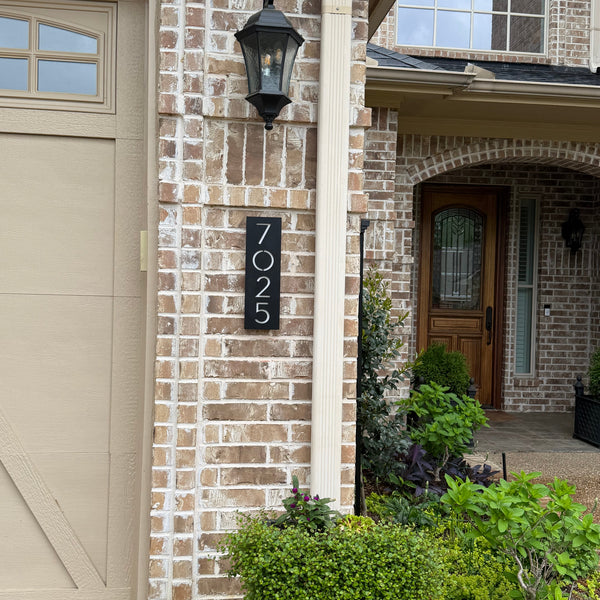
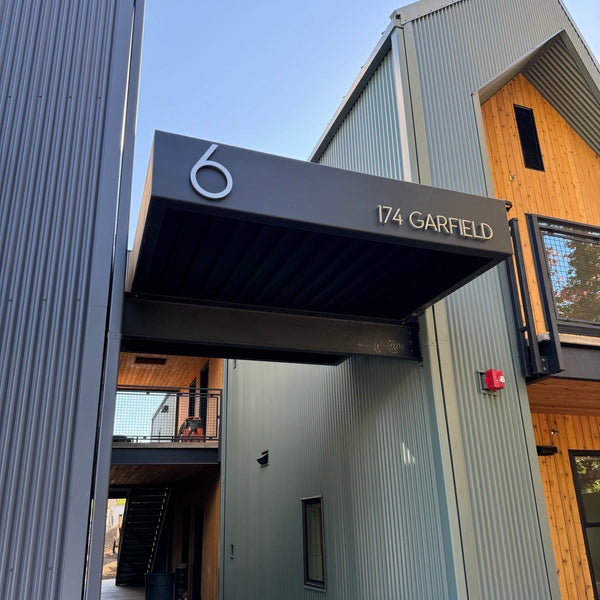
Architect-designed house numbers and plaques complement exterior signage by echoing the same typography, materials, and finish tones used on the pylon or monument sign, creating a unified property identity. When a monument sign uses brushed metal lettering or a masonry base, matching aluminum house numbers or an address plaque near the entrance reinforces that same architectural language at a pedestrian scale.
This coordination matters most for multi-tenant developments, medical offices, and boutique retail properties where visitors move from the parking lot sign to the actual entrance. A consistent font and finish between the two removes visual confusion and signals professionalism.
Modern House Numbers designs solid aluminum numbers, letters, plaques and monument signs in multiple font families, such as Palm Springs, SoCal, and Soho, giving property owners a way to mirror the sign's typography at the building entrance. They can also work with you on a custom design to ensure complete coordination. Every piece is handcrafted to order and includes concealed hardware and a personalized drilling template, so the finishing details look as intentional as the primary signage itself.
In practice, treating the entrance address as an extension of the main sign, rather than an afterthought, is what separates a polished commercial property from one that merely has "a sign and some numbers."
What Are the Key Takeaways About Choosing Between Pylon and Monument Signs for Your Business?
The key takeaways about choosing between pylon and monument signs are that the decision hinges on visibility needs, site conditions, budget, and desired brand image. Pylon signs suit high-speed roads and highway-facing properties, while monument signs suit close-range, pedestrian-oriented, and upscale settings.
Consider these deciding factors:
- Visibility distance: Pylon signs serve long-distance, highway-adjacent visibility, while monument signs serve close-range viewing near entrances.
- Budget range: Pylon signs can cost $8,000 to over $200,000, and monument signs with LED displays range from $15,000 to $300,000, depending on materials and scope.
- Brand impression: Monument signs project a sophisticated, architectural presence, while pylon signs project bold, high-impact visibility.
- Local codes: Height, setback, and illumination rules often narrow the choice before budget or branding even come into play.
Well-designed signage drives measurable results. Well-designed business signs can increase walk-ins by up to 50%, making the final choice a direct investment in foot traffic.
Once the primary sign is chosen, extending that same design thinking down to the house numbers and entrance plaque completes the property's visual story.