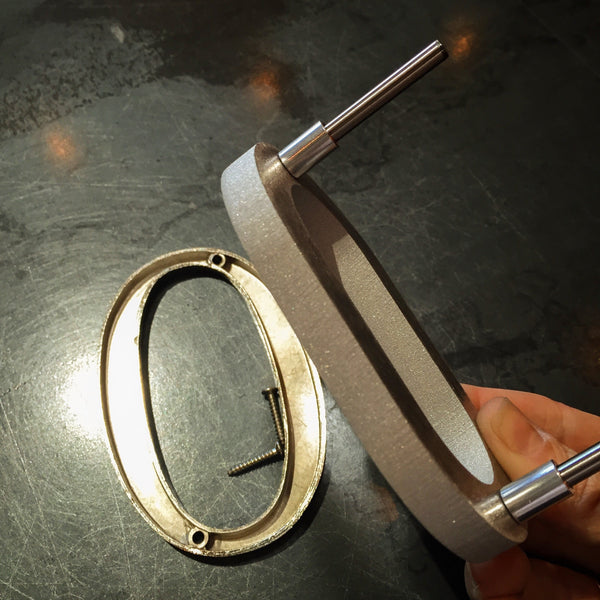
Not all house numbers are created equal. Ours are made from 3/8" solid, recycled aluminum. We include a handy drilling template made just for you for a beautiful installation. You'll get step-by-step instructions and concealed hardware for a subtle and sophisticated floating effect. Our products are handcrafted in Tucson, to enjoy for years to come.
Big box stores may have options, but watch out! Theirs are often hollow, flimsy, and lightweight - which you can only see when you turn them over. Many have hardware that can be seen from the front, which diminishes the quality of the installation.
rick mclain, author
Rick is a licensed architect at Repp McLain Design & Construction. He holds a Bachelor of Architecture from the University of Arizona and an MS from the Department of Architecture at the Massachusetts Institute of Technology (MIT). When he’s not designing and fabricating he enjoys spending time with Brandy, Jack, Avery & Taylor and restoring his grandfather’s Ford pickup truck. Learn more about Rick on LinkedIn.
You can learn more about Rick on the Repp McLain Website, on LinkedIn, at the AIA Website, or on Facebook.
You may also be interested in:

House number thickness is the measured depth of each numeral from its front face to its rear mounting surface, determining how far a character projects outward from a wall. That single dimension shapes durability, installation method, code compliance, and the visual weight a number carries from the street. This guide covers what thickness means and how it is measured, standard...
READ MORE
STR address numbering is the practice of displaying a property's street number in a format that meets fire code standards, satisfies local ordinances, and guides guests and emergency responders to the correct location without delay. This guide covers address numbering's role in safety and compliance, how to choose the right materials and design, installation best practices, the upgrade and replacement...
READ MORE
 Numbers + Letters
 QuickShip
 Plaques
 Decals
 Custom
 Trade
Trade