 Numbers + Letters
 QuickShip
 Plaques
 Decals
 Custom
 Trade
Trade


Making your house easier to find is the practice of improving address visibility so delivery drivers, visitors, and emergency responders can locate your property quickly and reliably. Poor address markings remain a leading cause of delayed packages, missed deliveries, and lost emergency response time across the United States.
This guide covers address visibility and safety, number sizing and placement, materials and architectural styles, smart technology and sustainability trends, customization and curb appeal, local regulations and compliance, and professional support for selection and installation.
Visible address markings directly affect emergency response outcomes. GPS technology can still fail during storms or satellite outages, and mapping limitations on private roads create dangerous delays for first responders who depend on clear, street-facing signage.
Proper number sizing and strategic placement determine whether your address is readable from the street. Residential homes typically need 4 to 6 inch numbers with high contrast against their background, and structures set farther from the curb require ground-level signage at specific heights.
Durable materials like powder-coated aluminum, marine-grade stainless steel, and weather-resistant polyethylene ensure address signs withstand rain, snow, UV exposure, and coastal salt spray for years. Each material pairs differently with modern or traditional architecture.
Solar-powered illumination, LED backlighting, motion-sensor lighting, and smart features like QR codes and NFC tags represent the latest innovations in address signage. Eco-friendly options now include recycled metals and FSC-certified woods.
Customizable style, size, and color options let homeowners boost curb appeal while meeting local building codes, HOA requirements, and USPS standards that govern minimum number dimensions and placement heights. Professional design expertise and installation services simplify the entire process from selection to mounting.
Why Is It Important for Homes to Be Easy to Locate?
Homes that are easy to locate protect residents during emergencies, reduce delivery failures, and help visitors arrive without confusion. The sections below cover the specific challenges poor address visibility creates for delivery services and emergency responders.
What Challenges Do Visitors and Delivery Services Face When Finding Addresses?
Visitors and delivery services face delays, failed deliveries, and frustration when addresses are unclear, obstructed, or poorly marked. Faded numbers, overgrown landscaping, and missing signage force drivers to slow down, circle blocks, or skip stops entirely.
According to Opensend's shipping accuracy data, 22% of delivery failures result from incorrect or incomplete addresses. Even when the address itself is correct, numbers that blend into a facade or sit behind shrubs create the same outcome: a package that never arrives.
For first-time visitors, the problem compounds after dark. Without contrasting, well-lit house numbers, even GPS cannot bridge the last few feet between a mapped pin and the correct front door. Investing in visible, high-contrast address signage eliminates this common gap between digital navigation and physical arrival.
How Can Emergency Responders Benefit From Clear Address Markings?
Emergency responders benefit from clear address markings by locating properties faster, which directly reduces response times when every second affects patient outcomes. According to the National Fire Protection Association, building address numbers must be visible from the street to assist emergency responders in locating properties.
GPS technology, while helpful, still fails during storms or satellite outages. Clear physical signage serves as the reliable backup. Key visibility practices include:
-
Displaying address numbers so they are visible from both street directions of approaching vehicles.
-
Placing home address digits on mailboxes along the main road to prevent emergency vehicles from searching down private drives.
-
Using reflective materials that remain legible at night under headlights.
Mapping inadequacies around private roads and complex property layouts can significantly delay first responders. A bold, well-positioned address sign removes that uncertainty before a crew ever leaves the station.
With the importance of locatability established, the next step is choosing practical ways to improve your home's address visibility.

What Are the Top Simple Ways to Improve the Visibility of Your Home Address?
The top simple ways to improve the visibility of your home address include using large, high-contrast house numbers, choosing the right placement and height, and adding dedicated lighting. A practical first step: walk out into the street and check whether your address is clearly visible in daylight, at night with lights on, and in full darkness with all lights off.
What Role Do Large, Contrasting House Numbers Play in Visibility?
Large, contrasting house numbers play a critical role in visibility by ensuring your address can be read quickly from the street by drivers, delivery personnel, and emergency responders. Size requirements vary by property type and setback distance:
-
Residential structures less than 50 feet from the curb require 4-inch numbers (6 inches recommended).
-
Residential structures greater than 50 feet from the curb require the same sizing, mounted at least 35 inches above ground.
-
Commercial buildings need 12-inch to 15-inch numbers depending on curb distance.
According to Pima County's address display requirements, apartment number ranges displayed below building numbers shall be 8 inches. Beyond size, contrast matters just as much. Dark numbers on a light background, or light numbers on a dark facade, create the legibility that reflective or standard signage depends on. Choosing bold, well-proportioned house numbers is the single highest-impact upgrade most homeowners can make.
How Should You Choose the Right Placement and Height for House Numbers?
You should choose the right placement and height for house numbers by prioritizing street-level sightlines. Numbers must be visible from both directions of approaching vehicles, which means mounting them where landscaping, columns, or porch features do not obstruct the view.
Key placement guidelines include:
-
Mount numbers near the front door or garage at a height visible from the road.
-
Maintain a minimum proportion ratio of 6:1 (height to width) so digits remain legible at a distance.
-
Angle or position numbers to face the street directly rather than perpendicular to it.
For homes with long driveways or heavy tree cover, adding a second set of numbers on a mailbox post or yard-mounted sign near the road solves the visibility gap that setback alone creates.
How Does Lighting Impact the Readability of Your Address, Day and Night?
Lighting impacts the readability of your address significantly because numbers that are perfectly visible at noon can disappear completely after sunset. When your address is not visible at night, critical emergency response time is lost.
Solar-powered address signs offer a practical solution. A solar digital address board is controlled by an intelligent circuit that turns on automatically every night, eliminating the need for wired electrical work. According to Pac Lights, the installation process for solar address signs is straightforward, requiring no specialized electrical setup. Other effective options include backlit LED house numbers, low-voltage landscape spotlights aimed at your address, and motion-activated porch lights positioned to illuminate your numbers.
Investing in nighttime illumination is one of the most cost-effective visibility upgrades, and it directly supports both safety and curb appeal. With your address visible around the clock, the next step is selecting the right sign style for your home's architecture.

Which Types of Address Signs and Numbers Work Best for Different House Styles?
The types of address signs and numbers that work best depend on your home's architectural style, local climate, and visibility needs. Material choice and finish affect both durability and aesthetic fit, while sizing and design should complement modern or traditional facades.
What Materials and Finishes Are Most Durable and Weather-Resistant?
The most durable and weather-resistant materials for address signs are aluminum, stainless steel, and polyethylene. Aluminum naturally resists rust through passivation, forming a protective oxide layer when exposed to air. Powder-coated aluminum performs especially well in rain, snow, and coastal conditions. Stainless steel, particularly 316-grade, offers unmatched strength against denting, scratching, and salt spray corrosion. For extreme environments, polyethylene stands out due to its rigidity against impacts and moisture resistance, according to Tahoma Manufacturing. Retroreflective finishes add another layer of function; these materials redirect light back toward the source, keeping signs visible at night. For most homeowners, powder-coated recycled aluminum delivers the ideal balance of longevity, weather resistance, and design versatility.
How Can You Match Address Numbers with Modern and Traditional Architecture?
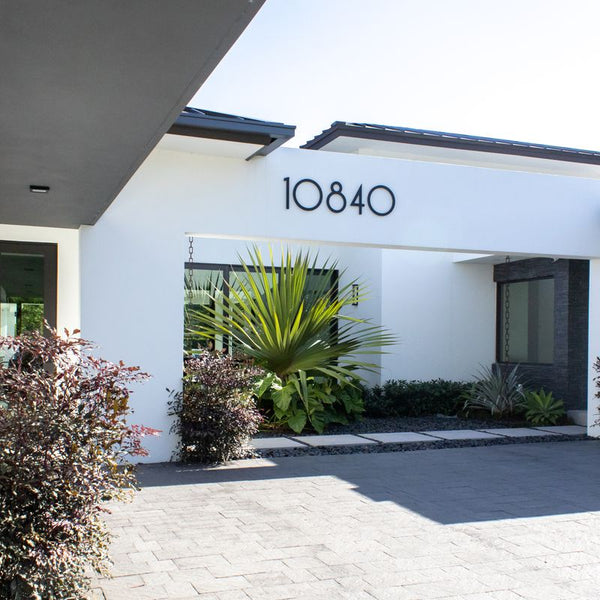
You can match address numbers with modern and traditional architecture by selecting fonts, finishes, and mounting styles that echo your home's design language. Sleek sans-serif numbers in brushed or matte aluminum suit contemporary, mid-century modern, and minimalist facades. Traditional homes pair well with serif-style fonts on cast plaques or decorative address numbers with ornamental details.
Regardless of style, effective address signs feature 4-6 inch numbers for residential properties with high contrast against backgrounds, plus illumination or reflectivity. According to Intel Market Research, the house address plaque market was valued at $389 million in 2024, projected to reach $475 million by 2031, reflecting growing homeowner investment in both curb appeal and visibility. Solar-powered address signs require no specialized electrical work, making illuminated options accessible for any architectural style. With the right pairing, address numbers become a design feature that also keeps your home easy to find.
What Are the Latest Trends and Innovations in Address Signs for 2026?
The latest trends and innovations in address signs for 2026 center on smart technology integration and sustainable material choices. Below, each sub-section covers how these developments improve visibility and environmental responsibility.
How Are Smart Technologies Enhancing Address Visibility?
Smart technologies are enhancing address visibility through solar-powered illumination, motion-activated lighting, and integration with connected home ecosystems. Solar address signs use intelligent circuits that activate automatically at dusk, eliminating the need for hardwired electrical work. Motion sensor-equipped house number lights provide warm white illumination when someone approaches, ensuring readability for delivery drivers and emergency responders alike.
According to a 2026 Research and Markets report, the Smart Home Technologies Market is valued at USD 140.94 billion in 2026 and projected to reach USD 306 billion by 2030, growing at a 21.4% CAGR. This rapid adoption signals that homeowners increasingly expect exterior elements, including address signage, to connect with broader smart home systems. For anyone upgrading their home's findability, pairing high-quality house numbers with smart lighting is one of the most practical investments available today.
What Sustainable and Eco-Friendly Materials Are Popular for Address Signs?
The sustainable and eco-friendly materials popular for address signs include recycled aluminum, FSC-certified wood, and solar-powered LED components. These options reduce environmental impact without sacrificing durability or design quality.
Key sustainable choices homeowners are embracing:
-
Recycled aluminum numbers that resist rust through natural passivation and last for years with minimal maintenance.
-
Solar-powered address lights that require 4 to 6 hours of direct sunlight for initial charging and then operate independently.
-
High-end hybrid signs that combine materials, such as a stainless steel frame with aluminum lettering, for both strength and recyclability.
According to House Sensations Art, many premium custom signs now blend multiple materials to balance aesthetics with longevity. For homeowners who value both curb appeal and environmental responsibility, choosing recycled or sustainably sourced sign materials delivers on both priorities without compromise.
With smart features and sustainable materials reshaping address signage, customization options let homeowners fine-tune style, size, and color to match any home.
How Can Customization Make Your House Numbers More Noticeable?
Customization makes your house numbers more noticeable by tailoring style, size, color, and format to your home's unique architecture and surroundings. The following sections cover available custom options and how personalized plaques and decals elevate curb appeal.
What Custom Options Are Available for Style, Size, and Color?
The custom options available for style, size, and color include font selection, number height, finish type, and color contrast tailored to your home's facade. Font choices range from sleek sans-serif styles to bold mid-century designs. Sizes typically span 4 to 15 inches for residential use, with larger options for setback properties. Finishes such as brushed aluminum, powder-coated matte black, and painted metal allow precise coordination with exterior palettes. According to House Sensations Art, aluminum is the ideal surface for powder coating, allowing homeowners to match nearly any Pantone color for perfect consistency. High contrast between number color and wall background remains the single most effective way to improve street-level readability.
How Can Personalized Plaques and Decals Boost Curb Appeal?
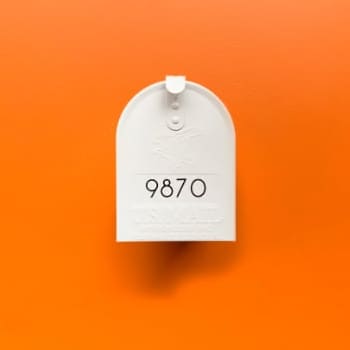
Personalized plaques and decals boost curb appeal by adding architectural character that generic, off-the-shelf numbers cannot match. Custom address plaques consolidate your house number into a single, cohesive design element that complements siding, trim, and landscaping. Decals and curb stencils offer a secondary visibility layer, particularly for mailboxes or street-facing curbs where wall-mounted numbers may not be visible.
Key ways personalized options enhance curb appeal include:
-
Coordinating materials and finishes with your home's exterior palette.
-
Selecting architect-designed fonts that reflect your property's style.
-
Adding mailbox decals for redundant address visibility from the street.
-
Choosing handcrafted plaques made from durable, recycled aluminum for a premium look.
Homes with cohesive, intentional design details consistently stand out, and address signage is one of the simplest upgrades with the highest visual return. With the right customization in place, understanding local regulations ensures your numbers also meet compliance standards.
What Should You Know About Local Regulations for House Numbers?
Local regulations for house numbers vary by jurisdiction, covering minimum size, placement height, contrast, and material requirements. The subsections below explain federal baseline standards and how to navigate HOA or municipality-specific guidelines.
Are There Specific Size or Placement Rules to Follow in the United States?
There are specific size and placement rules to follow in the United States, though they vary between jurisdictions. According to the International Code Council, the minimum address number size is 3 inches high and 1/2 inch wide, displayed in Arabic figures on a contrasting background. Many local jurisdictions set stricter standards. Some counties, for example, require 4-inch minimum numbers for residential structures within 50 feet of the curb, with 6-inch numbers recommended. Homes set farther back often need numbers mounted at least 35 inches above ground at the primary access point. The United States Postal Service also requires clear, unobstructed space for address visibility on mailboxes. Choosing numbers that meet or exceed these minimums is the safest approach, since compliance with the strictest applicable standard covers every requirement simultaneously.
How Can You Ensure Compliance With HOA or Municipality Guidelines?
You can ensure compliance with HOA or municipality guidelines by checking three sources before purchasing house numbers:
-
Your HOA's covenants, conditions, and restrictions (CC&Rs), which may dictate approved fonts, colors, materials, and mounting locations.
-
Your local building or fire code, often available on the county or city website, specifying minimum number height, contrast ratio, and visibility from the street.
-
Your local fire department's address display standards, since the National Fire Protection Association recommends signs be plainly legible and visible from the street or road fronting the property.
Request written specifications from each authority before ordering. Durable materials such as metal, ceramic, or high-quality aluminum typically satisfy both HOA aesthetic standards and municipal durability requirements. Understanding your local regulations first ensures your new house numbers enhance curb appeal without triggering compliance issues.
How Can Professional Support Simplify Address Sign Selection and Installation?
Professional support simplifies address sign selection and installation by combining design guidance with hassle-free mounting services. The following subsections cover the advantages of working with a design-focused provider and how streamlined installation removes common frustrations.
What Are the Benefits of Choosing a Provider With Design Expertise?
The benefits of choosing a provider with design expertise include accurate material recommendations, code-compliant sizing, and a cohesive aesthetic that matches your home's architecture. A knowledgeable provider ensures your numbers meet local visibility requirements while complementing your exterior finishes. Without that guidance, homeowners often select styles that clash with their facade or numbers too small for their setback distance. According to Angi, commercial sign installation costs average $464, with most business owners spending between $181 and $804. Residential address numbers, by contrast, can start well under $100 when matched correctly by a specialist. Design-led providers eliminate costly trial-and-error by narrowing options to what actually works for your property.
How Can Worry-Free Installation Services Improve the Experience?
Worry-free installation services improve the experience by eliminating guesswork around mounting hardware, surface preparation, and precise alignment. Professional installation services bundle labor, materials, and anchoring into a single cost, which varies by project scope and local rates. For homeowners who prefer a simpler path, providers like Modern House Numbers include personalized drilling templates and step-by-step instructions with every order, along with concealed hardware for a clean, architectural finish. This approach delivers professional-quality results without hiring a contractor. Choosing a provider that prioritizes the full journey, from design selection through final placement, is the most reliable way to ensure lasting curb appeal and address visibility.

How Can Modern House Numbers Help You Make Your House Easier to Find in 2026?
Modern House Numbers can help you make your house easier to find in 2026 by offering architect-designed, customizable address signs built for visibility, durability, and style. The following sections cover how these products improve home visibility and the key takeaways for 2026.
Can Architect-Designed, Customizable Address Signs From Modern House Numbers Help Improve Home Visibility?
Yes, architect-designed, customizable address signs from Modern House Numbers can help improve home visibility. Every product is handcrafted to order from solid, recycled aluminum in Tucson, Arizona, combining architectural precision with personalization that mass-produced signs cannot match.
Visibility depends on several factors working together:
-
Numbers at least 4 inches high ensure legibility from most residential properties, with taller sizes recommended for homes set farther back from the street.
-
High-contrast color combinations, such as a white background with black lettering, maximize readability day and night.
-
Signs positioned to be plainly legible from the street or road fronting the property meet fire department guidelines.
According to the National Fire Protection Association, address signs should be located in a position to be plainly legible and visible from the street or road fronting the property. Modern House Numbers addresses this requirement through customizable sizing, durable finishes, and concealed hardware that keeps installations clean. For homeowners who want both function and design, few solutions combine code-conscious visibility with genuine architectural character as effectively as a made-to-order address sign.

What Are the Key Takeaways About Making Your House Easier to Find Using These Simple Tips for 2026?
The key takeaways about making your house easier to find using these simple tips for 2026 center on three priorities: size, contrast, and illumination.
-
Choose house numbers tall enough to read from the street, with a minimum of 4 inches for most residential properties.
-
Pair numbers with a high-contrast background so they stand out in daylight and darkness.
-
Add lighting or reflective materials to maintain visibility at night, whether through solar-powered options, backlit LEDs, or retroreflective sheeting.
-
Place signs where they face approaching traffic from both directions, free from obstructions like overgrown landscaping.
-
Select durable, weather-resistant materials such as aluminum or stainless steel to ensure years of maintenance-free performance.
Investing in a well-designed address sign is one of the simplest upgrades a homeowner can make, and it pays dividends every time a delivery driver, guest, or emergency responder needs to locate your home. Modern House Numbers offers architect-designed, customizable solutions that make this process straightforward from design through worry-free installation.