 Numbers + Letters
 QuickShip
 Plaques
 Decals
 Custom
 Trade
Trade


House number visibility is the measure of how easily a street address can be identified from the road by drivers, delivery personnel, and emergency responders. It depends on the combined effect of numeral size, placement height, color contrast, material durability, and lighting conditions.
We cover why visibility matters for safety and compliance, how to select the right size and placement, which materials and finishes perform best over time, how to install numbers securely, and how to customize your address display without sacrificing readability.
Visible house numbers directly affect emergency response; poorly marked addresses force first responders to waste critical seconds locating a home, particularly at night or during severe weather. Fire departments across the country require address numerals to be legible from the roadway as a baseline safety measure.
Most U.S. building and fire codes require residential house numbers to be at least 4 inches tall with a minimum stroke width of 1/2 inch, mounted on a contrasting background. Viewing distance changes the equation: properties set farther from the street need proportionally larger numerals, and some jurisdictions mandate 6-inch or larger characters.
Placement on the home or property determines whether size and contrast actually work. Landscaping, porch overhangs, and seasonal obstructions like snow or overgrown vegetation can block otherwise compliant numbers. Dedicated lighting or reflective finishes extend readability into nighttime hours.
Material choice affects long-term legibility. Sunlight, rain, and temperature shifts degrade certain finishes faster than others, reducing contrast over time. Aluminum, stainless steel, and powder-coated options resist weathering while maintaining the clean lines that complement modern architecture.
Installation method and font selection round out the equation. Arabic numerals in simple, bold typefaces read clearly from a distance, while concealed mounting hardware keeps the look minimal. Balancing local code requirements, HOA restrictions, and personal design preferences is achievable when each decision starts with street-level readability.
Why Is House Number Visibility Important for Homes and Businesses?
House number visibility is important for homes and businesses because it directly affects safety, service delivery, and property identification. The sections below cover who relies on visible address numbers and how they influence emergency response times.
Who Needs Easily Visible House Numbers Besides Residents?
Besides residents, the people who need easily visible house numbers include emergency responders, delivery drivers, postal carriers, utility workers, and visitors. Firefighters and paramedics depend on legible address numbers to locate properties quickly, particularly at night. Mail carriers and package couriers use house numbers as their primary reference for accurate delivery. Rideshare drivers, home service technicians, and real estate agents also rely on clearly displayed addresses to find the right property without delay. According to the Federal Highway Administration, the goal of retroreflectivity standards is to have visible signs that meet the needs of drivers during nighttime. This principle applies equally to house numbers, which must serve anyone approaching a property from the street.
How Can Visible House Numbers Impact Emergency Response and Deliveries?
Visible house numbers impact emergency response and deliveries by reducing the time needed to locate a property. First responders often lose valuable minutes searching for homes with faded, small, or obstructed address numbers, especially at night or in poor lighting. In an emergency, every second matters. A clearly visible, reflective address sign helps first responders locate your home quickly, especially in low-light conditions.
Poorly marked addresses create compounding delays that affect critical outcomes:
-
Firefighters rely on house numbers for quick reference when navigating to a scene.
-
Paramedics facing obscured addresses lose time that can mean the difference between life and death.
-
Delivery personnel and postal workers misroute packages when numbers are hidden or illegible.
-
Snow, dirt, and debris can completely cover low-mounted or painted curbside numbers.
For most homeowners, investing in high-contrast, properly sized house numbers is one of the simplest steps that yields the greatest safety return. With visibility established as a safety priority, the next consideration is choosing the right size to meet code requirements and ensure legibility from the street.

What Are the Standard Size Requirements for House Numbers to Maximize Visibility?
The standard size requirements for house numbers range from 3 inches to 6 inches in height, depending on local building codes and property setback distance. The sections below cover U.S. safety code recommendations and how viewing distance should guide your size selection.
What Size House Numbers Are Recommended by Safety Codes in the United States?
The size house numbers recommended by safety codes in the United States varies by jurisdiction, but most codes require a minimum height of 4 inches. The City of Palo Alto, CA specifies that each character shall be not less than 4 inches (102 mm) high with a minimum stroke width of 1/2 inch (12.7 mm), installed on a contrasting background and plainly visible from the street. Some municipalities set different thresholds: Oakland Park Fire Rescue requires a minimum of 3 inches high.
According to the United States Postal Service, house numbers must be displayed in a manner clearly visible from the street or road fronting the property, using Arabic numerals or letters. The Los Angeles Fire Department adds a useful scaling formula: the height of any numeral must be 2 inches taller than 1/10 of the setback distance measured in feet. For most residential properties, choosing numbers between 4 and 6 inches tall satisfies the majority of local codes while keeping your address legible.

How Should Viewing Distance Influence the Size of Your House Numbers?
Viewing distance should influence the size of your house numbers because legibility decreases as the distance between the reader and the sign increases. A widely referenced principle from lighting research establishes that nighttime legibility distance approaches approximately 50 feet per inch of letter height. By that standard, a 4-inch number remains readable at roughly 200 feet, while a 6-inch number extends legibility to around 300 feet.
Properties with deeper setbacks, curved driveways, or tree-lined frontages should size up accordingly. If your home sits 50 feet or more from the curb, numbers smaller than 4 inches become difficult to read from a moving vehicle, particularly after dark. Choosing numbers proportional to your actual viewing distance is one of the simplest ways to ensure first responders, delivery drivers, and visitors can locate your address quickly.
With size requirements established, the next consideration is where to position those numbers on your property.
Where Should House Numbers Be Placed for Maximum Street Visibility?
House numbers should be placed where they face the street directly, remain unobstructed, and sit at a height readable from the road. The best locations and the role of landscaping and lighting are covered below.
What Are the Best Locations on a House or Property for Address Numbers?
The best locations on a house or property for address numbers are positions that face the primary street and remain visible from multiple approach angles. The most effective mounting spots include:
-
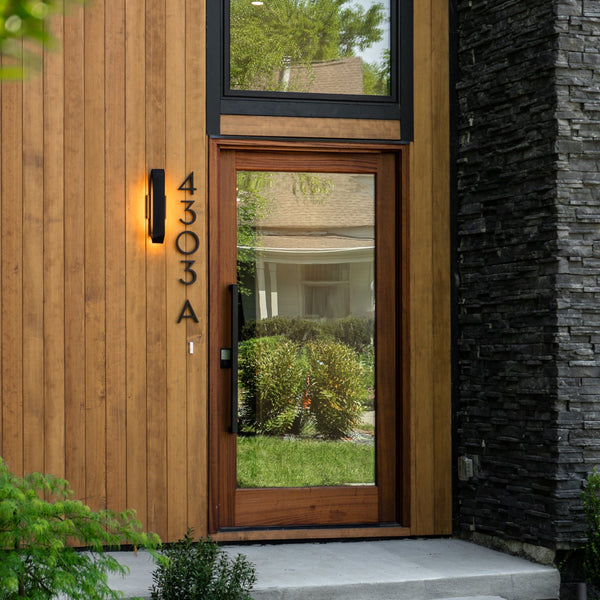
The area beside or above the front door, at a height between 4 and 5 feet from the ground
-
The front porch pillar or column closest to the street
-
The garage door frame or wall adjacent to the driveway
-
A freestanding post or monument sign near the curb, especially for homes set far back from the road
According to the Los Angeles Fire Department, the design, style, and shape of address numbers must render them easily readable from the street, and conditions such as shadows, overgrown vegetation, or building location can prompt fire officials to prescribe larger numbers. Curbside painted numbers should never serve as the sole identifier, since first responders cannot see them when approaching from a distance. For setback properties, a secondary address sign at the mailbox or driveway entrance provides a critical wayfinding reference that wall-mounted numbers alone cannot offer.
How Do Landscaping and Lighting Affect the Placement of House Numbers?
Landscaping and lighting directly affect the placement of house numbers by either revealing or concealing them from the street. Overgrown trees, shrubs, and hedges are among the most common obstructions that block address visibility. According to the Albertson Fire Department, house numbers should be clearly visible from the street, well lit at night, and never blocked by trees, shrubs, or other obstructions.
Effective strategies to maintain clear sightlines include:
-
Trimming vegetation within a 12-inch clearance zone around mounted numbers
-
Positioning uplights, downlights, or solar-powered spotlights to illuminate the address after dark
-
Using reflective numbers that catch headlights for properties without dedicated exterior lighting
-
Clearing snow, dirt, and seasonal debris from the number surface year-round
Nighttime visibility deserves special attention; the Federal Highway Administration reports that roughly 50% of crashes occur in dark conditions despite only 25% of travel happening at night. Well-placed landscape lighting transforms house numbers from a daytime convenience into a round-the-clock safety feature, which matters just as much when selecting materials and finishes.

Which Materials and Finishes Improve the Durability and Readability of House Numbers?
The materials and finishes that improve the durability and readability of house numbers include weather-resistant metals like aluminum, powder-coated surfaces, and high-contrast color pairings. The sections below cover how specific materials hold up over time and which color combinations maximize street-level legibility.
How Do Different Materials Withstand Weather and Time?
Different materials withstand weather and time at varying rates depending on their composition and surface treatment. Aluminum stands out as one of the most durable options; according to Novelis, nearly 75 percent of all aluminum produced in the U.S. is still in use today. This exceptional longevity makes recycled aluminum a practical choice for house numbers exposed to sun, rain, and temperature swings year-round.
Signs degrade from sunlight, weather, and environmental damage, with daylight and nighttime conditions causing different deterioration patterns. Powder-coated finishes add a protective layer that resists fading and corrosion. Uncoated brass or bronze, while attractive initially, can oxidize and lose contrast against their background, making them harder to read over time. Pairing bold, modern finishes with classic exterior materials like brick creates a look that is, as Architectural Digest notes, "timeless but current." For homeowners prioritizing both aesthetics and function, solid aluminum with a durable finish offers the best balance of longevity and readability.
What Color Contrasts Work Best for Readability from the Street?
The color contrasts that work best for readability from the street are high-contrast pairings where the number and background differ sharply in lightness. Research published in Ergonomics confirms a "positive polarity advantage," demonstrating that dark characters on light backgrounds are more legible than the reverse. For house numbers, this means black or dark bronze numerals on a light-colored wall, or white and silver numbers against dark siding, will consistently deliver the strongest visibility.
Harvard Digital Accessibility Services recommends maintaining a contrast ratio of at least 4.5:1 between text color and background color. Subtle combinations, such as gray numbers on a taupe wall, may look refined up close but become nearly invisible from the curb. When selecting finishes, test the pairing at your actual viewing distance; a contrast that reads well at arm's length can disappear at 30 feet.
With materials and contrast working together, proper installation keeps these elements performing at their best.

What Installation Tips Help Keep House Numbers Secure and Align With Design Goals?
Installation tips that help keep house numbers secure and aligned with design goals include using proper tools and templates for accuracy, concealing mounting hardware for a clean look, and checking HOA rules before starting.
What Tools and Templates Make Installation Easier and More Accurate?
The tools and templates that make installation easier and more accurate include a paper drilling template, a level, painter's tape, and a power drill with masonry or wood bits matched to your surface. A drilling template, taped to the wall at the correct height, marks exact hole positions so spacing stays consistent across all digits. After drilling pilot holes through the template, remove the paper and insert mounting hardware.
Before starting any installation, review your community's CC&Rs. According to Nolo Legal Encyclopedia, an HOA's "Covenants, Conditions, and Restrictions" is a legal document that describes what you can and cannot do with your home. Confirming allowed sizes, styles, and placement locations prevents costly reinstallation.
How Can You Conceal Hardware for a More Modern Appearance?
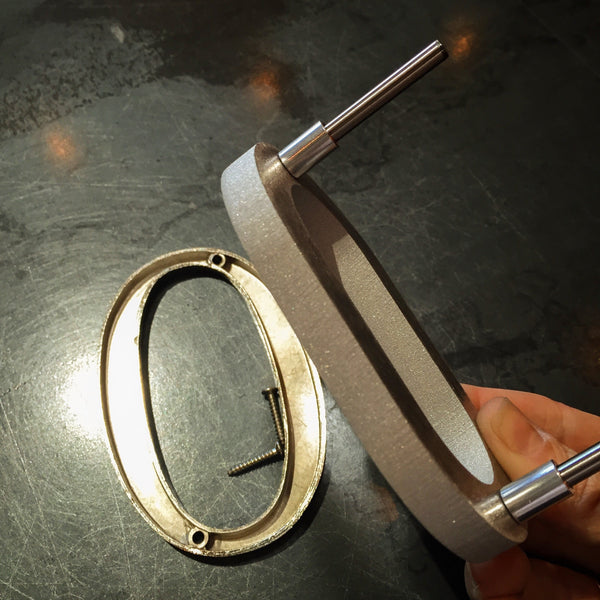
You can conceal hardware for a more modern appearance by using studs and standoff mounts that attach behind each number, creating a floating effect with no visible screws on the face. Each number mounts onto studs inserted into pre-drilled holes, so the fastener sits entirely behind the digit. Epoxy adhesive applied to both ends of the stud tip adds weather resistance and prevents loosening over time.
Standoff spacers, typically 0.5 inches deep, lift numbers off the wall surface. This gap creates shadow lines that enhance dimension and readability, particularly on flat facades. For homeowners who value both function and clean architectural lines, concealed mounting eliminates visual clutter while keeping numbers firmly secured for years.
With installation techniques covered, customization choices further balance curb appeal with street-level readability.
How Can You Customize House Numbers to Enhance Curb Appeal Without Losing Visibility?
You can customize house numbers to enhance curb appeal without losing visibility by choosing legible font styles, high-contrast finishes, and architect-designed options that balance aesthetics with readability. The following sections cover font selection and handcrafted design approaches.
What Font Styles and Number Formats Are Easiest to Read?
The font styles and number formats easiest to read are clean sans-serif typefaces with consistent stroke widths and standard Arabic numerals. According to Oakland Park Fire Rescue, house numbers must be Arabic numerals because fancy numbers or numbers that are spelled out may be aesthetically pleasing but are very difficult to read from the street.
Fonts that prioritize readability from a distance share several traits:
-
Uniform stroke width of at least 1/2 inch prevents thin segments from disappearing at range.
-
Open counters on digits like 6, 8, and 9 reduce visual confusion.
-
Generous spacing between characters prevents numbers from blending together.
-
Sans-serif designs eliminate fine details that fade with distance or poor lighting.
Overly decorative scripts and condensed typefaces may look striking up close, yet they sacrifice the clarity that emergency responders and visitors need from the curb.
Why Might Architect-Designed or Handcrafted Options Stand Out?
Architect-designed or handcrafted options stand out because they merge professional design principles with intentional material choices that serve both form and function. Where mass-produced numbers often compromise on proportions or finish quality, architect-designed

house numbers account for stroke width, letter spacing, and contrast from the initial concept stage.
Handcrafted production allows precise control over dimensions, ensuring each number meets visibility requirements while complementing a home's architectural style. Materials like solid recycled aluminum, finished in durable powder-coated colors, resist fading from sunlight and weather over time. This durability keeps numbers legible for years rather than degrading into an eyesore.
For homeowners who want both personality and compliance, custom options offer the most reliable path. With the right design foundations in place, selecting the ideal address sign becomes the final step.
How Should You Approach House Number Visibility and Placement With Custom Address Signs From Modern House Numbers?
You should approach house number visibility and placement with custom address signs from Modern House Numbers by prioritizing code-compliant sizing, high-contrast materials, and unobstructed mounting positions. The following subsections cover how handcrafted signs solve street-level readability and a summary of key takeaways.
Can Handcrafted Custom Address Signs From Modern House Numbers Help With Making House Numbers Visible From the Street?
Yes, handcrafted custom address signs from Modern House Numbers can help with making house numbers visible from the street. Modern House Numbers uses solid, recycled, ⅜-inch thick aluminum for all address signs and numbers. According to Oakland Park Fire Rescue, house numbers must be in a contrasting color to their immediate background. Aluminum in bold, architect-designed finishes avoids that problem entirely.
Modern House Numbers designs each sign to meet critical visibility standards:
-
Characters are available at 4 inches or larger, with stroke widths designed for optimal readability.
-
Clean Arabic numeral fonts ensure legibility, since fancy or spelled-out numbers are very difficult to read from the street.
-
Concealed mounting hardware keeps the sign face uncluttered, so nothing competes with the numerals for a driver's attention.
Seasonal conditions also matter. Snow, dirt, and debris can obscure curbside painted numbers completely, which is why the Plympton Fire Department advises against relying on them. Wall-mounted aluminum signs from Modern House Numbers stay elevated above ground-level obstructions, remaining readable year-round. Pairing these signs with nighttime lighting ensures visibility under headlights and low-light conditions. For homeowners who want both curb appeal and safety compliance, handcrafted aluminum address signs are one of the most practical investments available.

What Are the Key Takeaways About House Numbers Visible From Street: Size & Placement Tips We Covered?
The key takeaways about house numbers visible from the street, including size and placement tips, are:
-
Size matters for safety. Most fire codes require a minimum of 4-inch tall characters; some jurisdictions mandate 6 inches. Larger numbers improve legibility at greater distances.
-
Contrast is non-negotiable. Numbers must stand out against their background. Avoid materials that blend with the facade, such as brass on tan siding.
-
Placement must be unobstructed. Mount numbers where trees, shrubs, shadows, and seasonal debris cannot block sightlines from the road.
-
Lighting extends visibility. Well-lit or reflective numbers are critical at night, when first responders and delivery drivers face the greatest identification challenges.
-
Material durability prevents fading. Recycled aluminum with clear coat or powder coat finishes resists weather degradation far longer than painted, vinyl, or wooden alternatives.
-
Arabic numerals are required. Decorative script and spelled-out numbers reduce readability from the street.
Modern House Numbers combines architect-designed precision with handcrafted aluminum construction to deliver both visibility and curb appeal. Each order ships with a personalized drilling template and concealed hardware for worry-free installation that keeps the focus on clean, readable numerals.