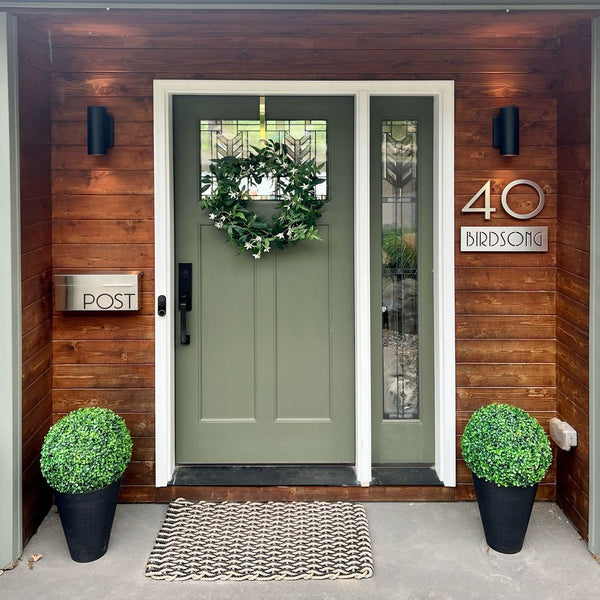
 Numbers + Letters
 QuickShip
 Plaques
 Decals
 Custom
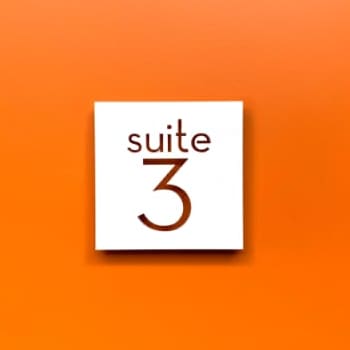 Trade
Trade


Multi-unit properties, such as apartments, condos, or duplexes, are residential buildings that contain two or more separate living units under one roof. Commercial properties are real estate used primarily for business operations, offices, retail stores, industrial spaces, and large multifamily residential buildings (typically those with five or more units).
According to a 2014 report by the U.S. Postal Service Office of Inspector General, over 155 billion mailpieces were processed in fiscal year 2014, and 6.6 billion (4.3%) of those were Undeliverable as Addressed due to incomplete, incorrect, or illegible addresses.
Numbering systems in these contexts are more complex because you must clearly distinguish between buildings, wings, floors, entries, and individual units. Accurate numbering is vital for postal services, emergency responders, tenants, visitors, and maintenance staff. It ensures safety, efficient navigation, and compliance with legal requirements, avoiding costly confusion.
In the sections ahead, we will explore best practices for designing clear numbering systems, tips for compliance, and ways to make house numbers more visible and durable.
Why Numbering Matters More in Multi-Unit and Commercial Spaces?
In multi-unit or commercial buildings (like apartment complexes, hospitals, or office towers), house numbering isn’t just decorative; it plays several critical roles:
-
Safety & Emergency Response: In a large apartment block or hospital, responders must promptly locate the correct building, entrance, floor, or suite to ensure a swift and effective response. Poor or confusing numbering can be a life-threatening issue in fire, medical, or security emergencies.
-
Navigation & Visitors: Tenants, clients, or delivery people rely on coherent numbering to find their way. In office towers with many wings or condo complexes with multiple buildings, directional signage and numbers prevent frustration.
-
Deliveries & Mail: Precise numbering reduces undeliverable‐as‐addressed (UAA) mail and delivery failures.
-
Branding & Professional Image: Commercial properties and high‐end multi-unit dwellings often use numbering and signage as part of their visual identity. A clearly visible, well-designed numbering contributes to a positive impression.
-
Regulatory & Compliance Needs: Many jurisdictions require that commercial properties maintain visible, legible street numbers of a specific size, material, or illumination. In cases of non-compliance, owners may face fines or orders to fix signage.

Real-world example: Hospitals often use “suite” or “wing” numbers in conjunction with building numbers to direct people (e.g., ER, Radiology). Office towers frequently have floor directories and standardized unit/suite numbers. Apartment complexes may assign building letters, followed by unit numbers (e.g., Building A, Units 101-120), for clarity.
Key Differences Between Residential and Commercial House Numbers
When comparing standard residential house numbers (typically used for single-family homes) to those required for multi-unit or commercial buildings, differences emerge in design, size, materials, visibility, and regulatory requirements. Below are the main contrasts:
|
Aspect |
Residential (single homes) |
Multi-unit / Commercial |
|
Design & Style |
Often decorative, matched to the home’s architecture, with a smaller scale. |
More uniform, sometimes standardized across a complex; may include suite/wing/building identifiers. |
|
Size |
Typically modest, many locales require a minimum height of around 3-4 inches (≈ 75-100 mm). |
Larger sizes are required so that numbers are readable from greater distances or from driveways/streets; for example, some building codes require numbers to be at least 4 inches (101.6 mm) high with a minimum stroke width of ½ inch for commercial or non-single-family home buildings. |
|
Materials & Durability |
Often, lightweight, decorative materials (such as plastic or cast metal) are sufficient. |
More durable materials (metal, weather-resistant coatings, backlit options) to survive heavy traffic, elements, and maintain legibility over time. |
|
Visibility & Placement |
Placed near the front door, facing the street; contrast color and lighting may be less critical. |
Must often be visible from the road or primary access points; backlit or externally lit; multiple placements (front entrance, entries to wings, visible from driveways). |
|
Regulatory / Code Compliance |
Governed by local ordinances or homeowner association rules, which are less stringent in many cases. |
Tighter building/fire codes; signage rules; required for emergency services; may be inspected as part of permitting or safety audits. |
Numbering Systems for Multi-Unit Properties

Numbering systems in multi-unit properties, such as apartments, duplexes, and condominiums, must strike a balance between clarity, consistency, and long-term usability. A well-planned numbering system is not only convenient for tenants and property managers but also essential for couriers, visitors, maintenance teams, and emergency responders.
When numbering is unclear, it can delay emergency services or lead to delivery errors, ultimately impacting both safety and efficiency. The following sections explain how to design numbering systems that function effectively in real-world applications.
Sequential and Logical Numbering for Apartments

Sequential and logical numbering means numbers follow a predictable order as you move through a building. This approach enables tenants and visitors to easily locate units, while also facilitating the work of couriers, maintenance staff, and emergency personnel without confusion or delays.
-
The numbering should always begin at the main entrance and proceed in a fixed direction, such as left to right or in a clockwise pattern when hallways loop around.
-
Each floor should follow a consistent numbering scheme, for example, assigning units 101 through 110 on the first floor, 201 through 210 on the second floor, and so on.
-
Numbers should not be skipped or reused within the same building, as this can lead to misunderstandings and incorrect deliveries.
-
A few numbers should be reserved for future expansions or reconfigurations so that renumbering the entire building can be avoided later.
Academic facility guidelines, such as those from Georgia Institute of Technology, emphasize that room numbers should “flow through the building in a consistent, comprehensible, and user-friendly pattern,” a principle that applies equally to commercial and multi-unit residential properties.
Floor and Unit Number Combinations

Combining floor and unit numbers is one of the most effective ways to make navigation intuitive and efficient. When the floor is part of the number, anyone can quickly identify where to go, even in a large complex.
-
Numbers like 101, 102, and 103 indicate that these units are on the first floor, while 201, 202, and 203 belong to the second floor.
-
A lettered system can also be used, such as 3A or 3B, where the first number indicates the floor and the letter indicates the unit.
-
More complex buildings may use a combined approach, such as 12-101, where “12” refers to the building or block number and “101” is the specific unit.
-
In basements or ground levels, combinations like B02 or G05 are helpful, where the prefix clearly identifies the floor level.
These formats are widely used in official room-numbering guidelines, including those adopted by universities and public institutions, because they create predictable and logical patterns.
Importance of Uniform Design Across Units
Uniformity in numbering design is just as critical as logical sequencing. Consistency ensures that residents, guests, and emergency services can quickly and easily identify units without confusion.
-
Every unit should display numbers in the same font style, size, and material to create a professional and cohesive appearance.
-
Placement should be standardized, ideally at eye level and either directly above or beside the entrance door, to improve visibility for everyone.
-
Colors should contrast with the background wall, and reflective or illuminated numbers should be used in dimly lit hallways or outdoor settings.
-
Maintaining a uniform design also makes property management easier because replacements are simpler, and inspections can be completed more efficiently.
A consistent design across all units also reinforces the property’s image and creates a sense of order, which is particularly important in condominiums and professionally managed apartment complexes.
House Numbers and Signs for Commercial Buildings
Commercial buildings need house numbers and signage that are larger, bolder, and more durable than those in simple residential settings. The demands are higher: visibility from a distance, resistance to weather or heavy traffic, compliance with accessibility laws, and integration with branding. Research suggests that the vast majority of shoppers consider signage when deciding whether to enter a small business.
In office towers, shopping centers, hotels, and large mixed-use buildings, signage serves not only as identification but also as a means of wayfinding and compliance with legal obligations. The sections below explain what makes commercial signage unique and the standards that must be met.
Oversized Numbers for Office Buildings
Big, precise numbers on the exterior of office buildings are essential so that the building can be quickly identified from the street or highway. Deliveries, visitors, and especially emergency services, such as fire or ambulance, must be able to see the number without difficulty.

-
The number characters should be large enough to be visible from the road at expected driving speeds.
-
Materials chosen must withstand weather (sun, rain, snow, wind) and remain legible even when dirty or aged.
-
Use high-contrast colors or backlit illumination so that numbers are readable in low light or during poor weather conditions.
Wayfinding Signs for Visitors and Customers
Once visitors are off the street and inside the property, good wayfinding signs guide them effectively. Both interior and exterior wayfinding signage should adhere to consistent design principles and comply with legal standards.
-
Exterior directional signs should clearly indicate the location of main entrances, visitor parking, loading docks, and public access points.
-
Interior signs (lobbies, elevators, corridors) should clearly identify floors, departments or suites, restrooms, and exits, using consistent fonts and materials.
-
Signs should be placed at natural decision points (forks, intersections, elevator banks) to prevent people from wandering.
ADA-Compliant Restroom and Accessibility Signs
Businesses must comply with legal standards for accessibility. That means installing signs that meet the ADA (Americans with Disabilities Act) or equivalent local legislation so persons with disabilities can navigate safely and independently.
-
Identification signs for restrooms and accessible entrances must include raised (tactile) characters and Grade 2 Braille, and the characters must be between 5/8 inch and 2 inches high.
-
These signs should use a non-glare finish, have light-on-dark or dark-on-light contrast, and be mounted between 48 inches and 60 inches above the finished floor to the baseline of the lowest tactile character.
-
Where pictograms are used (e.g., the ISA wheelchair symbol), there must be a field at least 6 inches high reserved for the pictogram. Text descriptors in raised characters and Braille beneath must accompany it.
Material and Durability Requirements for High-Traffic Properties
In high-traffic commercial environments (shopping centers, transit hubs, public buildings), materials must endure constant exposure to the elements, physical wear, and temperature changes. Choosing the right substrate ensures long lifespan, reduced maintenance, and safety for all users.
-
Aluminum is lightweight, naturally corrosion-resistant, and remains structurally stable over long periods. It does not rust, making it especially suited for outdoor signs exposed to moisture and changing weather conditions. For example, aluminum sign blanks resist rust and warping and are widely used for road signage and public info boards.
-
Stainless steel offers even greater strength and resists dents, scratches, and harsh environmental conditions. It is often chosen for industrial, coastal, or high-abuse settings because it resists chemical exposure and physical damage.
-
Reflective finishes (engineer-grade or prismatic reflective aluminum) help in low-light and nighttime visibility. They allow signs and numbers to be seen clearly by drivers or emergency services, even in poor illumination conditions.
Durability also depends on finish (powder coating, anodizing, or treated metal) and mounting methods that prevent corrosion at edges or joints. In summary, using aluminum or stainless steel with proper reflective coatings is best for long-term use in public, high-traffic locations.
Branding Opportunities with Commercial House Numbers
Commercial house numbers are not just functional; they also offer opportunities to strengthen brand identity, reinforce style, and make the property more memorable. With the right design choices, house numbers and plaques can align with the business’s overall image.

-
Businesses can integrate their logo or emblem into a number plaque so the branding is visible from street level. A logo etched or raised beside the number ensures recognizability even before someone reads the text.
-
Custom fonts or typefaces that are consistent with brand guidelines help reinforce the identity. If a business uses a distinctive font in its signage or advertising, matching that font in house numbers helps create a cohesive look.
-
Brand colors (within the boundaries of visibility and safety) can be used in numbers or backgrounds. For example, using the company’s primary color for the number plate background, combined with white or contrasting digits, improves both brand consistency and readability.
-
Materials such as brushed stainless steel, anodized aluminum, or powder-coated metals allow for color matching and textured finishes that align with corporate aesthetics. These materials also retain their appearance over time, even under exposure and use.
A well-designed number or plaque can become part of a property’s visual appeal. When visitors, clients, or partners approach a building, the signage conveys something about the quality and character of the business before they even walk in.
Installation Guidelines for Multi-Unit and Commercial Properties
The proper installation of house numbers and signs in multi-unit or commercial properties is crucial for ensuring safety and security. To ensure safety and security, it provides visibility, safety, and compliance with laws. Attention to placement, lighting, and local/fire codes helps avoid fines and provides accessibility. The following three subsections explain where and how to install signs correctly.
Placement for Maximum Visibility
Signs must be installed where they are easily visible from the street, driveways, gates, and common entrances. Poor placement can delay emergency responders or confuse visitors.
-
Address or building numbers should be mounted on exterior walls facing the street or road fronting the property so they are plainly visible and legible at typical driving speeds. For example, a local code in Celina, Texas requires approved numerals at least ten inches (10”) high and in a contrasting color, placed such that they are plainly visible from the street fronting the property.
-
For properties that do not front a street, display significant digits or the building number at the driveway or entrance gates in addition to the façade.
-
In lobbies, entrance vestibules, or interior corridors, numbers should be placed at eye level (roughly 48-60 inches above the finished floor) and on walls next to the door or suite entrance, so they are easily visible.
Illumination and Reflective Options
Signs should be readable both during the day and at night. Illumination or reflective finishes significantly improve visibility in low-light conditions or adverse weather.
-
Retroreflective materials are required (or strongly recommended) in many jurisdictions. For example, according to the Manual on Uniform Traffic Control Devices (MUTCD), signs that are not independently illuminated must have reflectorized backgrounds so they remain visible at night.
-
Where lighting is provided, external illumination (such as spotlights or floodlights) or internal/back-lit signs are adequate. Characters must contrast sharply with their background.
-
Consider the durability of light fixtures and reflective sheeting to prevent brightness and contrast from degrading quickly over time due to dirt, corrosion, or UV exposure.
Compliance with City and Fire Codes
Installation must align with municipal, building, and fire safety codes. Noncompliance can lead to penalties, failed inspections, or safety hazards.
-
Fire safety codes typically require that exit signs, building identification signs, and directional signage meet specific height, size, and visibility standards. For example, in a sample Texas fire and address signage code (Celina, TX), building numerals of a minimum 10-inch height are required for buildings and structures to ensure visibility.
-
Signage for fire protection equipment (e.g., Fire Department Connection, sprinkler controls) must use raised or engraved letters of minimum size as defined by local fire codes. In Canadaigua, New York, for instance, signs showing Fire Department Connections must have “raised or engraved letters at least 1 inch (25 mm) in height” on a plate.
-
According to NFPA 101 (Life Safety Code), exit signs must be visible from any direction of exit access. In exit access corridors, no point may be farther than the sign’s rated viewing distance or 100 feet (≈ 30 meters), whichever is less, from a visible exit sign. Additionally, for exit signs placed above doors, the bottom of the sign must be located no more than 6 feet 8 inches (≈ 2.03 meters) above the top of the exit opening.
Benefits of Proper Numbering in Multi-Unit and Commercial Properties
Proper, transparent, and compliant numbering in multi-unit and commercial properties yields multiple concrete benefits. These advantages affect safety, customer experience, and property value alike.
-
Enhanced safety arises when emergency responders can locate buildings and units without delay. Clear numbering can reduce response times and prevent potentially life-threatening confusion in emergencies.
-
A better customer and visitor experience comes from ease of navigation. When people can quickly find entrances, suites, restrooms, and parking, their perception of the property improves.
-
Mail, deliveries, and services operate more efficiently, reducing losses and misdeliveries due to incorrect or illegible addresses.
-
Property value and appeal increase. Well-maintained signage and numbering signal good management and compliance, which can attract tenants or buyers.
-
Compliance with accessibility and building codes helps avoid fines or failed inspections, which could otherwise result in thousands of dollars in costs or damage to a reputation.
Common Mistakes to Avoid in Multi-Unit and Commercial Numbering
Avoiding frequent errors ensures numbering systems are effective, compliant, and professional. Below are the most common mistakes to avoid.
-
Using inconsistent fonts and styles across units or buildings. That undermines readability, creates visual clutter, and can confuse visitors or emergency responders.
-
Choosing numbers that are too small or placed too low, so they cannot be seen from the street or from typical approach distances.
-
Poor contrast between the number/sign color and the background, especially in low light, which makes the numbers hard to read or invisible under adverse conditions.
-
Failing to follow ADA or similar accessibility standards, e.g., missing tactile characters or Braille, wrong mounting height, or non-compliant pictograms.
-
Ignoring lighting and reflective qualities so that numbers and signs are unreadable at night or during bad weather.
-
Neglecting required permissions, code compliance, or fire department stipulations, e.g., failing inspections or being subject to citation because signage doesn’t meet local or municipal law.
Ready to Upgrade Your Property’s Numbering System?

Clear, consistent numbering is more than just decoration. It is a critical part of safety, compliance, and creating a professional image for any multi-unit or commercial property. Well-designed numbers make it easier for first responders, delivery drivers, and visitors to quickly locate the correct location, while also enhancing your property’s curb appeal and value.
Choosing the right materials, sizes, and installation methods ensures long-term durability and adherence to city and ADA regulations. Avoiding common mistakes, such as poor contrast or inconsistent styles, helps keep your property compliant and visually appealing.
At Modern House Numbers, we specialize in high-quality, customizable numbers and plaques that enable businesses to showcase their brand while remaining code-compliant. Explore our range of modern, durable solutions and take the next step toward a safer, more professional-looking property.
Frequently Asked Questions
What are the rules for numbering houses?
Rules vary by city, but local authorities generally assign house numbers in a sequence that makes addresses easy to find. Odd numbers usually go on one side of the street and even numbers on the other.
How large should house numbers be?
Most building codes recommend house numbers at least 4 inches tall. Larger sizes, around 5–6 inches, are often required if the home is set back farther from the street.
How are house numbers determined?
House numbers are determined by the property’s location along a street. They are usually based on distance from the street’s starting point or assigned sequentially in odd and even order.
How do you choose visible house numbers?
Pick numbers that contrast with the background, are large enough to see from the street, and are well-lit at night. This ensures quick identification for visitors, deliveries, and emergency services.
What size should house numbers be for commercial buildings?
Most codes require numbers at least 4 inches tall with a ½-inch stroke, visible from the street. Some cities, such as Chicago, require commercial building numbers to be at least 6 inches in height.
Are illuminated numbers required for large buildings?
Yes, many cities require illuminated or reflective numbers for safety, so that first responders can easily locate the building at night or in low light.
How should apartments and condos number their units?
Use a precise, logical sequence: floor number first, then unit number (e.g., 305 for a third-floor unit). Large complexes should include building or wing identifiers.
What are the ADA requirements for commercial signage?
Signs must have tactile lettering, Braille, high-contrast colors, and be mounted 48–60 inches high for accessibility.