 Numbers + Letters
 QuickShip
 Plaques
 Decals
 Custom
 Trade
Trade


A house number plaque is a single unified plate that combines background and numerals into one fixed display, while a frame is a modular border that holds interchangeable individual digits against the wall surface behind them.
This guide covers how each option differs structurally and visually, the advantages and trade-offs of plaques and frames, how cost and long-term value compare, which option suits different architectural styles, and how custom-made plaques from specialty manufacturers can support your final decision.
Plaques and frames diverge most clearly in design integration. A plaque reads as a deliberate architectural detail; a frame isolates the numerals and uses the exterior wall as the visual background, making legibility dependent on wall color and surface texture.
Durability and maintenance separate the two options further. Aluminum plaques carry a longer lifespan because of material longevity, while frame longevity varies considerably by material, with wood frames faring worst under UV exposure and moisture cycling.
Cost comparisons favor plaques for lifetime value, since lower-grade frames often require replacement within a few years, while a well-made aluminum plaque holds its appearance and curb appeal across years of weather exposure.
Architectural fit and personal preference are the final deciding factors. Plaques suit craftsman, ranch, and contemporary homes where a flush-mounted, self-contained sign feels intentional, while frames complement traditional and transitional styles where bordered, inset detailing echoes existing facade elements.
What Are the Main Differences Between a House Number Plaque and a Frame?
The main differences between a house number plaque and a frame involve design integration, materials, and visibility. The sections below cover how each option affects curb appeal, which materials are most common, and how legibility compares between the two.
How Does the Design Style of Plaques and Frames Impact Curb Appeal?
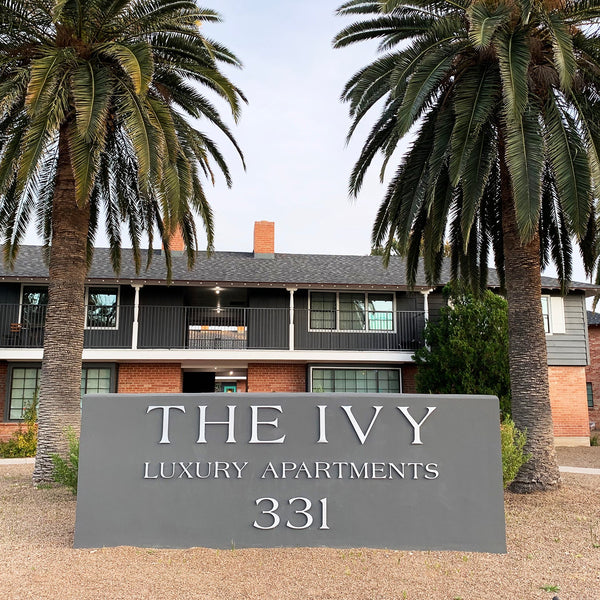
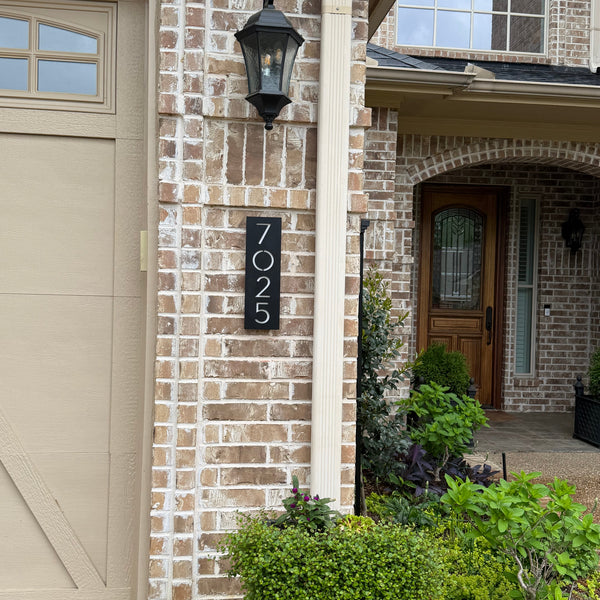
The design style of plaques and frames impacts curb appeal by determining how cohesively address signage integrates with a home's exterior architecture. Plaques function as self-contained design objects, combining background, border, and numerals into a single unified panel that reads as a deliberate architectural detail. Frames, by contrast, isolate the numbers within a border, making the numerals themselves the focal point while the surround acts as a secondary accent. Research using hedonic price models has examined whether address presentation reflects aesthetic preferences that influence perceived home value. For homes with clean, contemporary facades, a plaque's all-in-one composition tends to feel more resolved and intentional.
Which Materials Are Most Commonly Used for Plaques and Frames?
The most commonly used materials for plaques and frames are aluminum, acrylic, and composite or wood-based options. Aluminum dominates plaque construction because of its corrosion resistance and structural rigidity. Frames frequently incorporate painted wood, acrylic, or cast metal borders paired with individual numeral inserts. According to AMPP, the ASTM B117 salt spray test evaluates corrosion resistance of metallic materials and coatings under simulated marine or harsh outdoor conditions, making it a relevant benchmark for comparing aluminum and metal-framed options in coastal or humid climates.
How Does Visibility Differ Between House Number Plaques and Frames?
Visibility differs between house number plaques and frames based on contrast, mounting height, and background integration. Plaques create a dedicated contrast field behind the numerals, which improves legibility against varied exterior surfaces such as brick, stucco, or siding. Frames rely on the wall behind the numbers as the visual background, so legibility depends heavily on the wall color and surface texture. According to research published in Springer Link, wood in composite materials retains many original properties but moisture relationships differ from solid wood, meaning composite-framed signs may warp or shift over time in ways that compromise numeral alignment and readability.
What Are the Advantages and Disadvantages of House Number Plaques?
House number plaques offer a permanent, design-forward address display solution with distinct trade-offs in maintenance, customization, and durability. The following sub-sections cover maintenance requirements, customization options, and weather resistance.
What maintenance requirements do house number plaques have?
The maintenance requirements of house number plaques are minimal compared to frame-based alternatives, making them a practical long-term choice. A plaque is a single fixed unit, so there are no individual numbers to realign, replace, or re-secure after storms or heavy wind. Routine care typically involves occasional cleaning with mild soap and water to remove dirt or oxidation. Because plaques must meet visibility standards, NFPA 1, Section 10.11.1 requires address numbers to be plainly legible and visible from the street, so periodic checks for surface fading or debris buildup are worthwhile. A hedonic pricing study by Bourassa et al. also found that house numbers carry aesthetic value that affects perceived property worth, reinforcing the case for keeping plaques well-maintained.
Are house number plaques customizable for unique styles or addresses?
Yes, house number plaques are highly customizable for unique styles or addresses. Homeowners can select font styles, finishes, background colors, mounting orientations, and plaque shapes to match their home's architectural character. Plaques accommodate multi-unit addresses, long street names, and decorative borders within a single cohesive design. This integrated format makes customization especially effective because all elements are designed together rather than assembled individually. For design-conscious homeowners, this unified approach produces a more polished, intentional look than mixing separate components.
How durable are plaques against weather and wear?

House number plaques are highly durable against weather and wear, particularly when made from aluminum. According to SF Bay Signs, aluminum signs are considered the gold standard for permanent outdoor signage. Aluminum resists corrosion, UV degradation, and moisture absorption, which are the primary causes of outdoor sign failure. Powder-coated finishes add an additional protective layer against scratching and fading. For homeowners in high-humidity, coastal, or high-UV regions, aluminum plaques consistently outperform wood or plastic alternatives in long-term performance.
What Are the Pros and Cons of Using a Frame for House Numbers?
Frames offer a modular approach to house number display, making them easy to update while introducing trade-offs in material durability and design range. The sections below cover installation ease, design flexibility, and expected lifespan.
How easy is it to install or replace house numbers within a frame?
Installing or replacing house numbers within a frame is straightforward because individual digits slot in and out without tools or wall damage. Most frames use a track, channel, or clip mechanism that holds numbers in place, so swapping characters after a street renumbering or style change takes minutes. This modularity also means you can reuse the frame hardware indefinitely, replacing only the number inserts when needed. For homeowners who rent, move frequently, or simply want the option to update their look without repainting or re-drilling, a frame offers genuine practical convenience.
Do frames offer more design flexibility or limitations?
Frames offer moderate design flexibility, with a notable limitation: the overall look is constrained by the frame's fixed shape, size, and finish. You can change the number style within the frame, but the surrounding border remains constant, which can clash with evolving exterior color schemes or architectural updates. On the positive side, frames are available in materials such as metal, wood, and acrylic, and finishes ranging from matte black to brushed nickel. However, because the frame itself is the dominant visual element, homeowners with distinctive architectural styles may find the format less adaptable than a fully custom plaque. Timber systems led with 45.1% of the North American prefabricated housing construction market in 2025, reflecting how widely wood-framed exteriors shape residential design contexts and, by extension, what framing materials need to complement.
What is the expected lifespan and weather resistance of frames?
The expected lifespan and weather resistance of frames vary significantly by material. According to a NIST National Bureau of Standards report, methyl methacrylate plastic (acrylic) is almost immune to the effects of weathering, making acrylic frames a strong long-term option. Metal frames, particularly aluminum or stainless steel, resist corrosion well in most climates. Wood frames are the weakest choice for outdoor longevity because UV exposure and moisture cycling accelerate cracking, warping, and paint erosion. The material you choose for your frame ultimately determines how frequently you will need to refinish, repair, or fully replace it, and this ongoing maintenance cost is an often-underestimated part of the total ownership equation.
How Do Cost and Value Compare Between Plaques and Frames?

Cost and value between plaques and frames differ across upfront price, material longevity, and curb appeal impact. The following sections break down affordability and long-term property value benefits for each option.
Which Option Is More Affordable Upfront and Long-Term?
Plaques and frames occupy different price tiers, and the better long-term value depends on material quality. Plaques, particularly those made from solid aluminum, carry a higher upfront cost but require minimal replacement over time. Frames are often less expensive initially, but the combined cost of the frame plus individual number inserts can match or exceed plaque pricing. Lower-cost frame materials, such as plastic or thin metals, may need replacement within a few years due to weathering, making them costlier over a full decade.
For homeowners focused on lifetime value, a well-made plaque typically delivers a stronger return than an entry-level frame.
Does One Offer Better Long-Term Curb Appeal or Property Value Benefits?
Long-term curb appeal favors materials engineered to resist outdoor degradation. According to Displays and Holders, acrylic signage offers superior UV resistance and impact resistance for outdoor use compared to PVC signage, ensuring long-term performance. This matters because faded or cracked address displays reduce visual appeal and can signal deferred maintenance to prospective buyers. Plaques made from premium materials, such as aluminum or acrylic, hold their appearance across years of sun, rain, and temperature shifts, sustaining the curb appeal benefit that originally justified the purchase.
Frames using lower-grade materials rarely maintain that same visual consistency over time.
Which Option Is Best for Different Home Styles and Personal Preferences?
The best option depends on your home's architectural style, exterior materials, and personal aesthetic. The sections below cover how each option fits specific designs, installation factors by home type, and the key decision criteria for homeowners.
How do plaques and frames complement various architectural designs?
Plaques and frames complement architectural designs differently based on structural form and material finish. Plaques suit homes with defined facade surfaces, such as craftsman, ranch, mid-century modern, and contemporary styles, where a mounted, self-contained sign reads as a deliberate design element. Frames work well on traditional, colonial, and transitional homes, where a bordered, inset display echoes panel molding and symmetrical detailing. For stucco or smooth-face exteriors, a flat plaque maintains clean alignment with the wall plane. On brick or shiplap facades, a frame's recessed structure can echo the layered texture already present.
Are there specific installation considerations for each home type?
Installation considerations for each home type vary by wall material, substrate depth, and surface profile. Plaques mount flat against most surfaces using concealed hardware, making them straightforward on wood siding, stucco, and fiber cement. Frames require a flat, consistent mounting plane; brick and stone surfaces may need anchors or mortar-compatible fasteners to seat the frame evenly. Timber-framed and wood-sided homes, which represent a large share of North American residential construction, accommodate both options well, though moisture exposure at the mounting points should be sealed regardless of the option chosen.
What factors should homeowners consider for best fit and appeal?
The factors homeowners should consider for best fit and appeal include architectural style, exterior material, visibility distance, maintenance preference, and HOA guidelines. A well-matched address display reinforces the home's design character rather than interrupting it. Key decision factors are:
-
Architectural cohesion: Does the option's form (inset vs. flush-mounted) match the facade's visual language?
-
Visibility: Will the number size and contrast meet local code requirements from the street?
-
Material compatibility: Does the finish complement the dominant exterior material, such as metal on modern homes or painted finishes on traditional styles?
-
Maintenance: Plaques with durable finishes require less upkeep than frames with multiple components.
-
HOA standards: Some communities regulate signage style, size, or finish under architectural review board rules.
Matching the display to these criteria produces a result that feels intentional rather than incidental, which is ultimately what elevates curb appeal.
How Should You Choose Between a House Number Plaque and Frame with Modern House Numbers' Offerings?
Choosing between a house number plaque and a frame depends on your home's style, local code requirements, and customization needs. The sections below cover Modern House Numbers' custom offerings and key article takeaways.
Can Modern House Numbers' Custom-Made Plaques and Signage Support Your Address Display Needs?

Yes, Modern House Numbers' custom-made plaques and signage can support your address display needs across a wide range of homes and compliance requirements. Prices start at $64.50 and each plaque is architect-designed, handcrafted to order in Tucson, Arizona from recycled, ⅜" thick aluminum, for long-lasting outdoor use. Plus, every order includes a custom drilling template and concealed hardware for a polished, professional finish.
Local codes vary: New York City requires address numbers at least 4 inches tall that contrast with their background, and Hillsboro, Oregon mandates a minimum 0.5-inch stroke width. Modern House Numbers' configurable sizing and finish options make it straightforward to meet these standards. California homeowners should also note that Civil Code Section 4710 permits noncommercial sign displays, though HOA architectural review boards may impose additional style requirements for address displays.
For most homeowners, the plaque's all-in-one format simplifies compliance while elevating curb appeal. That combination of design integrity and regulatory readiness is genuinely hard to find in mass-produced alternatives.
What Are the Key Takeaways About House Number Plaques vs. Frames Covered in This Article?
The key takeaways about house number plaques vs. frames are: plaques offer a unified, permanent design solution, while frames provide modular flexibility for digit changes. The right choice depends on four practical factors:
-
Design intent: Plaques suit homeowners who want a cohesive, architectural look; frames work better for frequently updated numbers or rental properties.
-
Material durability: Aluminum plaques resist corrosion and UV exposure for long-term outdoor performance; frame longevity varies by material.
-
Code compliance: Most municipalities require minimum 4-inch letter height and strong contrast, both achievable with either format when properly specified.
-
Customization: Made-to-order plaques from Modern House Numbers allow font, finish, and layout control that standard frames cannot match.
Modern House Numbers offers a clear path forward: architect-designed, handcrafted products that satisfy visibility requirements, complement any architectural style, and arrive ready to install with personalized drilling templates and concealed hardware.