 Numbers + Letters
 QuickShip
 Plaques
 Decals
 Custom
 Trade
Trade


House numbers for brick exteriors require a different approach than other surfaces because brick is an unforgiving substrate: incorrect drilling, mismatched materials, or poor adhesive choices can cause cracking or surface damage that costs an average of $1,711 to repair professionally.
This guide covers material selection, mounting methods, finish durability, modern design trends, and sustainability considerations for brick installations.'
Choosing the right material starts with corrosion resistance and mounting compatibility. Solid recycled aluminum handles moisture and temperature cycles well, while the wrong base material or coating accelerates fading, rust, and adhesion failure, particularly in humid or coastal climates.
Mounting on brick without damage is achievable through three main approaches: no-drill brick clips, high-strength outdoor tape, and using a hammer drill. Each method suits different priorities, and small details like clearing dust from pre-drilled holes matter more than most homeowners expect, since debris alone can reduce anchor holding power by up to 40%.
Material durability depends as much on finish as on base metal. Powder-coated surfaces resist UV degradation and salt air far better than uncoated metals, with matte powder-coated finishes projected to lead house number design in 2025.
Contemporary brick homes are increasingly paired with warm-toned finishes in bronze and brass, which complement the earthy palette that defines 2025 exterior design trends. Custom font weight, standoff depth, and finish all affect how numbers read against brick's natural texture.
Recycled aluminum satisfies both performance and sustainability goals, meeting EPA Safer Choice recycled content benchmarks while remaining one of the most practical and accessible materials for outdoor brick installations.

What Should You Consider When Choosing House Numbers for Brick Exteriors?
Choosing house numbers for brick exteriors requires balancing material durability, visual style, and weather resistance. The sections below cover key material qualities, complementary styles, and how climate affects your best options.
What Are the Key Material Qualities to Look for in House Numbers for Brick?
The key material qualities to look for in house numbers for brick are corrosion resistance, structural durability, and compatibility with your mounting method. Brick is an unforgiving substrate: drilling too close to the edge or using the wrong bit can cause cracking, so numbers made from materials that accommodate concealed or adhesive mounting add flexibility. If adhesive is later removed, construction adhesive softens under a heat gun and scrapes cleanly with a stiff putty knife or 5-in-1 painter's tool, leaving the brick undamaged. Solid, recycled aluminum is a strong candidate because it resists moisture and maintains structural integrity through repeated temperature changes.
Which House Number Styles Best Complement Brick Homes?
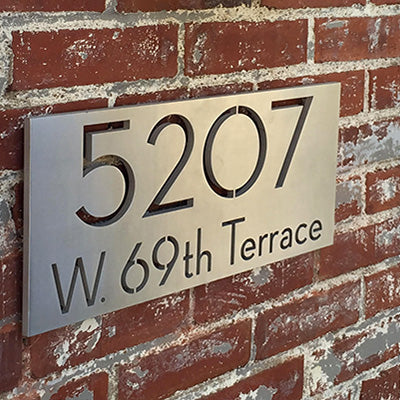
The house number styles that best complement brick homes are those with clean silhouettes, strong contrast, and proportional sizing for street visibility. According to Drop Cap Studio's best practices for house number placement, mounting numbers at eye level, between 4 and 5 feet above ground, maximizes legibility while preserving the architectural character of a brick facade. Matte black and brushed metal finishes read sharply against warm red, tan, or gray brick tones. Modern sans-serif or minimal serif letterforms avoid visual competition with brick's natural texture, keeping the address prominent without overwhelming the exterior.

How Does Weather Exposure Affect Your House Number Material Choice for Brick?
Weather exposure directly affects your house number material choice by accelerating corrosion, fading, and adhesion failure in lower-grade options. Marine-grade aluminum is especially worth considering in humid or coastal climates: according to BlinkSigns, marine-grade aluminum monument signs in coastal environments can last up to 15 years with minimal maintenance, whereas lower-grade materials may fail significantly sooner due to salt air exposure. For eco-conscious buyers, the EPA specifies that building materials bearing the Safer Choice label must meet minimum post-consumer recycled content thresholds, including 30% for metal packaging and 15% for plastic. Choosing certified recycled metal house numbers addresses both longevity and environmental responsibility in a single decision.
How Can You Mount House Numbers on Brick Without Damaging the Surface?
You can mount house numbers on brick without damaging the surface using three main approaches: no-drill brick clips, outdoor mounting tape, or hammer drill installation. The sections below cover each method, required tools, and best practices for long-term hold.
What Are the Main Installation Methods for House Numbers on Brick?
The main installation methods for house numbers on brick are drill-free attachment, adhesive tape, and hammer drill mounting. Each suits different priorities:
-
Brick clips: Hook directly onto brick courses without drilling or adhesives, leaving zero surface damage.
-
High-strength outdoor mounting tape: Applied to a thoroughly cleaned brick surface for a semi-permanent bond.
-
Hammer drill installation: Studs inserted into pilot holes drilled through a paper template using a 3/16-inch carbide-tipped bit.
-
Construction adhesive: Bonds numbers directly to brick but requires a heat gun and scraping tool for removal.
What Tools and Materials Are Needed for Mounting House Numbers on Brick?
The tools and materials needed for mounting house numbers on brick include a hammer drill, carbide-tipped masonry bit, paper drilling template, and a level. Quality house number suppliers often include personalized drilling templates and step-by-step instructions with purchases, making alignment straightforward for brick installations. For placement height, numbers mounted between 4 and 5 feet above ground level achieve optimal street visibility, according to Drop Cap Studio's residential placement guidelines.
How Can You Ensure House Numbers Stay Securely Attached to Brick?
You can ensure house numbers stay securely attached to brick by selecting the correct anchor type and clearing debris from every pre-drilled hole before inserting fasteners. Dust left inside a masonry hole can reduce anchor holding power by up to 40%, according to DK Hardware's masonry anchor guidance.
With the right method and hardware selected, choosing materials that hold up against weather and wear becomes the natural next priority.

What Are the Most Durable Materials for House Numbers on Brick?
The most durable materials for house numbers on brick are metals such as aluminum and stainless steel, along with cast acrylic for lower-impact applications. The sections below compare these materials directly and examine how finishes extend their lifespan on brick exteriors.

How Do Metal, Acrylic, and Other Materials Compare for Brick Applications?
The materials for brick applications vary significantly in strength, corrosion resistance, and long-term performance. Aluminum offers an excellent strength-to-weight ratio and resists moisture without rusting, making it one of the most practical choices for outdoor brick installations. Stainless steel provides comparable structural integrity. Acrylic is lighter and less prone to oxidation but can become brittle under prolonged UV exposure. For most brick homes, solid aluminum or stainless steel numbers paired with quality mounting hardware represent the highest-durability combination.
How Do Finishes and Coatings Affect Longevity for House Numbers on Brick?
Finishes and coatings directly determine how well house number materials resist UV degradation, moisture, and oxidation on brick exteriors. Powder-coated aluminum finishes add a durable polymer layer that resists chipping and fading, with matte powder-coated options projected to dominate house number design in 2025. Uncoated metals, by contrast, are far more vulnerable to salt air, humidity, and freeze-thaw cycles common across U.S. climates. Choosing a high-quality finish is as important as the base material itself.
What Modern Design Trends Are Popular for House Numbers on Brick Homes?
Modern design trends for house numbers on brick homes center on finishes, tones, and forms that complement the texture and color of brick. The subsections below cover how to balance modern aesthetics with durability, and which customization options best suit brick exteriors.
How Can You Achieve a Modern Look While Maintaining Durability on Brick?
A modern look on brick can be achieved by pairing matte powder-coated finishes with clean, minimal numeral forms. According to a 2025 trend report by Ferosa, matte powder-coated finishes are projected to dominate house number design because they reduce glare and complement both light and dark exterior palettes. The Brick Industry Association's 2025 home design data also notes that warm, earthy tones such as deeper grays, soft browns, and muted reds are shaping exterior color direction, making dark bronze and matte brass finishes highly compatible with brick facades. Floating mount installations add depth and shadow that reinforce a contemporary appearance without compromising the structural integrity of the brick surface.
What Customization Options Are Available for House Numbers on Brick?
The customization options available for house numbers on brick include choices across font style, finish, size, and mounting method. For brick specifically, finish selection is particularly consequential: matte blacks, dark bronzes, and matte brasses each read differently against red, tan, or gray brick tones. Font weight also matters on textured surfaces, as bolder, wider characters maintain legibility against the visual noise of brick coursing. Standoff depth on floating mounts can be adjusted to cast more or less shadow, which enhances dimensional contrast and visibility. These variables, considered together, make brick homes especially well-suited to custom addressing solutions rather than off-the-shelf options.
How Can Sustainability Play a Role in Your House Number Material Choice?
Sustainability can play a meaningful role in your house number material choice by prioritizing recycled content, low-waste manufacturing, and long-lasting materials. The sections below cover the benefits of recycled materials and how eco-friendly options hold up on brick.
What Are the Benefits of Choosing House Numbers Made From Recycled Materials?
The benefits of choosing house numbers made from recycled materials include reduced resource consumption, lower embodied energy, and longer service life. The EPA specifies that metal packaging bearing the Safer Choice label must meet a minimum 30% post-consumer recycled content threshold, establishing a measurable benchmark for evaluating metal products. Aluminum is particularly well-suited here: it is infinitely recyclable without quality loss, making recycled aluminum numbers a genuinely circular product choice.
Compliance is also worth noting. Municipal codes in cities like Nashville require house numbers to be at least six inches tall on a contrasting background, so sustainability choices must still satisfy visibility requirements. Individual aluminum house numbers range from $24.50 to $82.95 depending on size and finish, making recycled aluminum both an accessible and responsible option.
How Do Eco-Friendly Materials Perform When Mounted on Brick?
Eco-friendly materials perform reliably when mounted on brick, provided the product uses durable finishes. Recycled aluminum with powder-coated finishes resists corrosion, UV degradation, and moisture without requiring chemical treatments that could leach into masonry over time. This matters on brick surfaces, where moisture absorption cycles can degrade lesser materials from the inside out.
Choosing a made-to-order product also reduces waste at the production level, meaning fewer unused units end up in landfills. For sustainable installations, stainless steel studs are the preferred fastener, as they resist rust without galvanic corrosion against aluminum. Eco-friendly materials, when correctly specified, perform as well as conventional options on brick and often outlast them.
How Should You Approach House Number Selection and Installation for Brick With Modern House Numbers' Offerings?
Selecting house numbers for a brick exterior involves matching materials to the facade, choosing the right mounting method, and ensuring long-term durability. The sections below cover how Modern House Numbers' products address these needs and summarize the key lessons from this guide.

Can Modern House Numbers' Architect-Designed, Handcrafted Products Help With Brick House Number Installation?
Yes, Modern House Numbers' architect-designed, handcrafted products can help with brick house number installation by combining design precision with practical mounting support. Every order includes a personalized drilling template and step-by-step installation instructions, making accurate placement on brick straightforward for homeowners and professionals alike.
Modern House Numbers handcrafts each product from recycled, ⅜" thick aluminum with concealed hardware, which eliminates visible fasteners and delivers a clean architectural finish on brick facades. According to the Brick Industry Association, 2025 design trends favor warm, earthy tones such as deeper grays, soft browns, and muted reds, aligning well with Modern House Numbers' dark bronze and matte brass finish options. Modern House Numbers' handcrafted aluminum numbers starting at $24.50 offer a premium, architect-quality product with a complete installation system included.
What Are the Key Takeaways About House Number Ideas for Brick—Mounting & Material Tips We Covered?
The key takeaways about house number ideas for brick center on three decisions: material, mounting method, and design compatibility. Choosing the right approach upfront prevents costly damage, since professional brick wall repair averages $1,711 as of 2025-2026, according to HomeAdvisor.
The most actionable conclusions from this guide are:
-
Choose weather-resistant materials such as recycled aluminum to withstand moisture, UV exposure, and temperature cycles on brick exteriors.
-
Match your mounting method to your risk tolerance: drilling with 3/16-inch carbide-tipped masonry bits offers the most secure hold, while brick clips and outdoor tape provide damage-free alternatives.
-
Prioritize installation hardware quality: using the correct masonry drill bit directly determines long-term holding strength.
-
Align finish to facade tone: dark bronze and matte brass finishes complement brick's warm palette, while matte black suits contemporary gray-painted brick.
-
Verify local code compliance before finalizing size and placement to avoid enforcement issues.
Modern House Numbers' made-to-order products address all five of these factors with architect-guided design, durable recycled aluminum construction, and worry-free installation support included in every purchase.