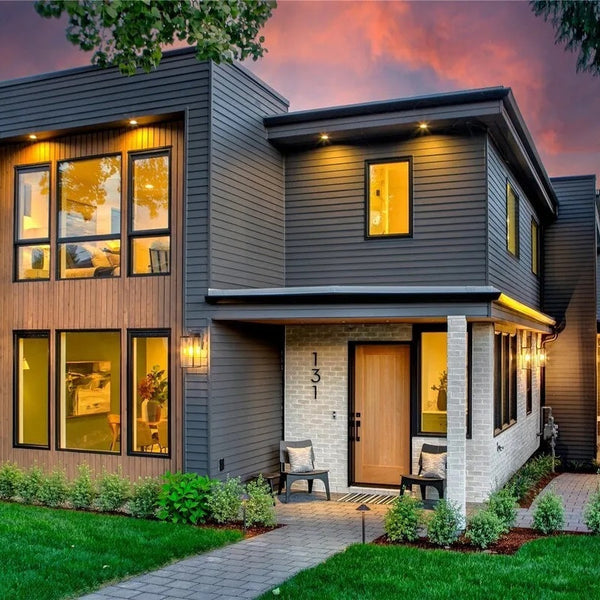
 Numbers + Letters
 QuickShip
 Plaques
 Decals
 Custom
 Trade



A feng shui entryway is a front door and foyer arranged so life force energy, or chi, enters the home freely rather than stalling at a cluttered or poorly lit threshold. Chi, translated from Chinese as "breath," moves through color, light, layout, and material choices, and the entrance is called the "mouth of chi" because it governs how much of that energy reaches the people living inside.
This guide covers the core feng shui principles behind chi flow, evaluating and fixing an existing entryway, front door positioning and color, foyer layout and the five elements, lighting and the Bagua map, decluttering, decorative details, exterior curb appeal, apartment adaptations, and how modern house numbers support a balanced, welcoming entrance.
The core principles rest on chi, yin-yang balance, and the five elements, wood, fire, earth, metal, and water, each carrying its own colors and traits that shape how energy behaves at the door. Evaluating an entryway means checking for blocked chi signs like unused doors or squeaky hinges, then assessing light, clutter, and common design mistakes that quietly disrupt flow.
Front door treatment centers on swing direction, direction-based color pairing (a north-facing door favors Water-element blacks and blues, for example), and finishes that suit the entrance's size and orientation. Inside, foyer layout, furniture arrangement, mirror placement, and rug choice determine whether chi curves gently into the home or stalls near the threshold.
Lighting and Bagua color guidance work together to strengthen specific life areas, career, wealth, relationships, while decluttering and organized storage remove the physical blockages that trap stagnant energy. Plants, art, and decor add living vitality and symbolism, and exterior elements, walkways, driveways, and curb appeal, extend that same chi-guiding logic from the street to the door.
Renters and apartment dwellers can apply nearly all of these principles through non-permanent fixes, while modern materials and geometric forms let contemporary entryways stay stylish without losing elemental balance. Finally, well-chosen house numbers and plaques, in auspicious numerals and solid, energy-anchoring materials, tie the entire entrance together as a lasting, harmonious first impression.
What Are the Core Feng Shui Principles for a Harmonious Entryway?
The core feng shui principles for a harmonious entryway center on chi flow, elemental balance, and yin-yang harmony. A welcoming entrance treats the front door as the "mouth of chi," balances yin and yang energy, and incorporates the five elements to invite prosperity.
Why Is the Main Entrance Called the "Mouth of Chi" in Feng Shui?
The main entrance is called the "mouth of chi" because it functions as the primary gateway through which life force energy enters the home. Chi, translated from Chinese as "breath," is the vital energy that flows through all things, moving and shifting much like wind or water. A stronger, healthier, and more balanced front entry allows more nourishing chi to reach the people living inside. Because the entryway sets the tone for everything chi carries with it, from opportunity to well-being, feng shui treats this threshold as one of the most consequential spaces in the home. Homeowners who neglect this entry point often find that stagnant or blocked energy shows up elsewhere in daily life.
How Do Yin and Yang Balance Influence the Feeling of Your Entryway?
Yin and yang balance influences the feeling of your entryway by determining whether the space feels calm and restful or active and inviting. Yin energy is feminine, passive, and nurturing, ideal for restful spaces, while yang energy is masculine, active, and generates from movement. Feng shui holds that chi is complete only when both energies coexist in balance. The front entryway, however, should lean more toward yang energy, since this draws opportunities toward the home from the "river" of the roadway, according to Luminous Spaces' guidance on yin and yang balance. An entryway that feels too still or dark leans too yin, while one that feels too sharp or hard leans too yang.
What Role Do the Five Elements Play in Front Door Feng Shui?
The five elements, wood, fire, earth, metal, and water, shape color, material, and shape choices at the front door so entryway energy stays balanced. Each element carries its own colors and traits:
- Wood: green, purple; growth and opportunity
- Fire: red; visibility and recognition
- Earth: yellow, beige, brown; vitality and connection
- Metal: white, gold, silver; expression and support
- Water: black, blue; purpose and work
Wood doors represent the wood element directly, while glass, UPVC, and fiberglass doors don't anchor chi the same way solid wood does. This elemental awareness increasingly matters to buyers: according to a 2015 BHGRE Media Center study, 86% of respondents said feng shui would factor into their future home-buying decisions. With these foundational principles in place, evaluating your current entryway's chi becomes the next step.
How Do You Evaluate Your Existing Entryway’s Feng Shui Energy?

Evaluating your entryway's feng shui energy means checking for blocked chi, assessing light and clutter, and spotting common design mistakes that disrupt flow. This section covers:
- Signs that chi is blocked at the front door
- Assessing light, space, and clutter at the entrance
- Common design mistakes that disrupt chi flow
What Feng Shui Signs Show That Chi Is Getting Blocked at Your Front Door?
The feng shui signs that chi is getting blocked at your front door include an unused entrance, poor hardware function, and a weak connection to the home's "mouth of chi." The stronger, healthier, and more balanced the front entry, the better the chi that nourishes the people living inside. A door that sits unused becomes a blocked portal, keeping fresh energy from ever entering the home. Squeaky hinges and stuck locks translate into everyday obstacles, while a broken door symbolizes blocked communication within the household. The main door you use daily, even a side or utility entrance, functions as your true mouth of chi and deserves equal attention.
How Can You Assess Light, Space, and Clutter at the Entrance with Feng Shui?
You can assess light, space, and clutter at the entrance by checking three things: how much light reaches the door, whether obstructions block movement, and how items are stored. Dark entrances prevent opportunities from finding you, so weak lighting signals blocked chi. Items piled behind or in front of the door create fundamental and energetic obstacles that stop energy from circulating. According to feng shui expert Laura Cerrano, evaluating an entryway also means considering the size of the foyer, the amount of natural light filtering in, and the type of floral placed near the entrance. Side-wall mirrors can further reveal problem areas: they bounce natural light and visually enlarge tight spaces once clutter is cleared.
Which Common Entryway Design Mistakes Disrupt Positive Chi Flow?
The common entryway design mistakes that disrupt positive chi flow are:
- Leaving the front door unused
- Blocking natural light with heavy curtains, dark colors, or poor fixtures
- Piling clutter, shoes, or coats near the threshold
- Ignoring squeaky hinges or stuck locks that signal blocked chi
- Hanging a mirror directly across from the door, reflecting chi back outside
Each mistake weakens the mouth of chi in a different way, whether by stopping energy at the door or reflecting it straight back out before it can circulate. Homeowners often prioritize decor over function, but feng shui reverses that order: fix structural issues first, then decorate. With these mistakes addressed, positioning the door itself becomes the next area worth examining.
How Should You Position and Treat Your Front Door for Optimal Chi Flow?
You should position and treat your front door for optimal chi flow by clearing its approach, letting it swing inward, and finishing it in colors suited to its facing direction. The sections below cover swing direction, direction-based color, and entry door finishes.
Why Does Front Door Location and Swing Direction Matter in Feng Shui?
Front door location and swing direction matter in feng shui because they determine how much chi actually reaches the home and settles inside it. A door that opens inward draws energy into the space, while an outward swing pushes that same energy back toward the street. Positioning around the entrance affects this flow just as much as the swing itself. Obstacles crowding the front door, such as bikes, bins, or stacked planters, block chi before it reaches the threshold. The path leading to the door should stay clear and welcoming, giving energy an open route inside rather than a cluttered obstacle course to navigate.
How Do You Choose Front Door Colors Based on Direction and Element?
Front door colors are chosen based on direction and element, pairing each compass-facing entrance with hues that support rather than clash with its ruling element. According to feng shui guidance referenced by Evgor Luxury (2026), a north-facing door calls for Water-element colors, while doors facing other directions follow their own elemental pairings.
|
Direction |
Element |
Ideal Colors |
Colors to Avoid |
Life Aspect |
|
North |
Water |
Black, blue |
Yellow, brown, pink |
Career, life path |
|
South |
Fire |
Red |
Black, blue |
Fame, reputation |
|
East |
Wood |
Green, purple |
White, gold, silver |
Health, family |
|
West |
Metal |
White, silver, gold |
Red |
Creativity, children |
|
Northeast/Southwest |
Earth |
Yellow, brown, pink |
Green, purple |
Education luck, romance luck |
|
Northwest |
Metal |
White, silver, gold |
Red |
Travel luck, helpful people |
|
Southeast |
Wood |
Green, purple |
White, gold, silver |
Wealth |
What Feng Shui-Friendly Materials and Finishes Work Best for Entry Doors?
The feng shui-friendly finishes that work best for entry doors are green tones for east and southeast entrances and lighter, white-based finishes for small entryways. A green finish reinforces the Wood element that already governs east and southeast doors instead of competing with it. White finishes suit small entryways because the lighter tone brightens a tight space, making the whole approach feel more open and less confined. Finish quality matters as much as color choice, since a scuffed or fading surface disrupts the calm, welcoming impression a feng shui entrance is meant to create. With door color and finish settled, attention can shift to the foyer's internal layout.
How Can Layout and Circulation in the Foyer Support Smooth Chi Movement?
Layout and circulation shape how chi moves through the foyer, guiding it deeper into the home rather than letting it stall near the door. Furniture arrangement, mirror placement, and floor coverings each play a distinct role in this movement.
How Do You Arrange Entryway Furniture to Guide Chi Gently Into the Home?
Entryway furniture should be arranged to draw chi inward rather than block or redirect it back outside. A door that opens inward invites positive energy into the home, while an outward-swinging door pushes that energy away before it ever settles.
Soft-leafed plants placed near this furniture grouping, such as an orchid, bring a feeling of love into the home and soften the transition from outside to in. If the space still feels stagnant, lighting adjustments help: changing bulb wattage and temperature, adding motion-activated strip lights, or installing a pendant light keeps chi moving instead of pooling in a dim corner.
Where Should Mirrors Be Placed (and Avoided) in a Feng Shui Entryway?
Mirrors in a feng shui entryway should be placed on side walls, never directly facing the front door. A mirror positioned straight across from the entrance reflects incoming chi right back outside before it can circulate through the home, canceling out the benefit of a well-positioned entrance. Side-wall placement instead bounces natural light around the foyer and visually expands a tight space without disrupting the flow of energy.
Color also shapes how the mirror's surrounding wall feels to someone stepping inside. As feng shui expert Angela Higgins explains, "Ultimately, the entryway color (and ideally the whole home) should make you feel welcome, safe, and calm: 'Like a warm hug at the end of a busy day.'" A well-placed mirror paired with a calming wall color reinforces that sense of arrival rather than working against it.
In practice, mirrors are one of the highest-impact, lowest-cost layout fixes available. Homeowners often overlook wall placement entirely, focusing on frame style instead of position, which is precisely the detail that determines whether the mirror helps or hurts chi flow.
How Can Rugs, Runners, and Mats Be Used Without Blocking Chi?
Rugs, runners, and mats should lie flat, sit clear of the door's swing path, and use rounded or organic patterns rather than sharp geometric lines that can fragment chi as it enters. A runner that narrows the walkway or bunches near the threshold creates a physical snag that mirrors an energetic one, so keeping the path unobstructed matters as much as the material itself. Textures with movement, such as woven or looped fibers, support the entryway's transition zone rather than freezing it in place.
Beyond the interior, a well-defined exterior approach, clearly marked with a distinct, easy-to-read house number, helps chi (and guests) locate and enter the home smoothly, an idea Modern House Numbers reflects in its architect-designed, made-to-order address numbers.
How Do You Use the Five Elements to Design a Balanced, Inviting Entryway?

A balanced, inviting entryway uses all five feng shui elements, Wood, Fire, Earth, Metal, and Water, in colors, materials, and shapes that support rather than clash with the front door's direction. The following sections cover incorporating each element, avoiding elemental clashes, and simple modern applications.
How Can You Incorporate Wood, Fire, Earth, Metal, and Water at the Entrance?
You can incorporate Wood, Fire, Earth, Metal, and Water at the entrance by following the nourishing cycle: Water nourishes Wood, Wood feeds Fire, Fire produces Earth, Earth bears Metal, and Metal collects Water. This cycle explains why certain pairings feel harmonious while others feel off.
Applying it at the door means matching colors to the relationships each element shares with its neighbors:
- Wood entrances benefit from water tones such as blue and black, since Water nourishes Wood, but should avoid white, gold, and silver finishes, since Metal cuts Wood.
- Fire entrances should avoid black or blue, since Water extinguishes Fire.
- Metal entrances are strengthened by yellow, pink, and brown tones, since Earth supports Metal.
Material choice matters too. Synthetic materials like UPVC and fiberglass do not provide the same energy anchoring as wood or metal, making solid materials the stronger choice for anchoring elemental energy at the threshold.
How Do You Avoid Element Clashes That Weaken Front Door Energy?
You avoid element clashes by matching door colors, mirrors, and materials to the front door's element instead of working against it. The front door is known as the "mouth of chi," the primary gateway through which life force energy enters the home, and the quality of that energy directly influences the prosperity and well-being of inhabitants.
Common clash points to watch for:
- Faded or cracked paint: this attracts "poverty" energy, while a fresh, well-maintained door attracts opportunities.
- Mirrors facing the door directly: these reflect chi straight back outside instead of welcoming it in; place mirrors on side walls instead.
- Mismatched doormats: a doormat bearing the logo of something you admire symbolically tramples it underfoot.
- Unaddressed negative energy: hanging a small mirror facing the house number or front door helps reflect it away.
Chi itself is the vital life force that moves and changes constantly, and for south-facing doors, red brings strong upward-moving energy that lifts spirit rather than stagnating it. In practice, the biggest clashes come from neglect, not bold design choices, so a well-maintained door in the right color usually outperforms an elaborate but poorly kept one.
What Are Simple, Stylish Ways to Add Each Element in a Modern Home?
Simple, stylish ways to add each element in a modern home include pairing clean geometric shapes and finishes with the color palette tied to each element, so the entryway feels current without losing elemental balance. A round metal light fixture, a square earth-toned console, or a wavy water-inspired rug can each introduce an element subtly.
As Anjie Cho notes in "Holistic Spaces: 108 Ways to Create a Mindful and Peaceful Home," every space should support the overall harmony of the home rather than standing apart from it. This principle applies directly to Modern House Numbers' handcrafted aluminum numbers and plaques: choosing a finish and font that complements the entryway's dominant element ties the address display into the same balanced design, reinforcing chi flow rather than disrupting it at the threshold.
How Can Lighting and Color Enhance Positive Chi at the Front Door?
Lighting and color enhance positive chi at the front door by strengthening the entryway's ability to attract, welcome, and circulate life force energy. The sections below cover warm lighting techniques, bagua-based color psychology, and adaptations for apartments and small spaces.
What Types of Entryway Lighting Create a Warm, Protective Feng Shui Glow?
The types of entryway lighting that create a warm, protective feng shui glow include layered fixtures that brighten the space both visually and energetically. Adjusting bulb wattage and color temperature lifts a dim foyer instantly, while motion-activated strip lights add movement without extra switches to manage. Pendant lights introduce a focal point overhead, and uplighting, fixtures aimed upward, visually expands a tight entry by drawing the eye toward the ceiling.
- Warmer, brighter bulbs to eliminate dark corners
- Motion-activated strip lights for hands-free illumination
- Pendant lights as a decorative focal point
- Uplighting to expand a small or narrow space
- Multiple light sources placed at different heights to create depth
Beyond the fixtures themselves, symmetrical planters flanking the entrance reinforce this glow by generating protective energy on both sides of the door. In practice, pairing warm lighting with symmetrical greenery does more for a lackluster entry than any single fixture upgrade could achieve alone.
How Should You Use Color Psychology and Bagua Colors in the Foyer?
Color psychology and bagua colors should be used in the foyer by matching hues to the five elements that govern each direction of the entrance. Bagua color guidance assigns black, deep navy, and midnight blue to Water; red, vivid orange, bright pink, and purple to Fire; green and natural wood tones to Wood; white, gray, silver, and gold to Metal; and yellow, beige, sand, and terracotta to Earth.
|
Element |
Foyer Colors |
|
Water |
Black, blue |
|
Fire |
Red |
|
Wood |
Green, purple |
|
Metal |
White, silver, gold |
|
Earth |
Yellow, pink, brown |
White offers particular flexibility in the foyer, since its neutrality allows other bagua colors to be layered in through accents without clashing. Colors chosen for connecting rooms should complement each other so the spaces flow into one another rather than compete for attention. Selecting one dominant bagua tone for the entry, then echoing it lightly in the adjacent room, is a simple way to keep the whole transition feeling intentional rather than disjointed.
How Can You Adjust Lighting and Color for Apartments and Small Spaces?
Lighting and color can be adjusted for apartments and small spaces using the same feng shui principles applied on a smaller, renter-friendly scale. Feng shui works for awkward, small spaces, whether renting or owning, which means neither square footage nor lease restrictions limit its benefits.
- Swap bulbs for brighter, warmer options in rented fixtures
- Add battery-operated lights where wiring isn't an option
- Introduce color through removable accents like doormats or wall art
- Use a single bagua-aligned accent wall or panel instead of a full repaint
Small entries respond quickly to these low-commitment changes, since even one well-placed light source or accent color can shift how the whole space feels. With lighting and color addressed, the bagua map offers the next layer for refining the entryway's energy.
How Do You Apply the Bagua Map to Your Entryway and Front Door Area?
The Bagua map applies to your entryway by overlaying a nine-grid energy chart onto your floor plan to identify which life areas, such as career, wealth, and relationships, correspond to your front door's position. The sections below cover locating your entry's Bagua zone, enhancing career energy, and correcting wealth, health, or relationship placements.
How Do You Find Your Entryway's Bagua Area (Career, Wealth, etc.)?
You find your entryway's Bagua area by standing at your front door, facing into the home, and aligning a nine-square Bagua grid across the floor plan from that vantage point. Each square corresponds to a life aspect: career, knowledge, family, wealth, fame, relationships, children, helpful people, or health. The square containing your main entrance reveals which life area the door most directly activates. Most practitioners overlay the grid using either the compass method (based on directional facing) or the simpler front-door method, which always places the entrance along the bottom edge of the grid regardless of compass direction. For homeowners, the front-door method offers a faster, more practical starting point before layering in directional color guidance discussed elsewhere in this guide.
Which Enhancements Support Career and Opportunity When the Door Is in Kan?
Career and opportunity enhancements support a door falling in the Kan area by reinforcing the Water element that governs that zone, since Kan sits at the bottom-center of the Bagua grid and rules career and life path. Freeform shapes, along with black or blue tones, strengthen this area's natural energy. A small water feature, mirror, or metallic accent (Metal nourishes Water) can further activate opportunity flow at this entry point. Keeping the threshold clean and unobstructed matters most here, since a blocked or cluttered Kan-area door dampens the career-boosting potential this position is meant to offer. This placement rewards simplicity over decoration; one well-chosen element usually outperforms several competing accents.
What Cures Help When the Main Door Falls in Wealth, Health, or Relationships?
The cures that help when the main door falls in Wealth, Health, or Relationships center on clearing clutter and creating dedicated storage, since a beautiful, balanced space is considered a step in the right direction toward health, wealth, and happiness. According to feng shui practitioner Julia Sarasola, giving yourself a dedicated place for house keys and bags, whether a simple hook or a small console table, streamlines daily comings and goings and removes the physical clutter that blocks these three life areas. Sarasola notes, "If you want your health, relationships, and wealth to effortlessly flow in your life, start by clearing out the clutter around your door." In practice, this single habit often resolves more Bagua imbalance than any decorative cure alone. Once these zones flow freely, decluttering the rest of the entrance sustains that momentum.
How Can Decluttering and Organization Improve Feng Shui at the Entrance?

Decluttering and organization improve feng shui at the entrance by removing physical obstacles that trap stagnant energy near the front door. An organized entryway lets chi circulate freely, while clutter creates blockages. The sections below cover why clutter-free entries matter, how to store shoes and coats properly, and which minimalist systems keep busy households tidy.
Why Is a Clutter-Free Entryway Critical for Attracting Fresh Chi?
A clutter-free entryway is critical for attracting fresh chi because piled-up items create stagnant, low-vibration energy that blocks incoming opportunities. Shoes, debris, and recycling bins left near the door generate this stagnant energy, preventing sheng chi (positive energy) from entering the home freely. When belongings accumulate around the threshold, they physically narrow the path chi travels along, weakening the "mouth of chi" function of the front door.
This blockage does not just affect the entryway itself. Because the entrance sets the tone for energy distribution throughout the home, a congested threshold can dampen the flow of health, relationship, and wealth energy into every connected room. Clearing this space is often the single fastest feng shui improvement a household can make, since it requires no purchases, only removal of what no longer serves the space.
How Should You Store Shoes, Coats, and Bags Without Blocking Energy?
Shoes, coats, and bags should be stored in enclosed or designated storage that keeps them off the floor and out of the direct path of the front door. Loose shoes, bins, and debris create stagnant energy, so containment matters more than volume. Effective storage approaches include:
- Closed shoe cabinets or benches with lids, which hide footwear while keeping the entry floor clear.
- Wall-mounted hooks for coats, positioned to the side of the door rather than directly behind it.
- A designated console table or small tray for bags, keys, and mail, preventing items from landing randomly on the floor.
- Vertical storage solutions for narrow entries, maximizing space without crowding the walkway.
Keeping these items off the direct chi path, rather than eliminating them altogether, is the practical goal.
What Minimalist Systems Keep a Busy Household Entry Tidy and Calm?
Minimalist systems that keep a busy household entry tidy and calm rely on assigning every item a fixed, dedicated spot rather than allowing surfaces to become catch-alls. The most effective systems include:
- One hook per family member for coats and bags, reducing pile-up from shared surfaces.
- A single tray or bowl for keys, placed in the same spot daily to build habit and reduce clutter.
- Closed cabinetry over open shelving, since visible clutter reads as chaotic even when organized.
- A weekly reset habit, clearing out mail, packages, and stray items before they accumulate.
In busy households, the biggest risk is small daily items compounding into visual and energetic clutter. Prioritizing closed storage over open display consistently keeps the entry calmer, since it removes decision fatigue about where things go. With storage and habits addressed, the next consideration is refining decor and layout for lasting chi flow.
How Can Plants, Art, and Decor Activate Welcoming, Prosperous Chi?
Plants, art, and decor activate welcoming, prosperous chi by adding living energy, symbolic color, and thoughtful detail near the entrance. This section covers the best entryway plants, luck-attracting art, and decor details that balance warmth with chi flow.
Which Plants Are Best (and Worst) for Feng Shui Near the Front Door?
The best plants for feng shui near the front door are soft, rounded-leaf varieties such as jade plants, while the worst are sharp or spiky plants like cacti, bonsai trees, and unruly climbing vines. Rounded foliage promotes harmonious, welcoming energy, whereas spiky leaves emit sha chi, or cutting energy, that can feel unwelcoming to guests.
Live plants placed near the front door, including money trees, jade plants, and lucky bamboo, add fresh vitality to the entrance. Pairing greenery with a red doormat reinforces this warm first impression, reflecting the shift away from treating entryways as leftover space near the door.
How Do You Choose Art and Symbolism That Attracts Luck and Protection?
You choose art and symbolism that attracts luck and protection by selecting colors, imagery, and details that carry positive meaning. Red is one of the most powerful choices, symbolizing luck, protection, passion, and prosperity, making it a strong accent for wall art, framed pieces, or decorative accessories near the entrance.
Beyond color, symbolism extends to numerals and personal identifiers displayed at the entrance. Choosing numbers that resonate with personal style allows homeowners to express identity while reinforcing the protective, prosperous intent of the space. Selecting art with meaningful subject matter, such as nature scenes, abstract shapes, or cultural symbols, further personalizes the entrance's energy for each household.
What Decorative Details Make Guests Feel Welcome While Supporting Chi?
Decorative details that make guests feel welcome while supporting chi include clear sightlines, tidy plantings, and finishing touches that avoid clutter. Overgrown vines or blocked pathways may make guests hesitant to enter, undercutting the welcome a decorated entryway should create.
Entryway decor should shape first impressions about how homeowners feel returning home, not impress guests. Simple additions such as a mirror on a side wall, a piece of framed art, or a seasonal accent work best without overloading the space.
Decor chosen for daily comfort, rather than for visitors, tends to sustain welcoming, prosperous chi longer. With interior chi supported, attention now turns to the exterior approach and curb appeal.
How Should Exterior Approach, Pathway, and Curb Appeal Support Chi Flow?
Exterior approach, pathways, and curb appeal shape how chi travels from the street to the front door. A clear, inviting path draws energy inward, while curb appeal signals the home's vitality. The following sections cover walkway design, modern curb appeal tips, and fixes for challenging layouts.
How Do Walkways, Driveways, and Landscaping Affect Energy Reaching the Door?
Walkways, driveways, and landscaping affect energy reaching the door by either guiding chi smoothly toward the entrance or scattering it before arrival. A meandering, well-defined path invites chi to slow and gather at the threshold, while a straight, narrow, or obstructed walkway rushes energy past the door or blocks it outright. Landscaping that flanks the path, such as symmetrical shrubs or low hedges, softens hard edges and frames the entrance so chi lingers before entering. Overgrown plants, cracked pavement, or a cluttered driveway create stagnant pockets that keep positive energy from ever reaching the door. Many homeowners polish the entry itself yet ignore the driveway, missing a key piece of the same welcoming effect.
What Feng Shui Tips Improve Curb Appeal in Modern American Neighborhoods?

Feng shui tips that improve curb appeal in modern American neighborhoods include maintaining a tidy lawn, adding hardscaped walkways, layering outdoor lighting, and favoring natural materials over synthetic ones. According to a 2025 American Home Shield survey of 995 homeowners, 89% of buyers care about curb appeal, and the most enticing features include:
- Well-maintained lawn (61%)
- Hardscaping such as patios and walkways (45%)
- Fencing (42%)
- Outdoor lighting (30%)
Modern materials like glass and UPVC are popular in contemporary exteriors but are considered less ideal from a feng shui perspective compared with natural materials. Feng shui principles apply regardless of architectural style, since the goal is balanced energy flow rather than a specific look.
How Can You Fix Challenging Features Like Long Drives or Direct Streets?
You can fix challenging features like long drives or direct streets by slowing and redirecting chi before it reaches the door, rather than removing the driveway or street itself.
- Curve the walkway or add stepping stones to break a straight line from street to door.
- Plant layered landscaping or install a low wall along a long driveway to soften its pull of energy.
- Add a lighted feature, planter, or bend partway down a long drive to slow energy before it arrives.
- Use a covered porch, arbor, or archway to mark a transition point along the approach.
Once the exterior approach flows well, apartment and rental entries need their own adjustments.
How Do You Adapt Feng Shui Entryway Tips for Apartments, Condos, and Rentals?
Adapting feng shui entryway tips for apartments, condos, and rentals means working with mirrors, furniture, and non-permanent fixes instead of structural changes. Renters can still shape chi flow through smart, temporary adjustments. The following sections cover direct-entry living spaces, virtual foyers, and landlord-friendly fixes.
What Can You Do When Your Front Door Opens Directly Into a Living Space?
When a front door opens directly into a living space, the fix is to use mirrors and furniture placement to create visual separation without walls. According to Clear Space Living, mirrors can expand a cramped entry, but they should never face the front door directly, since this reflects chi straight back outside instead of letting it settle inside. Placing a mirror on a side wall instead solves this problem while still bouncing light into the room.
Beyond mirrors, the goal is flow, not division. Rather than fighting the door for visual attention, furniture and connecting spaces should lead into one another so chi moves smoothly from the entry into the living area. A console table, a low bookshelf, or an area rug can all signal "entry zone" without needing a hallway.
How Do You Use Screens, Furniture, and Rugs to Create a "Virtual Foyer"?
A virtual foyer is created by using screens, furniture, and rugs to simulate the boundaries of a hallway that doesn't physically exist. This technique lets studio and open-concept dwellers define an entry zone using movable, non-structural elements.
Practical ways to build a virtual foyer include:
- Positioning a folding screen or divider just inside the door to slow and redirect chi before it rushes into the main room.
- Placing a rug or runner directly at the threshold to visually mark where the entry ends and the living space begins.
- Adding a small table with flowers near the door to divert and soften incoming chi.
Each element should work together rather than compete for attention, keeping the path into the home clear of obstructions.
Which Landlord-Friendly, Non-Permanent Fixes Support Better Chi?
Landlord-friendly, non-permanent fixes that support better chi include lighting swaps, hardware changes, and removable finishes that don't alter the unit's structure. These options let renters improve their entryway's energy without violating lease terms.
Effective non-permanent fixes include:
- Replacing lightbulbs with brighter, warmer options to eliminate dark, chi-blocking corners.
- Swapping doorknobs, cabinet pulls, and switch plates for updated hardware that still supports the unit's feng shui color needs.
- Using removable wallpaper or peel-and-stick finishes to introduce color or texture at the entry.
- Adding command strips and damage-free hanging tools to hang artwork or mirrors without drilling.
- Placing a welcoming doormat to define the entryway's boundary and cue arriving chi to pause and enter calmly.
In practice, lighting and hardware upgrades tend to deliver the most noticeable shift in a rental's entry energy, since they're inexpensive, fully reversible, and address two of the most common chi blockers: darkness and neglected details. A well-chosen house number plaque, mounted with removable-friendly hardware, adds a similar polished, welcoming signal at the door.
How Can Modern Design and Feng Shui Work Together in a Contemporary Entryway?
Modern design and feng shui work together when layout, scale, and material choices are treated as one structured system rather than separate decisions. Contemporary entryways succeed when every element, from console placement to lighting, supports the door and path rather than existing purely for decoration.
How Do You Balance Clean, Minimal Design With Warm, Welcoming Energy?
Balancing clean, minimal design with warm, welcoming energy requires pairing simple lines with colors and textures that carry emotional warmth. Yellow contributes bright energy, balance, and stability, while in the earth element specifically it brings health, well-being, and a genuinely welcoming feeling. A minimalist entryway can use a single yellow accent, such as a vase or piece of art, to soften stark surfaces without cluttering the space.
Sharp, aggressive shapes work against this goal. Pointed edges, harsh angles, or overly stark finishes create unwelcoming, aggressive energy, even in an otherwise well-designed space. Rounded furniture edges, soft lighting, and one warm accent color typically resolve this tension. In practice, minimalism and warmth are not opposing goals; they simply require intentional color placement rather than decorative excess.
Which Modern Materials and Geometric Forms Are Most Feng Shui-Friendly?
The most feng shui-friendly modern materials and geometric forms are those that echo the five elements while still reading as clean and contemporary. Solid metal, natural wood, and stone pair well with rounded or softly angled forms, such as circular mirrors, curved console tables, or arched niches near the door.
Geometric balance matters as much as material choice:
- Rounded shapes soften metal or glass surfaces and reduce sha chi.
- Rectangular wood elements introduce grounded, growth-oriented energy.
- Square earth-toned surfaces add stability near the threshold.
- Freeform accents bring gentle movement without visual clutter.
Mixing one dominant material with a complementary shape keeps a modern entryway feeling curated rather than cold.
How Can You Maintain Feng Shui When Following Current Entryway Trends?
Feng shui can be maintained alongside current entryway trends by prioritizing light, plant health, and material quality over trend-driven decor alone. Many popular trend choices, however, create hidden problems. Leafy trend plants like the weeping fig are difficult to maintain in limited-light entryway settings, and constant leaf drop can undercut the very sense of stability a well-designed entry is meant to project.
The practical fix is substitution: choose trend-forward plants and finishes that also tolerate real entryway conditions, such as low light or narrow space. This is where thoughtful architectural detailing, including well-placed numbers and plaques that harmonize with the home's exterior, keeps a contemporary entrance feeling both current and energetically sound.
How Should You Maintain and Refresh Your Feng Shui Entryway Over Time?
Maintaining a feng shui entryway is an ongoing practice, not a one-time fix. This section covers the daily habits, update frequency for decor and lighting, and seasonal rituals that keep chi flowing well at the front door.
What Regular Habits Keep the Entrance Energetically Clear and Inviting?
Regular habits that keep the entrance energetically clear and inviting include weekly cleaning, prompt decluttering, and keeping the space bright and clear at all times. Feng shui practitioner Julia Sarasola notes the entrance is where potential resources, opportunities, and energy first enter the home, so upkeep should reflect that purpose. Well-maintained, clearly visible house numbers reinforce this clarity, since a faded address disrupts chi before it reaches the door. According to a 2025 ResearchGate study on feng shui product demand, government policy and social infrastructure shape how widely these habits are adopted across cultures. Wiping down hardware and replacing dim bulbs weekly sustains this energy.
How Often Should You Update Decor, Plants, and Lighting at the Door?
Decor, plants, and lighting at the door should be refreshed seasonally, with fixtures inspected every few months and plants rotated as they show wear. Outdoor lighting ranks among the most enticing curb appeal upgrades, cited by 30% of homebuyers as a top factor, according to the 2025 American Home Shield survey. Homeowners agree: 32% listed outdoor lighting among their top planned curb appeal projects for 2025. For side doors backing onto an alley, feng shui guidance recommends decorating both sides with plants to soften the approach and keep chi from scattering. Regular bulb changes and seasonal plant swaps keep the entrance fresh.
What Seasonal Feng Shui Rituals Support the Front Door's Chi?
Seasonal feng shui rituals that support the front door's chi include deep cleaning at each solstice, refreshing the doormat, and rotating plants to match the changing elements. Many practitioners cleanse the threshold with salt water or smudging at the start of spring to clear stagnant winter energy, then add fresh flowers to invite growth. Summer favors lighter, brighter decor for yang energy. These small resets keep chi moving as seasons shift. Well-kept numbers and fixtures make each seasonal refresh more effective. These small touches connect naturally to lasting details like quality house numbers.
How Should You Approach Feng Shui Entryway Design With Modern House Numbers?

Feng shui entryway design with modern house numbers means selecting numbers, plaques, and materials that harmonize with the home's architecture and its energy. The following sections cover custom number selection and key takeaways for a welcoming entrance.
How Can Modern House Numbers' Custom Numbers, Letters, and Plaques Support Feng Shui at Your Entrance?
Modern House Numbers' custom numbers, letters, and plaques support feng shui at your entrance by offering placement flexibility, solid aluminum construction, and rounded fonts that align with guidance. In feng shui, some numbers are considered more auspicious than others, such as 8 for wealth, 6 for prosperity, and 9 for longevity, while 4 is generally viewed as unlucky. North-facing homes should position numbers on the left side of the entrance, while south-facing homes should place them on the right. Modern House Numbers crafts every number from solid, recycled aluminum, a material feng shui practitioners favor for anchoring energy over glass or synthetic alternatives. For an inauspicious address, rounded fonts can help neutralize negative energy.
What Are the Key Takeaways About Creating a Feng Shui Entryway for a Welcoming Home Entrance With Positive Chi Flow?
The key takeaways about creating a feng shui entryway for a welcoming home entrance with positive chi flow are that small, intentional details, from door color to house numbers, shape how energy moves through the space. According to the 2015 Feng Shui Home Buying Study, 79% of respondents said they would pay more for a home with good feng shui, showing buyers value this attention to detail.
A welcoming entrance consistently combines:
- Clear, uncluttered pathways with a defining doormat
- House numbers and colors matched to the home's architecture and orientation
- Freely flowing chi, supported by good lighting and tidy surfaces
Fixing what's broken and choosing details that spark genuine joy matters more than following every feng shui rule perfectly.