 Numbers + Letters
 QuickShip
 Plaques
 Decals
 Custom
 Trade
Trade


The Bagua Map is a nine-square grid that overlays a home's floor plan to reveal nine life areas, with the front door marking the primary point where energy enters the space. Understanding this map, and where your entrance falls within it, forms the foundation for every feng shui adjustment that follows.
This guide covers the fundamentals of the Bagua Map and how it relates to your entrance, aligning the grid to your floor plan, applying it to your specific door placement, core entrance principles, the Five Elements system, house numbers and signage, common entrance challenges, and integrating feng shui with modern minimalist design.
The Bagua Map operates through two distinct schools: Classical (Compass) feng shui, which anchors life areas to compass directions, and Western/BTB feng shui, which anchors them to the entrance itself. Your front door's position, centered, left, or right, activates specific guas like Career, Knowledge, or Helpful People, and locating this "mouth of chi" is the first step before any alignment work begins.
Aligning the map to irregular floor plans, multi-level homes, and staircases requires treating each room or floor as its own grid rather than forcing one overlay across an entire structure. Once the entrance's activated zone is confirmed, specific placement questions, recessed doors, angled entries, off-center positioning, determine how that energy actually behaves.
Supporting that energy depends on core entrance principles: keeping the space uncluttered and well-lit, then matching colors, materials, and shapes to the correct element. The Five Elements system (Water, Wood, Fire, Earth, Metal) governs which decor choices strengthen a zone and which combinations create conflict at the door.
House numbers and signage carry their own weight in this system, blending legal visibility requirements with numerology and elemental correspondence. Choosing modern house numbers that align with material, finish, and placement lets homeowners reinforce their entrance's bagua element without sacrificing curb appeal.
Common challenges, sharp corners, T-junction alignment, dark entryways, each have specific cures, and these fixes extend naturally into balancing feng shui with contemporary, minimalist exteriors where clean lines and natural materials support rather than compete with traditional principles.
What Is the Feng Shui Bagua Map and How Does It Relate to Your Front Door?

The Feng Shui Bagua Map is a nine-square grid that maps nine life areas onto a home's floor plan, with the front door as its main energy entry point. This section covers classical versus Western methods, the life areas your entrance affects, and how to find your door's activated zone.
How Does the Bagua Map Work in Classical and Western Feng Shui?
The Bagua Map works differently by school: Classical (Compass) feng shui anchors its nine life areas to compass directions, while Western/BTB feng shui anchors them to the entrance. Classical practitioners take a compass reading from the house's front, since direction, not the door, determines each area. According to Jan Cisek, a Capital Feng Shui expert with 40+ years of practice, this compass method reflects "upbringing, cultural preference and fate-like mindset." Western/BTB feng shui instead places the door at the bottom of the grid, letting the entrance orient the whole map, a shift from fate-based thinking toward personal empowerment. Practitioners describe the bagua less as literal geography and more as intention, energy, and ritual combined. For homeowners choosing an approach, the entrance-based Western method is often easier to apply without specialized compass tools.
Which Life Areas on the Bagua Map Are Most Affected by Your Home Entrance?
The life areas on the Bagua Map most affected by your home entrance are the three front-row guas, since the door sits directly along that edge of the grid: Career, Knowledge & Self-Cultivation, and Helpful People & Travel. The Bagua Map itself is a 3x3 grid mapping nine life areas, often described as a "vision board for your life" that harmonizes a home's energy. The entrance functions as the doorway through which chi enters the space, making its position the starting point for reading every other gua. In Classical bagua, however, this influence shifts: the same nine areas apply to every floor of a multi-level home regardless of door placement, since compass direction, not entrance, defines each zone.
How Do You Determine the Bagua Area Your Front Door Activates?
You determine the Bagua area your front door activates by identifying which feng shui school guides your layout, since the two methods work oppositely. In Western/BTB bagua, standing at the entrance facing inward, you align the grid's front edge with the structure's furthest front edge, placing the door at the bottom and activating Career, Knowledge, or Helpful People, depending on whether it sits center, left, or right. In Classical bagua, a compass reading from the house's front determines the area instead, since direction alone assigns each zone and personal lucky direction. Settling this orientation first prevents wasted effort on the wrong life area. With the entrance's bagua area identified, floor-plan alignment comes next.
How Do You Find and Align the Bagua Map to Your Home's Floor Plan?
You find and align the bagua map by standing at your main entrance facing inward, then overlaying a nine-square grid onto your floor plan with the door along the bottom edge. The sections below cover locating the mouth of chi, choosing which door to use, and mapping irregular or multi-level layouts.
How Do You Locate Your Home's "Mouth of Chi" and Main Energy Entry?
The mouth of chi is the main entrance through which energy enters your home, and it serves as the main portal for energy to enter the house. This entry point anchors the entire bagua grid, since every gua area is measured outward from wherever this door sits along the bottom edge.
A welcoming, unobstructed mouth of chi calls both energy and opportunity into the home, while an entry that is hard to find or reach limits how much positive energy can flow inside. Long entryways that funnel toward a room at the far end concentrate energy sharply rather than letting it circulate, and sharp angles pointed directly at the door create what practitioners call a poison arrow. Blocked or hard-to-find entries reduce positive energy entry into the entire floor plan, not just the entryway itself.
Should You Use the Front Door or the Most-Used Door When Placing the Bagua?
You should use the formal front door when placing the bagua, even if your household rarely uses it. According to Anjie Cho, Certified Feng Shui Consultant and Architect, "Yes, the main bagua of the house is based on the formal front door, whether it's used or not."
This rule holds true across both major schools:
- Western/BTB method: Also called the "Three-Door Gate of Chi" bagua, this school places the door at the bottom of the grid, with the wealth corner sitting furthest left, opposite the entry.
- Classical method: Door position is less critical here, since compass direction determines every gua area instead.
Cho recommends opening and using the front door periodically, roughly every nine days, to keep its qi active even if a side or garage door serves as the daily entrance. Households with multiple exterior doors can apply secondary bagua maps to each one, an advanced technique, since doors represent the "mouth of inhabitants," and too many active entries can signal confusion or power struggles within the household.
In practice, most homeowners find the front-door method easier to commit to consistently. Jan Cisek observes that "most people prefer the three-door gate of chi bagua because they resonate with it and want to be empowered," and that flexibility is exactly why the Western method suits modern American floor plans better than rigid compass alignment.
How Do You Lay the Bagua Map Over Different Home Shapes and Layouts?
You lay the bagua map over different home shapes by treating each floor and each room as its own separate grid rather than forcing one map across an entire multi-story structure. Each floor can carry its own bagua overlay, and each individual room can likewise have its own overlay applied independently.
For chaotic or zig-zag floor plans where a whole-house grid simply will not fit cleanly, apply the bagua to a single room instead of the entire house. Treat that room's own door as the bottom of the map, the mouth of chi for that space, then overlay the nine sections onto the room alone. Classical compass bagua stays simpler here: all floor levels align the same way regardless of story, with no variation needed per level, whereas the Western method's flexibility means every level gets remapped individually.
This room-by-room approach also matters for staircases, since stairs should not face the front door directly, as doing so blocks chi flow between levels. With floor plan alignment settled, activating each gua's element with the right entrance details comes next.
How Do You Apply the Bagua Map Specifically to Your Home Entrance?

The Bagua map applies to a home entrance by aligning the door's exact position, whether centered, left, or right, with a specific life area. Where the door sits, how staircases interact with multi-level homes, and how recessed or angled entries shift alignment all determine which gua activates.
Which Bagua Area Is Activated When Your Front Door Is Centered, Left, or Right?
A centered front door activates the Career gua, a front door positioned to the left activates Knowledge & Self-Cultivation, and a door positioned to the right activates Helpful People & Travel.
- Front Left: Knowledge & Self-Cultivation, governed by the Gen trigram, linked to the Northeast, the Earth element, and blue tones.
- Front Right: Helpful People & Travel, governed by the Qian trigram, linked to the Northwest, the Metal element, and gray tones.
When a door sits off-center, diagnosing the missing gua matters: a missing back-left corner weakens Wealth & Abundance, while a missing front-right corner weakens Helpful People & Travel. Activating the wealth corner with water reflects Water Star 8, said to bring prosperity.
How Do Multi-Level Homes and Staircases Near the Entrance Affect the Bagua?
Multi-level homes and staircases near the entrance affect the bagua by shifting how each floor's own life areas overlay onto the ground floor, and by risking chi that rushes straight out the door instead of settling into the home. A staircase positioned directly opposite the front entrance can send energy right back outside before it activates any gua. Softening this effect starts with a plant placed near the entrance, since placement near the entrance is considered ideal for welcoming energy. A rounded plant at the base of the stairs helps slow the flow and invites chi to settle rather than escape.
What Should You Consider When a Front Door Is Recessed, Angled, or Off to the Side?
When a front door is recessed, angled, or off to the side, you should consider the approach path, since an unclear route can disconnect the entrance from the bagua grid. A recessed door needs the walkway leading up to it kept in excellent condition; a walkway or sidewalk in good repair functions like a flowing river, channeling beneficial energy toward the door. Angled or side entrances benefit from lighting and clear sightlines that draw the eye, and attention, straight to the threshold. Off-center entrances are hardest to activate correctly, making the approach path the top priority. With the entrance activated correctly, broader entrance principles keep that energy flowing well.
What Are the Key Feng Shui Principles for a Supportive Front Entrance?
The key feng shui principles for a supportive front entrance are an uncluttered and well-lit entry, colors and materials matched to the correct bagua element, and decor placed with intention rather than added at random. The following sections cover each principle in detail.
Why Is an Uncluttered, Well-Lit Entry Essential for Good Feng Shui?
An uncluttered, well-lit entry is essential for good feng shui because clutter blocks chi flow while bright light welcomes it in. A packed, small entryway causes energy stagnation, and an overly bare large space leaves chi feeling overwhelmed rather than guided. Exterior upkeep matters just as much as interior order, since good feng shui depends on the house being in its best shape overall, with peeling paint, rusty hardware, and dead plants signaling neglect to incoming energy.
This principle carries measurable weight indoors as well. A systematic review of feng shui studies found the practice had good reliability across the research reviewed, lending credibility to these consistent clutter and lighting recommendations.
In practice, a well-lit, decluttered entrance is often the single highest-leverage fix homeowners can make, since it costs little but immediately changes how a home feels and functions.
How Do Color, Materials, and Shapes at the Entrance Support Bagua Elements?
Color, materials, and shapes at the entrance support bagua elements by matching each element's visual language to the zone the front door activates. A well-supported entrance includes seven core components: a table or chair for keys and bags, coat hooks or a closet to prevent clutter, a mirror to open up the space, bright lighting, an area rug, meaningful artwork, and a wind chime or bells to stimulate chi as the door opens.
Each of the five elements carries its own shape and color signature:
|
Element |
Shapes |
Colors |
Areas Supported |
|
Earth |
Square |
Brown, pink, yellow |
Wellness, knowledge, partnerships |
|
Metal |
Circular, oval |
White, gold, silver |
Helpful people, children |
|
Water |
Freeform |
Black, blue |
Career |
|
Wood |
Rectangular |
Green, purple |
Family, wealth |
|
Fire |
Triangle |
Red |
Fame |
If the entrance falls in a Metal zone such as Creativity or Children, round shapes, metal sculptures, and white or grey colors reinforce that element. Homeowners should also confirm local rules before installing entrance features, since some jurisdictions specify materials, colors, or placement restrictions for exterior fixtures.
How Do You Use Plants, Water Features, and Decor Without Disrupting the Bagua?
Plants, water features, and decor can be used without disrupting the bagua by matching each item to its supportive element and avoiding placements that clash with the entrance's activated zone. Water features carry particular significance in feng shui: moving water is treated as a magnet for positive energy and symbolizes wealth and abundance, so fountains work best near the entryway or wealth corner, with water always flowing toward the interior of the home rather than away from it.
Decor choices should follow the same elemental logic used for color and shape. If the entrance sits in a Career (Water) zone that feels weak, mirrors, black or blue decor, and water imagery reinforce it, while blue and black tones paired with mirrors, glass accents, or a small fountain generally strengthen any Water-associated area. Plants add vitality but require care in selection; soft, rounded leaves suit an entrance, while dead, sick, or spiky plants work against welcoming energy.
Beyond symbolism, this elemental approach has a practical basis: strategic use of natural features such as water optimizes microclimate and thermal comfort at a home's entrance, giving these choices function as well as meaning. Homeowners who treat plants and water features as deliberate design decisions, rather than decorative afterthoughts, tend to get both a better-looking entrance and a more balanced one.
How Do the Five Elements Apply to Your Home Entrance Bagua Area?
The five elements, Water, Wood, Fire, Earth, and Metal, apply to your entrance bagua by matching colors, materials, and shapes to the trigram governing that zone. The following covers identifying your dominant element, strengthening it, and avoiding conflicts at the front door.
How Do You Identify the Dominant Element of Your Entrance Bagua Zone?
You identify the dominant element of your entrance bagua zone by matching your front door's compass direction, or activated gua, to its ruling element. Water governs North and the Career zone, Wood governs East and Southeast (Family, Wealth), Fire governs South (Fame), Earth governs Center, Southwest, and Northeast (Health, Relationships, Knowledge), and Metal governs West and Northwest (Children, Helpful People). Each element carries its own areas, shapes, and colors:
|
Element |
Shapes |
Colors |
Areas |
|
Earth |
Square |
Brown, pink, yellow |
Wellness, knowledge, partnerships |
|
Metal |
Circular, oval |
White, gold, silver |
Helpful people, children |
|
Water |
Freeform |
Black, blue |
Career |
|
Wood |
Rectangular |
Green, purple |
Family, wealth |
|
Fire |
Triangle |
Red |
Fame |
How Can You Strengthen or Balance an Element Using Design and Decor?
You can strengthen or balance an element using design and decor by following the productive cycle, where Wood feeds Fire, Fire feeds Earth, Earth feeds Metal, Metal feeds Water, and Water feeds Wood. A weak Water zone benefits from black or dark blue accents and wavy lines, while a weak Wood area gains from green textiles, columnar shapes, or a healthy plant near the door. Fire zones respond to red accents and triangular details, Earth zones to square ceramics and earth tones, and Metal zones to white, silver, or rounded metal fixtures. In practice, layering one supportive element rather than overloading a single hue produces steadier, more balanced entrance energy than an all-or-nothing approach.
Which Element Conflicts Should You Avoid at the Front Door?
The element conflicts you should avoid at the front door follow the destructive cycle, where Wood depletes Earth, Fire melts Metal, Earth muddies Water, Metal chops Wood, and Water extinguishes Fire. Since the Career area (Front Center) sits on the Kan trigram in the North and carries the Water element with black and dark blue tones, heavy Earth-toned stone or excessive yellow decor there can muddy that Water energy. Likewise, bold red Fire accents at a Water-governed entrance work against the zone's flowing quality rather than supporting it. Choosing complementary, not conflicting, elements keeps the entrance harmonious. With element balance addressed, house numbers offer another way to reinforce your entrance's bagua energy.
How Can House Numbers and Signage Support Feng Shui at the Entrance?

House numbers and signage support feng shui at the entrance by controlling how clearly chi and opportunity can locate a home, while also carrying numerology, elemental, and placement significance. The following sections cover numerology meanings, legibility requirements, material and color choices, and optimal installation.
Why Do Visible, Legible House Numbers Matter for Chi Flow and Opportunity?
Visible, legible house numbers matter for chi flow and opportunity because energy, like visitors and emergency responders, must be able to find the entrance to enter. House numbers must be plainly legible and visible from the street or road fronting the property. This legal requirement doubles as a feng shui principle: numbers visible from the street support chi flow just as they support fire and postal access. Practical options include:
- Trimmed bushes and clear sightlines so numbers aren't obscured
- Illuminated house numbers, including solar-powered options, for nighttime visibility
How Do Material, Color, and Shape of House Numbers Relate to Bagua Elements?
Material, color, and shape of house numbers relate to Bagua elements through the same Five Elements system used throughout feng shui design. Metal numbers correspond to the Metal element and suit white, silver, or gold finishes tied to precision and clarity. Wood numbers, in green or purple tones, support growth and family energy, while ceramic or brown-toned numbers reflect Earth's stability. Red numbers activate Fire energy, and black or blue numbers align with Water. Shape follows the same logic: circular or oval numbers reinforce Metal, rectangular styles reinforce Wood, and triangular accents reinforce Fire. Feng shui practice treats cosmetic fixes as insufficient on their own; painting a house wall a favorable color does not correct deeper energy issues, since energy ignores surface-level cosmetics. Material and color choices work best when paired with genuine legibility and placement, not as a substitute for them.
Where and How Should House Numbers Be Installed for Optimal Energy?
House numbers should be installed where they are clearly visible from the street, well-lit, and aligned with the front door to properly channel chi into the home. Homes located at the end of a T-junction face road energy that rushes directly toward the property, and strong, well-placed signage becomes part of the broader effort to manage that incoming energy rather than a fix on its own. Landscape lighting installed at a lamp post or corner helps anchor energy around the entrance and improves number visibility after dark. A house's exterior presentation, including its numbers, directly shapes the energy it projects to the street, and that exterior energy can attract prosperity and good fortune.
With numbers positioned and legible, the next step is matching their style to the entrance's bagua element.
How Do You Choose Modern House Numbers That Align With Your Entrance Bagua?
Modern house numbers align with your entrance bagua when their material, color, and placement match the front door's dominant element and meet local code. Three considerations guide this choice:
- Selecting styles that support the bagua area's element.
- Sizing, finish, and placement for balance and harmony.
- Using custom plaques or decals for feng shui and curb appeal.
How Can You Select House Number Styles That Support Your Bagua Area's Element?
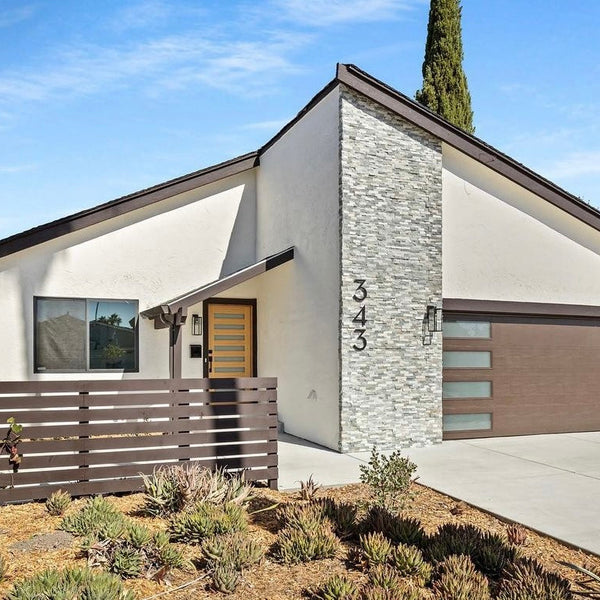
House number styles that support your bagua area's element are selected by matching material, finish, and shape to the element ruling that entrance zone, whether Metal, Wood, Water, Fire, or Earth. Modern homeowners increasingly seek this kind of style-to-bagua alignment. This growth signals that buyers view house numbers as a design decision, not an afterthought. Modern House Numbers offers multiple finishes and font styles, from Palm Springs to Santa Barbara, giving homeowners options that can be paired with an entrance's elemental needs while keeping a clean, architectural look.
How Do You Decide on Number Size, Finish, and Placement for Balance and Harmony?
Number size, finish, and placement for balance and harmony are decided by proportioning digits to the façade, matching finish to the entrance's material palette, and centering the address near eye level. Address digits themselves carry symbolic weight: the number 2 represents balance, cooperation, and diplomacy, while the number 6 is considered harmonious and nurturing, making both favorable for households seeking domestic balance. Mirrors, used in various sizes and placements near an entry, can visually expand a narrow approach without competing with the house numbers for attention. In practice, oversized numbers on a small home overwhelm the entrance, while undersized numbers on a large façade get lost, so proportion matters as much as symbolism.
Can Custom Plaques or Decals Enhance Both Feng Shui and Curb Appeal?
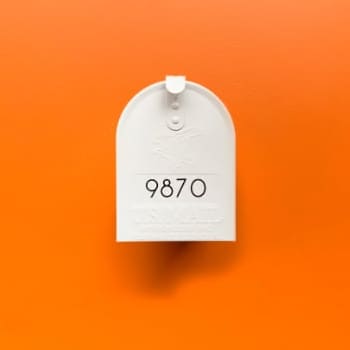
Yes, custom plaques or decals can enhance both feng shui and curb appeal, since demand for personalized, style-to-bagua address products is rising. Curb appeal is an important feng shui principle, and clean exterior details, like sparkling windows, signal a well-cared-for home. Modern House Numbers' custom plaques and decals let homeowners pair architectural style with an entrance's elemental needs while keeping a clean, minimalist look. With house numbers style-matched, everyday entrance elements complete a balanced feng shui approach.
How Do You Handle Common Feng Shui Challenges at the Front Door?
Common feng shui challenges at the front door include sharp corners, street or T-junction alignment, and dark, cramped entryways, each requiring a specific cure. The sections below cover fixes for poison arrows, misaligned entrances, and low-light passageways.
What Should You Do If Your Front Door Faces a Wall, Staircase, or Sharp Corner?
If your front door faces a wall, staircase, or sharp corner, you should treat that edge as a poison arrow and soften it immediately. Rounded furniture in place of sharp corners disperses this energy before it reaches the entry. A related issue occurs when the wall section is uneven: empty space covering less than 50% of the wall width signals a missing corner, depleting chi in that life area. Curved planters or a rounded entry table correct both issues near the door.
How Can You Correct an Entrance Aligned With a Street, Driveway, or T-Junction?
An entrance aligned with a street, driveway, or T-junction can be corrected by blocking the direct line of rushing energy before it reaches your door. A solid wall, dense hedge, or thick row of shrubs planted between the entry and the roadway breaks this straight path, while a metal wind chime near the entrance disperses whatever energy slips through. Positioning the door slightly off the direct sightline also helps when the floor plan allows it. Any barrier added should not block legal visibility. City codes typically require house numbers to measure at least 4 inches and stay easily visible from the street, so hedges must be trimmed to keep numbers unobstructed.
Which Feng Shui Cures Work for Dark, Narrow, or Cramped Entryways?
The feng shui cures that work for dark, narrow, or cramped entryways add light and open up perceived space. Stagnant chi and a feeling of confinement are the core problems, and cosmetic-only fixes like a decorative crystal with no real light rarely solve them. Effective remedies include:
- Overhead lights or sconces eliminate stagnant chi.
- Soft, neutral wall colors open up the passage.
- Mirrors expand the sense of space.
- Artwork with depth simulates distance.
- Decluttering lets energy move freely.
- Healthy plants and faceted crystals add vitality and light.
These entryway fixes prepare the ground for blending feng shui with modern, minimalist exteriors.
How Can You Integrate Feng Shui With Modern, Minimalist Home Exteriors?

Feng shui integrates with modern, minimalist exteriors by aligning natural materials, clean lines, and open energy flow with contemporary design values. The sections below cover balancing feng shui with architecture, whether minimalist signage still supports the bagua map, and practical adjustments for modern homes.
How Do You Balance Feng Shui Principles With Contemporary Architectural Design?
Balancing feng shui principles with contemporary architectural design means applying feng shui's spatial optimization to modern building forms. According to a 2025 academic framework by Xie and Mao, feng shui integrates spatial layout and environmental optimization drawn from geography, geology, meteorology, and environmental studies to harmonize natural and built environments. By regulating spatial energy flow, feng shui fosters livable, balanced spaces aligned with modern well-being.
Advantages include:
- Thermal comfort through strategic use of natural features
- Aesthetic appeal rooted in symbolic and natural beauty
- Cultural and spiritual significance that strengthens identity
- Environmental sustainability supporting healthier living spaces
For minimalist architecture, feng shui works best as a planning discipline, not decoration, reinforcing flow and comfort rather than adding ornament.
Can Simple, Clean-Lined Numbers and Signage Still Support the Bagua Map?
Yes, simple, clean-lined numbers and signage can still support the bagua map, because bagua placement depends on location and orientation rather than ornamentation. A house number activates its sector by its position near the entrance, the "mouth of chi," regardless of decorative detail. Minimalist signage aligns naturally with feng shui's shared values of clarity, balance, and calm, the same qualities linking modern interior design with feng shui principles. Clean lines complement this aesthetic without weakening the number's placement or element association. Choosing a plain number in wood or metal, rather than an ornate font, keeps the entrance uncluttered while still honoring the sector's elemental needs.
What Are Practical Examples of Subtle Feng Shui Adjustments for Modern Homes?
Practical examples of subtle feng shui adjustments for modern homes include small changes that respect minimalist style while improving chi flow. Exterior fixes should come first, since interior adjustments alone rarely help if the entrance stays blocked or misaligned.
Subtle adjustments include:
- Clean metal hardware supporting the Metal element
- A single rounded planter or bench near the door
- Warm, dimmable lighting instead of harsh overhead fixtures
- A neutral, earth-toned door color instead of bold patterns
According to a 2015 Better Homes & Gardens Real Estate survey, buyers reported an average 16% premium for feng shui-compliant homes, showing that modest, minimalist-friendly changes can carry real market value. These small exterior refinements set the stage for choosing house numbers that reinforce the same balance.
How Should You Approach Front-Entrance Feng Shui With Modern House Numbers Products?
Front-entrance feng shui with modern house numbers products works best when material, placement, and visibility align with bagua principles. Metal and wood numbers support most entries, while stone and glass require moderate, careful use.
How Can Modern House Numbers' Custom Numbers, Plaques, and Decals Support Your Entry Bagua?
Modern House Numbers' custom numbers, plaques, and decals support your entry bagua by letting homeowners align material, color, and shape with the specific gua their front door activates. Custom and designer house numbers offer the flexibility needed to match metal finishes to Career or Helpful People zones, or warmer tones to Wealth and Family areas.
This customization also fits the modern virtual/spiritual bagua approach, which treats placement as non-space-dependent and rooted in personal intention rather than strict compass rules. A plaque chosen with clear intention can activate a life area regardless of exact positioning.
In practice, homeowners get the most value by treating house number selection as a design decision, not just a fire-code requirement, since the entry sign is the first energetic and visual signal a home sends. With drainage strategies in place, regular maintenance keeps these protections effective.
What Are the Key Takeaways About Bagua Map Explained: How to Apply Feng Shui to Your Home Entrance We Covered?
The key takeaways about Bagua Map Explained: How to Apply Feng Shui to Your Home Entrance are that entrance-level choices carry measurable weight for both energy flow and real estate value. Consumer research shows why this matters:
- 81% of Chinese-American homeowners said feng shui factored into their most recent home purchase.
- 86% of all respondents said feng shui will influence a future home-buying decision.
- 90% of Chinese-Americans believe feng shui increases a home's resale value.
- 41% of Chinese-Americans consider feng shui important when searching for a home..
Deal-breaker issues like poor stair and door alignment show buyers scrutinize entrances closely, and bathroom feng shui elements reinforce that spatial fundamentals matter throughout the home. This creates significant financial incentive for investors and sellers to apply feng shui thoughtfully.
A pristine lawn, free of leaves and branches, signals "I care about my home," and the same logic applies to the entry sign: a well-chosen, well-placed house number tells visitors that the entrance was designed with intention, not left to chance.