 Numbers + Letters
 QuickShip
 Plaques
 Decals
 Custom
 Trade
Trade


Missed deliveries happen when drivers cannot locate or confirm a residential address, and the most common cause is house numbers that are too small, poorly placed, or invisible from the street. The problem is widespread: millions of packages and mail pieces go undelivered each month across the United States due to addressing issues alone.
This guide covers the root causes of missed deliveries, best practices for house number display and placement, common homeowner mistakes that hide addresses, the connection between curb appeal and wayfinding, how to choose the right address products, and what to do when drivers still can't find you.
Poor visibility is the factor homeowners can control most directly. Weather, low lighting, and complex property layouts all reduce a driver's ability to read your address, especially at speed or after dark. High-contrast colors, adequate sizing, and illumination make house numbers legible in nearly every condition.
Many homeowners unintentionally obscure their addresses with overgrown landscaping, decorative elements, or number styles that prioritize aesthetics over readability. Municipal codes typically require numbers at least three inches tall in a contrasting color, yet countless homes fall short of even that baseline.
Choosing durable, architect-designed address signs serves both function and style. The right materials withstand years of sun, rain, and temperature shifts while complementing your home's design.
When visibility upgrades alone aren't enough, clear delivery instructions and awareness of local display regulations close the remaining gap between your address and the driver searching for it.
What Are the Most Common Reasons Delivery Drivers Miss an Address?
The most common reasons delivery drivers miss an address include poorly visible house numbers, adverse weather and lighting conditions, and confusing property layouts. According to Precisely, in January 2025 alone the USPS reported 117.8 million Undeliverable-As-Addressed mail pieces, with nearly 49 million linked to addressing issues such as vacant properties, invalid ZIP codes, and missing sub-address validation.
How Does Poorly Visible or Missing House Numbers Affect Deliveries?
Poorly visible or missing house numbers force drivers to slow down, guess, or skip addresses entirely. When a driver approaches at speed and cannot quickly identify the correct property, the delivery attempt fails or goes to the wrong home. According to GBG, when addresses are inaccurate or incomplete, 41 percent of deliveries are delayed and 39 percent simply fail.
Faded paint, undersized digits, and decorative fonts that prioritize style over legibility are among the most frequent culprits. A house number obscured by a screen door or recessed into a shadowed entryway becomes functionally invisible from the street. For drivers managing dozens of stops per hour, even a few seconds of confusion per address compounds into significant route delays.
What Role Do Weather and Lighting Conditions Play in Missed Deliveries?
Weather and lighting conditions play a significant role in missed deliveries by reducing a driver's ability to spot house numbers from the street. Rain, fog, snow, and glare can obscure even well-placed signage, while nighttime deliveries without exterior illumination leave drivers navigating in near-total darkness.
Failed deliveries represent a growing challenge that researchers have classified across eight categories, including environmental visibility factors, according to a 2024 IEEE analysis. Low-contrast number finishes that appear readable at noon may become invisible under overcast skies or harsh streetlight angles. Seasonal changes compound the problem; shorter daylight hours in winter mean more deliveries occur after dark, precisely when unlit house numbers disappear from view.
How Can Complex or Unusual Property Layouts Lead to Confusion?
Complex or unusual property layouts lead to confusion by breaking the predictable patterns drivers rely on for quick identification. Standard addressing grids place even numbers on north and west sides of streets and odd numbers on south and east sides, so properties that deviate from this system disrupt a driver's expectations.
Multi-unit buildings without clear unit designations, long shared driveways serving several homes, and rural properties set far back from the road all create ambiguity. Gated communities with internal numbering that differs from the municipal system add another layer of difficulty. When GPS coordinates drop a driver at a driveway entrance but the actual door sits hundreds of feet away, the delivery is likely to fail. Clear, visible addressing at every decision point along the approach path helps eliminate this guesswork entirely.
How Can You Make Your Address Easier for Delivery Drivers to Find?
You can make your address easier for delivery drivers to find by displaying large, high-contrast house numbers in a visible location, adding illumination, and removing obstructions. The following subsections cover best practices for display, optimal placement, and how contrast and lighting improve recognition.
What Are the Best Practices for Displaying House Numbers?
The best practices for displaying house numbers include choosing a size, color, and style that ensures readability from the street. As Justin Wallace of the American Planning Association notes, street names and addresses serve as everyday wayfinding devices that reflect core civic values, yet they often go unnoticed.
Key best practices include:
-
Select numbers at least three inches tall; increase size for homes set farther from the road.
-
Use a contrasting color against the mounting surface so digits stand out in any light.
-
Choose durable, weather-resistant materials that maintain legibility over years of exposure.
-
Keep the font clean and simple, avoiding overly decorative scripts that slow recognition.
-
Install numbers where no landscaping, decorations, or architectural features block the view.
For most homes, a combination of proper sizing, strong contrast, and unobstructed placement solves the majority of missed-delivery problems before they start.

Where Should House Numbers Be Placed for Maximum Visibility?
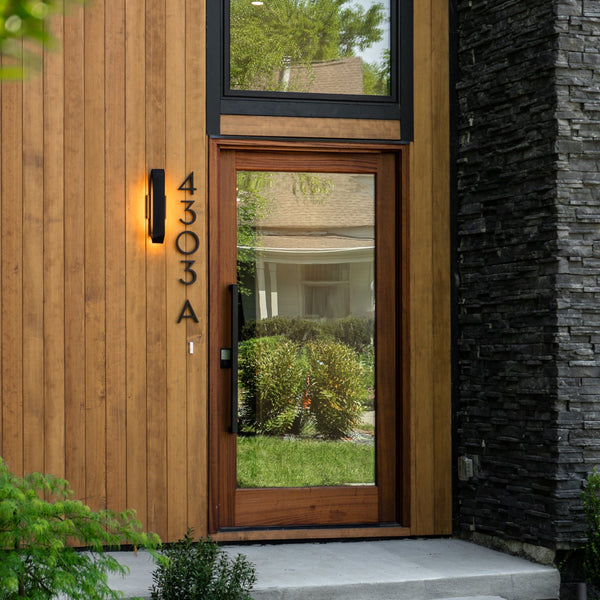
House numbers should be placed where they are visible from the street in both directions of approach. Mounting them near the front door or garage at a height between four and six feet ensures drivers can spot them without leaving their vehicle.
Ideal placement locations include:
-
Beside the front door or on the door frame, centered at eye level.
-
On a porch column, pillar, or exterior wall facing the street.
-
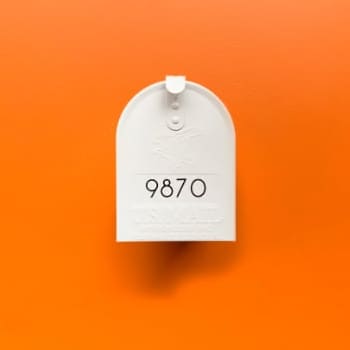
On a mailbox, fence post, or gate for properties set back more than 45 feet from the road.
-
Near a porch light or exterior fixture so existing illumination aids nighttime visibility.
Avoid placing numbers on surfaces that swing open, sit perpendicular to the street, or fall into shadow for most of the day. The goal is a clear sightline from the curb in both travel directions.

How Do High-Contrast, Large, or Illuminated Numbers Improve Recognition?
High-contrast, large, or illuminated numbers improve recognition by increasing legibility across distance, weather, and low-light conditions. Research published in Applied Sciences (MDPI) found that achromatic-chromatic color combinations, such as black text on a colored background, produced the fastest reading speeds compared to low-contrast pairings.
These three factors work together:
-
Contrast separates the digit from its background, making numbers readable even in rain, fog, or dusk.
-
Size extends the readable distance; a four-inch number is legible from roughly 40 feet, while larger digits push that range further.
-
Illumination through backlit, solar-lit, or externally spotlit numbers eliminates the nighttime visibility gap entirely.
Instacart driver Michael Stearns captured the practical stakes well: "Make your address available, light up the house, give us a landmark." Investing in well-lit, boldly contrasted numbers is one of the simplest upgrades a homeowner can make. With display, placement, and visibility covered, avoiding common homeowner mistakes further reduces missed deliveries.
What Mistakes Do Homeowners Make That Cause Missed Deliveries?
Homeowners cause missed deliveries by allowing landscaping to obscure address numbers and by choosing house number styles or placements that are difficult to read. These preventable errors contribute to a widespread problem.
How Can Landscaping or Obstructions Hide Your Address?
Landscaping or obstructions can hide your address when overgrown shrubs, tree branches, hanging planters, or decorative features block the line of sight between the street and your house numbers. A delivery driver approaching at speed has only seconds to scan for an address, and even partial obstruction forces guesswork.
Common obstructions that hide house numbers include:
-
Overgrown hedges or foundation plantings that creep above the number line
-
Tree canopy growth that shades or physically covers wall-mounted numbers
-
Seasonal decorations, flags, or wreaths hung near the address display
-
Parked vehicles, trash bins, or mailbox accessories blocking curb-level visibility
A 2023 study by Descartes found that 67% of consumers have experienced delivery problems, with failed deliveries representing a major component. Trimming vegetation below and around your house numbers at least twice per year eliminates one of the most common, yet easily fixable, causes of missed deliveries.
Are Certain House Number Styles or Placements Harder to Read?
Certain house number styles and placements are significantly harder to read, particularly thin script fonts, low-contrast color pairings, and numbers mounted too low or recessed into shadowed alcoves. A driver scanning from a moving vehicle needs bold, high-contrast characters positioned at eye level near the primary entrance.
Styles and placements that reduce readability include:
-
Ornate or cursive fonts where digits blur together at distance
-
Numbers that match the wall color, eliminating contrast
-
Placement inside covered porches or behind columns
-
Mounting below three feet, where parked cars or snow banks block visibility
For most homes, numbers sized at a minimum of four inches, mounted between four and six feet high, and finished in a color that contrasts sharply with the mounting surface solve the majority of readability issues. Choosing the right style matters as much as choosing the right location.

Why Does Curb Appeal Matter for Delivery and Wayfinding?
Curb appeal matters for delivery and wayfinding because a well-designed exterior guides visitors, drivers, and emergency responders directly to the right address. The sections below explore how professional-grade address signs combine style with function and why quality house numbers deliver lasting returns.
How Do Professional-Grade Address Signs Enhance Both Style and Function?
Professional-grade address signs enhance both style and function by combining architect-designed aesthetics with high-visibility placement that meets municipal and postal standards. Unlike generic hardware-store options, these signs use precise sizing, high-contrast finishes, and durable materials that remain legible in low light, rain, and direct sun.
According to Justin Wallace of the American Planning Association, street names and addresses serve as everyday wayfinding devices that casually contribute to ambience and the symbolic meaning of a place. A well-chosen address sign does double duty: it elevates a home's architectural character while ensuring every courier, guest, and first responder finds the property on the first attempt. For most homeowners, this intersection of form and function is where curb appeal delivers its highest practical return.
What Are the Long-Term Benefits of Investing in Quality Address Numbers?
The long-term benefits of investing in quality address numbers include fewer missed deliveries, improved emergency response times, sustained curb appeal, and reduced replacement costs. Cheap, mass-produced numbers fade, warp, or corrode within a few seasons, forcing repeated purchases.
Quality address numbers made from solid, recycled aluminum resist UV degradation and weather damage for years. Intel Market Research valued the global house address plaque market at USD 389 million in 2024, projecting growth to USD 475 million by 2031, which reflects rising homeowner demand for durable, design-forward solutions. Beyond durability, well-crafted numbers maintain the high contrast and minimum sizing that fire codes and postal guidelines require, so visibility never degrades over time. Investing once in architect-designed address numbers eliminates the cycle of replacements while keeping a home's exterior polished and navigable.
With curb appeal and wayfinding working together, choosing the right house numbers becomes the next practical step.
How Can You Choose the Right House Numbers or Address Signs for Your Home?
You can choose the right house numbers or address signs by selecting durable materials suited to your climate and matching a style that complements your home's architecture. The following sections cover weather-resistant finishes and design-compatible styles.
What Materials and Finishes Best Withstand Weather and Enhance Visibility?
The materials and finishes that best withstand weather and enhance visibility include solid aluminum, stainless steel, and brass, each offering distinct advantages in durability and contrast. Recycled aluminum, for example, resists rust, holds painted finishes well, and maintains legibility across seasons. Powder-coated and anodized finishes add an extra layer of UV and moisture protection that keeps colors from fading.
High-contrast finishes matter as much as the base material. According to research published in Applied Sciences (MDPI, 2025), achromatic-chromatic color pairings, such as black text on a colored background, produced the fastest reading speeds compared to low-contrast combinations. Choosing a finish color that contrasts sharply with your exterior wall ensures drivers can read your address quickly, even in low light or rain.
For most climates, solid aluminum with a matte black or brushed finish strikes the best balance between weather resistance and readability.
Which Address Sign Styles Complement Different Home Designs?
Address sign styles that complement different home designs range from sleek sans-serif numerals for contemporary facades to serif or script options for traditional architecture. The key is matching proportions, weight, and finish to your home's visual language.
Common pairings include:
-
Mid-century modern homes pair well with clean, geometric sans-serif fonts like Palm Springs or SoCal styles mounted with standoff hardware.
-
Craftsman or farmhouse designs suit slightly heavier letterforms with dark bronze or brass-toned finishes.
-
Contemporary and minimalist facades benefit from thin-profile, floating-mount numbers in brushed aluminum or matte black finishes.
-
Mediterranean or Spanish-revival homes work with address plaques that frame the numbers, adding a finished, architectural look.
Scale also matters; numbers should be proportional to the facade area where they are mounted. For homes set back more than 45 feet from the street, oversized numbers or illuminated plaques keep the address legible from the curb.
With the right material and style selected, the next step is ensuring drivers can still find you if problems persist.

What Should You Do if Delivery Drivers Still Miss Your House After Making Changes?
If delivery drivers still miss your house after making changes, you should communicate specific directions through delivery app notes and contact your local municipality about house number display codes. The following sections cover driver communication strategies and local regulations.
How Can You Communicate Directions to Drivers and Delivery Services?
You can communicate directions to drivers and delivery services by adding detailed delivery notes, updating your address profile, and contacting carriers directly. Most delivery platforms and carrier apps include fields for specific instructions that drivers see before arriving.
Effective delivery notes should include:
-
A physical landmark near your home, such as a distinctive tree, fence color, or neighboring business.
-
The exact location of your house numbers on the property.
-
Gate or access codes required for entry.
-
Preferred drop-off spots if the front door is hard to locate.
For recurring issues, calling USPS, UPS, or FedEx customer service to flag your address with a permanent delivery note often resolves repeated misses. Instacart driver Michael Stearns emphasized in a 2024 KTXS News interview that making your address available, lighting up the house, and providing a landmark are critical for safe, successful deliveries. Proactive communication paired with visible, well-designed house numbers eliminates most remaining delivery failures.
Are There Local Regulations About Displaying House Numbers?
There are local regulations about displaying house numbers in most U.S. municipalities, and requirements vary by jurisdiction. Cities and counties typically mandate minimum size, contrast, and placement standards through building or fire codes.
Common regulatory requirements include:
-
Minimum height of three inches for house number characters.
-
Contrasting color between numbers and their immediate background.
-
Visibility from the street in both directions of approach.
-
Placement on a gate post, fence, or mailbox when the dwelling sits more than 45 feet from the front lot line.
According to the City of Oakland Park, Florida, house numbers must be at least three inches high, in a contrasting color, and displayed where they remain visible from all directions when approaching from the street. The National Fire Protection Association also requires building address numbers to be visible from the street to assist emergency responders.
Checking your local code ensures compliance and maximizes findability. Many homeowners unknowingly violate these standards with undersized or low-contrast numbers, which contributes to both missed deliveries and delayed emergency response. Understanding these regulations before selecting new house numbers helps you choose the right size, finish, and mounting location from the start.
How Can Modern, Architect-Designed Address Products Help Prevent Missed Deliveries?
Modern, architect-designed address products help prevent missed deliveries by combining code-compliant sizing, high-contrast finishes, and precise installation guidance. Below, we cover how Modern House Numbers solves visibility problems and summarize the key takeaways from this article.
Can Custom House Number Signs and Installation Templates from Modern House Numbers Help With Missed Deliveries?
Yes, custom house number signs and installation templates from Modern House Numbers can help with missed deliveries. Each product is architect-designed with sizing that meet municipal visibility codes requiring numbers at least three inches. The included personalized drilling template ensures correct height and spacing on the first attempt, so numbers remain visible from the street.
This visibility matters financially. According to a 2024 ShipVeho analysis, failed first-time deliveries cost retailers an average of $17.20 per order, and each failure typically triggers 2.3 customer service interactions costing $12 to $25 each to resolve.
Modern House Numbers addresses the core causes of these failures by using:
-
Recycled, 3/8-inch thick aluminum that resists weathering that degrades lesser materials over time.
-
Architect-selected fonts that prioritize legibility from the street, not just aesthetics.
-
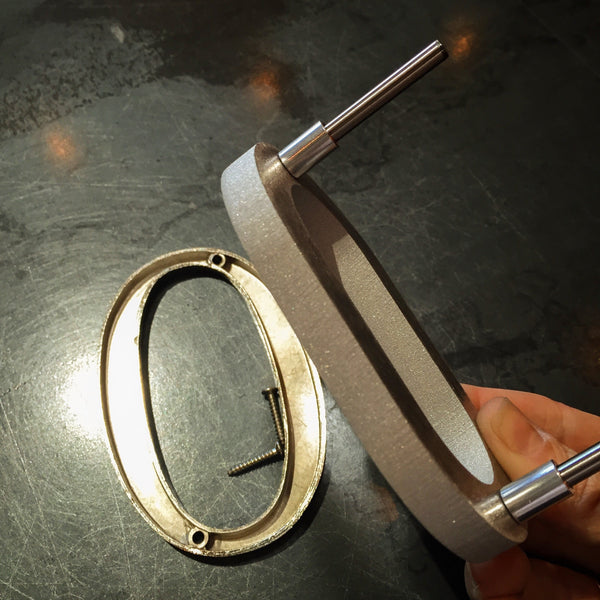
Concealed mounting hardware that creates a clean facade without visual clutter.
-
Step-by-step installation instructions that eliminate guesswork.
For properties set back more than 45 feet from the front lot line, municipal guidelines recommend displaying numbers on a gate post, fence, or mailbox visible from all approach directions. Modern House Numbers offers plaques and mounting options suited to these configurations. Proper placement turns a decorative upgrade into a practical wayfinding solution for every driver who approaches your home.

What Are the Key Takeaways About Why Delivery Drivers Miss Your House and How to Fix It We Covered?
The key takeaways about why delivery drivers miss your house and how to fix it are straightforward. Drivers miss addresses primarily because house numbers are too small, poorly contrasted, obstructed by landscaping, or invisible in low light. Incomplete or inaccurate addresses account for 22% of failed first-attempt deliveries, and when address information is lacking, 41% of deliveries face delays.
The most effective fixes include:
-
Installing numbers at least three inches high in a color that contrasts with the mounting surface.
-
Placing numbers where they are visible from the street, not hidden behind columns or foliage.
-
Adding illumination or reflective finishes for nighttime and overcast visibility.
-
Using delivery app instructions to note landmarks or unusual property layouts.
-
Choosing durable, weather-resistant materials that maintain legibility across seasons.
Architect-designed products from Modern House Numbers combine these principles into a single solution, with precision drilling templates, concealed hardware, and recycled aluminum construction built to last. Investing in properly sized, well-placed address numbers is one of the simplest upgrades a homeowner can make to reduce missed deliveries, improve emergency response times, and elevate curb appeal simultaneously.