 Numbers + Letters
 QuickShip
 Plaques
 Decals
 Custom
 Trade
Trade


A welcome sign is a decorative or personalized marker displayed at your home's entryway to greet visitors, reflect your style, and establish curb appeal. Choosing the right one involves matching materials, design, and placement to your home's architecture and environment.
This guide covers sign types and materials, aesthetic coordination, weather resilience, strategic placement, personalization options, long-term maintenance, sustainability, and cohesive integration with your existing address signage.
Wood, metal, and acrylic each bring distinct visual character and durability profiles. Cedar can last up to 25 years with proper care, aluminum forms a natural oxide layer that prevents rust, and UV-resistant acrylic stays clear for 10 to 20 years outdoors. Your material choice sets the foundation for both style and longevity.
Matching a welcome sign to your home's exterior means coordinating finishes, fonts, and colors with your architectural style. Modern homes favor sleek metallic or acrylic options with clean typography, while traditional and rustic exteriors pair well with wood or framed metal signs featuring classic lettering.
Climate plays a direct role in how long your sign lasts. Moisture-prone regions demand sealed or corrosion-resistant materials, while sun-heavy areas require UV-protective coatings or shaded placement under awnings and porches.
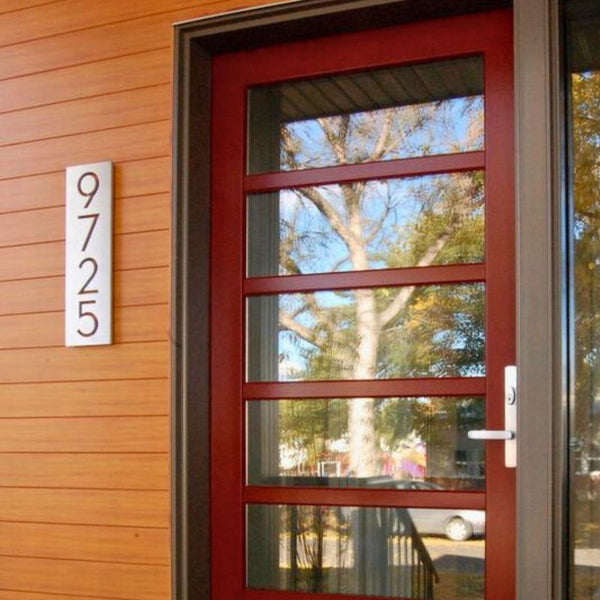
Where and how you mount your sign determines its visual impact. Eye-level placement at five to six feet works well for wall-mounted signs, and sizes should scale to the location; a front door sign needs different dimensions than a yard or garden display.
Personalization transforms a generic sign into something meaningful, whether through family names, house numbers, or custom finishes. Pairing your welcome sign with coordinated address plaques and hardware creates a unified exterior that feels intentional and polished.
Routine cleaning and seasonal inspections keep signs looking sharp for years, and choosing recycled or responsibly sourced materials like reclaimed wood or recycled aluminum reduces environmental impact without sacrificing quality.
What types of welcome signs are available for home entryways?

The types of welcome signs available for home entryways span a wide range of materials, design styles, and form factors. The sections below cover how material choice affects durability, which design trends are shaping modern selections, and how shape and size influence visual impact.
How do materials like wood, metal, or acrylic impact a welcome sign's style and durability?
Materials like wood, metal, and acrylic impact a welcome sign's style and durability by determining weather resistance, maintenance needs, and aesthetic character. Each material suits different architectural contexts and climate conditions.
Key material options for outdoor welcome signs include:
-
Aluminum is corrosion-resistant, lightweight, and recyclable, making it one of the most versatile choices for lasting curb appeal.
-
Acrylic offers weather resistance with UV protection and minimal maintenance.
-
Stainless steel delivers premium durability and low maintenance, though at a higher cost.
-
Wood provides rustic charm but requires ongoing sealing and re-treatment.
-
Vinyl is cost-effective and versatile for short-to-medium-term use.
-
PVC is affordable, though less durable than aluminum or acrylic.
According to Aetheris Concepts, high-quality UV-resistant acrylic can remain crystal clear for 10 to 20 years outdoors, with outdoor-grade sheets engineered to block up to 98% of UV radiation. For homeowners prioritizing both longevity and sustainability, eco-friendly alternatives like Etronit and GreenBond, made from FSC-certified sawdust and recycled paper fibers, carry up to 50% lower carbon footprints than traditional signage materials. Aluminum remains the strongest all-around performer for most residential applications, balancing weather resistance with design flexibility.
What are the most popular design trends for modern welcome signs?
The most popular design trends for modern welcome signs reflect broader shifts in home design toward rich textures, moody tones, and material contrast. Warm woods paired with sleek metal finishes have become a defining combination for 2025 entryways.
Current trends shaping welcome sign design include:
-
Mixed materials that layer metal with wood or stone for dimensional contrast.
-
Moody, saturated color palettes inspired by the rich tones trending in interior spaces.
-
Minimalist typography with clean, architectural fonts on uncluttered backgrounds.
-
Personalized elements such as family names, monograms, or custom messages.
With the interior design market projected to reach US $208.16 billion by 2033 according to ResearchAndMarkets.com, design-forward details at the entryway increasingly signal a home's overall style. For most homeowners, matching sign material and finish to existing architectural elements creates stronger visual cohesion than following fleeting color trends.
How do different shapes and sizes affect the look and visibility of welcome signs?
Different shapes and sizes affect the look and visibility of welcome signs by influencing readability from the street, proportion relative to the entryway, and overall design presence. Choosing the right dimensions depends on where the sign will be displayed.
Recommended size ranges by placement:
-
Front door or porch wall: 4”x11” to 5”x16”
-
Porch leaning signs: 48"x12" to 60"x14"
-
Yard or garden signs: 24"x36" or larger
-
Entryway table or shelf (interior): 8"x10" to 12"x18"
-
Mantel or console table (interior): 6"x12" to 10"x20"
Mounting at eye level, approximately 5 to 6 feet high, maximizes visibility for wall-mounted options. According to Landmark Visibility Solutions, professional installation and regular inspections significantly extend a sign's functional lifespan regardless of size. Oversized signs on small porches overwhelm the space, while undersized signs on wide facades disappear entirely; getting the scale right is one of the simplest ways to elevate curb appeal.
With materials and sizing established, the next step is matching your welcome sign to your home's overall aesthetic.
What should you consider when matching a welcome sign to your home's aesthetic?
You should consider your exterior color scheme, architectural style, and font choice when matching a welcome sign to your home's aesthetic. The sections below cover color coordination with your decor and how font style and personalization create a cohesive look.
How can you coordinate your welcome sign with your exterior color scheme and decor?
You can coordinate your welcome sign with your exterior color scheme and decor by selecting finishes and materials that echo your home's existing palette and architectural details. A sign in brushed aluminum or matte black complements contemporary facades, while dark bronze tones pair naturally with homes featuring rich woods and moody colors, a direction that aligns with 2025 design trends highlighted by Houzz.
Interior design experts recommend foreshadowing your home's style through consistent design elements at the entryway, including creating smooth transitions between indoor and outdoor spaces. Consider these coordination strategies:
-
Match your sign's finish to existing hardware, such as door handles, light fixtures, or mailbox metal.
-
Choose a sign color that contrasts enough against your wall for readability, while staying within the same tonal family.
-
Align sign materials with your home's dominant textures; wood signs suit craftsman exteriors, while sleek metal suits modern builds.
-
Incorporate local or personal design flavor to reinforce your home's unique character.
With the personalized home decor market projected to reach USD 330.6 billion by 2034, the range of coordinated finish options available to homeowners continues to expand. Investing in a sign that visually connects to your exterior pays off in both curb appeal and longevity, since metal building signs last 10+ years depending on finish and exposure.
What role does font style and personalization play in a cohesive look?
Font style and personalization play a central role in a cohesive look by reinforcing your home's architectural character at the very first point of contact. A serif or script font conveys traditional elegance suited to colonial or farmhouse exteriors, while a clean sans-serif font signals modern minimalism. The font you choose is one of the strongest visual cues guests notice, so it should mirror the design language already present in your home.
Personalized elements, such as a family name, house number, or custom message, transform a generic sign into a meaningful design detail. This is where selecting from multiple font options and finishes matters most; consistency between your welcome sign typography and any existing address numbers or plaques creates a unified entryway.
For most homeowners, choosing one font family across all exterior signage yields the cleanest result and avoids visual clutter, making font selection arguably more impactful than material choice alone.
How can climate and weather influence your choice of welcome sign?
Climate and weather influence your choice of welcome sign by determining which materials, finishes, and protective coatings will hold up in your specific environment. The sections below cover the most weather-resistant options and how sun and moisture degrade signs over time.
Which materials and finishes are most resistant to outdoor elements?

The materials and finishes most resistant to outdoor elements include aluminum, stainless steel, UV-resistant acrylic, and powder-coated metals. Aluminum forms a natural protective oxide layer when exposed to air, preventing rust entirely. For coastal homes facing saltwater exposure, 316-grade stainless steel is the industry standard due to its chromium-infused corrosion resistance.
The most durable outdoor sign materials break down as follows:
-
Aluminum resists corrosion, weighs nearly one-third of steel, and is recyclable.
-
Stainless steel provides superior long-term value in harsh environments despite higher upfront cost.
-
UV-resistant acrylic blocks up to 98% of UV radiation and can remain clear for 10 to 20 years outdoors.
-
Powder-coated finishes resist chipping, rusting, and flaking, making them ideal for coastal or industrial areas.
Acrylic should be avoided in regions with extreme heat, where it may warp. For most homeowners, aluminum with a quality powder coat finish offers the best balance of durability, weight, and weather resistance.
How does sunlight or moisture exposure affect sign longevity and appearance?
Sunlight and moisture exposure affect sign longevity and appearance by causing fading, material degradation, and structural damage over time. UV radiation breaks down pigments and finishes, while moisture promotes rot in wood and corrosion in unprotected metals. According to Landmark Visibility Solutions, metal building signs last 10 or more years depending on finish and exposure, while monument signs reach 15 or more years with proper upkeep.
Key maintenance practices that counteract these effects include:
-
Applying UV-resistant paint or sealant to protect color from sun damage.
-
Inspecting wood signs annually and re-sealing to prevent moisture rot (cedar needs yearly cleaning; pine requires sealant before initial use).
-
Cleaning acrylic with microfiber cloths and mild soap while avoiding ammonia-based products.
-
Placing signs under awnings, porches, or shaded areas to reduce direct weather exposure.
Regular cleaning and professional installation significantly extend a sign's lifespan regardless of material. Investing a few minutes each season in preventive care is far less costly than premature replacement, making maintenance one of the most overlooked factors in sign selection.
With weather resistance addressed, choosing the right placement ensures your sign stays visible and protected.
Where is the best place to display a welcome sign for maximum impact?
The best place to display a welcome sign depends on your mounting surface, visibility goals, and architectural style. The following subsections cover ideal placement locations and installation methods that keep your sign secure and visually striking.
Should you mount your welcome sign on a door, wall, porch, or yard?

You should mount your welcome sign on whichever surface best matches your home's layout and the sign's size. Each location offers distinct advantages:
-
Front door or porch wall works best for smaller signs (12"x18" to 18"x24"), placing your greeting at eye level where visitors naturally look first.
-
Porch leaning signs (48"x12" to 60"x14") add a casual, layered look beside seating or planters without requiring wall hardware.
-
Yard or garden placement suits larger signs (24"x36" or above), maximizing street-facing visibility.
Wall-mounted signs installed at eye level, roughly 5 to 6 feet high, deliver the strongest visual impact. Reclaimed wood adds warmth and character to covered porches, while recycled aluminum offers lightweight versatility for both indoor and outdoor spots. For exposed locations, choosing a durable material matters more than placement alone; signs in sheltered areas like covered porches consistently last longer with less maintenance.
What installation methods ensure a secure and attractive presentation?
Installation methods that ensure a secure and attractive presentation include concealed stud mounting, adhesive systems, and bracket hardware, each suited to different surfaces.
-
Concealed mounting hardware uses steel studs and aluminum spacers to create a floating effect, hiding all fasteners behind the sign face.
-
Surface-specific anchors accommodate wood, stucco, stone, brick, concrete, and metal, ensuring a tight hold regardless of wall material.
-
Freestanding stakes or easel frames work for yard signs that need repositioning.
According to Landmark Visibility Solutions, professional installation significantly extends a sign's lifespan, while regular cleaning and inspections prevent small issues from becoming costly problems. Pre-drilling with a personalized template eliminates guesswork, keeping letter spacing precise and holes aligned. For homeowners who want an architectural, clean-lined result, concealed hardware consistently delivers the most polished look.
With placement and mounting resolved, personalization options let you make that welcome sign uniquely yours.
What personalization options are available for welcome signs?
The personalization options available for welcome signs include custom text such as family names, house numbers, and unique messages, along with custom finishes, sizes, and graphics. These choices transform a standard sign into a distinctive expression of your home's identity.
Can you add your family name, house number, or unique message to a welcome sign?

Yes, you can add your family name, house number, or unique message to a welcome sign. Most custom sign manufacturers offer text personalization as a core feature, letting homeowners engrave or cut individual names, street addresses, and short greetings directly into materials like aluminum, wood, or acrylic.
Common personalization options include:
-
Family surnames or monograms displayed in a chosen font style
-
House numbers paired with street names for dual-purpose signage
-
Short welcome messages, quotes, or established dates
-
Specialty symbols and custom graphics
Material choice affects how text is rendered. According to Divine Signs and Graphics, durable outdoor sign materials such as aluminum, acrylic, and stainless steel each support different personalization techniques, from precision laser cutting to engraving and vinyl application. Choosing the right material ensures your custom message remains legible and attractive for years.
How do custom finishes, sizes, or graphics enhance a welcome sign's uniqueness?
Custom finishes, sizes, and graphics enhance a welcome sign's uniqueness by allowing homeowners to match the sign precisely to their home's architectural style, scale, and color palette. A brushed aluminum finish reads differently than matte black or dark bronze, and each creates a distinct visual impression at the entryway.
Size selection matters equally. A small 8"x10" sign suits an entryway shelf, while a 48"x12" porch-leaning sign commands attention from the street. Graphics such as botanical motifs, geometric patterns, or silhouette icons add visual layers that plain text cannot achieve alone. For most homeowners, combining a distinctive finish with appropriately scaled graphics is the single most effective way to ensure no two welcome signs look alike.
With personalization covered, proper maintenance keeps these custom details looking sharp over time.
How do you maintain and care for your welcome sign over time?
You maintain and care for your welcome sign over time by using material-specific cleaning methods and conducting regular inspections. The following subsections cover recommended cleaning techniques and an ideal inspection schedule.
What cleaning methods are recommended for different sign materials?
The cleaning methods recommended for different sign materials depend on the material's surface and finish. Each material responds best to specific products and tools:
-
Metal signs (aluminum, stainless steel): Wipe with a soft cloth and mild soap solution. Rinse thoroughly and dry to prevent water spots on the finish.
-
Acrylic signs: Use microfiber cloths with mild soap and acrylic-safe cleaners. Avoid ammonia-based products and rough sponges, which scratch the surface.
-
Wood signs: Clean cedar yearly with warm soapy water. Pine requires sealant reapplication before outdoor use and periodic re-treating to prevent moisture damage and rot.
According to Landmark Visibility Solutions, regular cleaning and inspections prevent small issues from becoming costly problems, and professional installation significantly extends sign lifespan. For powder-coated aluminum signs, the low-VOC finish resists chipping and flaking, so gentle cleaning is typically all that is needed.
How often should you inspect and update your welcome sign's condition?
You should inspect and update your welcome sign's condition at least once per year, ideally at the start of each season change. Seasonal shifts in temperature, moisture, and UV exposure accelerate wear differently across materials.
During each inspection, check for:
-
Fading, discoloration, or chalking on painted or coated surfaces
-
Loose mounting hardware or spacers
-
Cracks, warping, or moisture damage on wood signs
-
Scratches or hazing on acrylic panels
Wood signs require the most frequent attention; cedar and pine both need annual cleaning and re-sealing to prevent rot. Metal and acrylic signs typically need less intervention but still benefit from a quick visual check. Addressing minor issues early keeps your welcome sign looking sharp for years rather than requiring a full replacement.
With a consistent care routine established, choosing sustainable materials can further extend your sign's lifespan.
How can selecting a sustainable or eco-friendly welcome sign make a difference?
Selecting a sustainable or eco-friendly welcome sign reduces environmental impact while maintaining lasting curb appeal. The following sections cover material sourcing benefits and how ethical craftsmanship shapes a greener home exterior.
What are the benefits of choosing recycled or responsibly sourced materials?
The benefits of choosing recycled or responsibly sourced materials include a lower carbon footprint, reduced waste, and long-lasting performance. According to Modulex, materials like Etronit and GreenBond, made from FSC-certified sawdust and recycled paper fibers, have up to 50% lower carbon footprints compared to traditional signage materials such as PVC, acrylic, and non-recyclable composites. Recycled aluminum retains both durability and a sleek finish suitable for exterior applications. Post-consumer plastics can be molded into lightweight, versatile panels for indoor and outdoor use. Choosing these materials means your welcome sign performs well for years without contributing unnecessary waste to landfills.
How does ethical craftsmanship contribute to a more sustainable home exterior?
Ethical craftsmanship contributes to a more sustainable home exterior by prioritizing intentional production methods that minimize waste and resource consumption. Manufacturers adopting closed-loop systems reintegrate offcuts and production scraps into new products, while energy-efficient methods and water-based inks further reduce environmental impact. A made-to-order approach, rather than mass production, eliminates overstock and excess material use. For homeowners who value both design and responsibility, this production philosophy ensures each sign carries purpose beyond aesthetics. Investing in ethically crafted signage is one of the most practical ways to align your home's exterior with long-term environmental values, especially when paired with cohesive address signage.
How can you choose a welcome sign that integrates seamlessly with other address signage?

You can choose a welcome sign that integrates seamlessly with other address signage by matching materials, finishes, and fonts across all exterior elements. The following subsections cover coordination strategies and design tips for a unified look.
Should your welcome sign coordinate with house numbers, plaques, or decals for a cohesive look?
Yes, your welcome sign should coordinate with house numbers, plaques, or decals for a cohesive look. Matching the material and finish across all signage elements creates visual continuity that elevates curb appeal. A brushed aluminum welcome sign paired with house numbers in the same finish reads as one intentional design system rather than a collection of mismatched pieces.
Consistency in font style matters just as much as material. When your welcome sign, address plaque, and mailbox decal share the same typeface, the entire facade feels architecturally deliberate. According to Modern House Numbers, modern homes favor sleek metallic or acrylic signs, traditional homes lean toward framed metallic or wooden signs with elegant fonts, and rustic homes utilize wooden planks with aluminum letters.
Even small details like mounting hardware and spacing contribute to cohesion. Concealed mounting with uniform standoff distances gives every piece a consistent floating effect that ties the signage together.
What design tips help unify all your home's exterior signage?
The design tips that help unify all your home's exterior signage focus on three core principles: consistent finish palette, proportional scale, and intentional placement.
-
Choose one finish style (such as matte black, brushed aluminum, or dark bronze) and apply it across your welcome sign, house numbers, and any plaques or decals.
-
Select a single font family for all lettering so each piece appears part of the same collection.
-
Scale signage proportionally to its viewing distance; a porch-mounted welcome sign and nearby house numbers should complement each other in size without competing for attention.
-
Align mounting heights and spacing so all elements share a visual rhythm along the entryway.
-
Use identical mounting methods, such as concealed hardware with matching standoff depths, across every piece.
Treating exterior signage as a coordinated system rather than individual purchases is one of the simplest ways to achieve a polished, architect-quality entrance. With a unified signage approach established, the right partner can help bring that vision to life with precision-crafted options.
How does Modern House Numbers support homeowners in creating custom welcome signs?
Modern House Numbers supports homeowners by offering handcrafted, architect-designed signage made from recycled aluminum with multiple customization options. The sections below cover specific product options and key takeaways for selecting your ideal welcome sign.
What handcrafted-to-order signage options does Modern House Numbers offer for personalizing your home entry?
Modern House Numbers offers custom-made plaques crafted from solid 3/8-inch thick recycled aluminum, available in 3 font styles, 4 finishes, 3 shapes, and 1–3 sizes per shape. Every sign is handcrafted to order in Tucson, Arizona, with a standard production time of 10 business days.
Available finishes include:
-
Brushed Aluminum sealed with multiple coats of matte UV protectant
-
Matte Black powder coat
-
Matte Brass powder coat
-
Dark Bronze powder coat
All powder coat finishes are low-VOC and resist chipping, rusting, and flaking, making them well suited for coastal and industrial areas. Each sign ships with concealed mounting hardware, including 2-inch steel studs and 1/2-inch aluminum spacers, which creates a floating effect on wood, stucco, stone, brick, concrete, or metal surfaces. For homeowners who value both personalization and architectural quality, few options match the depth of customization available here.
What are the key takeaways for choosing the perfect welcome sign for your home?
The key takeaways for choosing the perfect welcome sign center on matching material, size, and style to your home's architecture and climate:
-
Select a material that suits your environment; aluminum and sealed acrylic resist UV and moisture, while wood delivers warmth but demands annual maintenance.
-
Size your sign to its placement; front door and porch wall signs work best at 4”x11” to 5”x16”, while yard signs need 24"x36" or larger for visibility.
-
Mount at eye level, roughly 5 to 6 feet high, for the strongest visual impact.
-
Coordinate finishes and fonts with existing exterior elements, such as house numbers and plaques, for a cohesive look.
-
Choose protective coatings and sheltered placement to extend your sign's lifespan.
Investing a few minutes in these decisions pays off for years. Modern House Numbers can help bring that vision to life with architect-designed, handcrafted signage built to last.